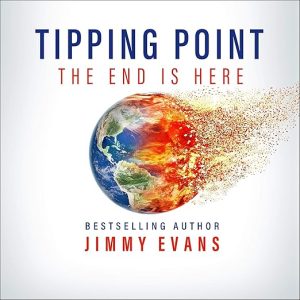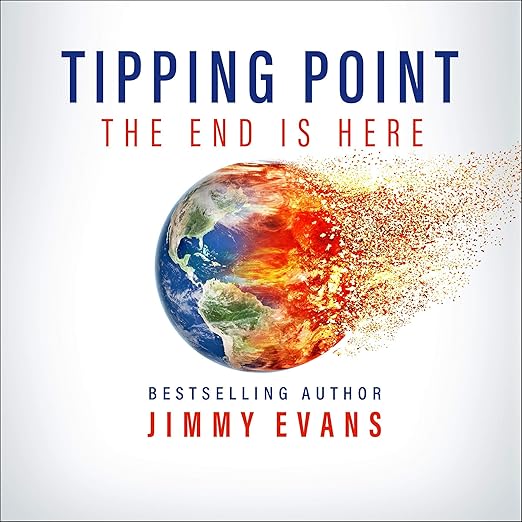
Does a prophecy book age well? That is the first question worth asking about any title arguing that current events line up with biblical end-times texts, and this one comes with a date stamp built in. XO Publishing released the audiobook in July 2020, four hours and fifty-five minutes long, with Jimmy Evans reading his own work. Among the questions the description promises to answer is whether COVID-19 and other world events are announcing the imminent return of Jesus. Six years on, that framing has become a measurable claim rather than an atmospheric one, and how you feel about that will decide whether this book is for you.
First, the Big Picture
Evans structures the book around questions his audience actually asks. Are we living in the end times? How should believers respond to rising immorality? Will Christians go through the Tribulation? What role does Israel play in prophetic plans? Each of those gets answered directly and anchored in scripture rather than atmosphere, which is a more disciplined approach than the genre usually manages. Ken B, at five stars in October 2021, names the discipline exactly: the author marries past and current world events to biblical text, references his scripture carefully, states plainly when an opinion is his own rather than the Bible's, and repeats that he is not God and does not claim to know when Christ will return.
That refusal is what separates this from the excitable end of prophecy publishing, and it sounds like a small disclaimer until you notice how much rests on it. A book that declines to name a date is arguing about interpretation. A book that names one is placing a bet and inviting you to place it too. Evans stays on the first side of that line for all five hours, which is why the argument survives its own moment better than the subtitle suggests.
The Best Parts of Tipping Point: The End Is Here
Method is the strongest argument for spending five hours here, and a five-star entry from nosnow_here in October 2023 lays it out precisely. That response credits Evans with backing his claims from the Bible and from decades of study, with avoiding any know-it-all posture and admitting as much directly, and with presenting the differing interpretations of scholars he respects rather than pretending consensus exists. For anyone who has ever stopped mid-passage wondering what a prophetic text means, that combination is worth more than confidence would be.
Under five hours is also the right length for the material. Prophecy writing bloats easily, since every symbol invites another chapter of cross-reference, and this stays tight enough to hold a shape you can remember afterward. Author-read nonfiction has a specific quality worth noting too: the author field and the reader field carry the same name here, so the emphasis you hear is the emphasis the writer intended. If you already know Evans from teaching elsewhere, that is a point in its favor. If you would rather have a trained narrator, the choice is made for you.
The Caveats
Start with the arithmetic, because this record does not add up. Five written responses are displayed, every one of them at five stars, while the ratings counter reads four and the displayed average reads 4.8. A counter of four cannot accommodate five raters. Five unanimous fives cannot average 4.8. Whichever number is wrong, the average shown here is not describing the responses shown beneath it, and any judgment you form from that headline figure is built on a broken foundation.
Tone is the second consideration, and it varies more than the star ratings suggest. A December 2020 entry signed KSK8 reads as a catalog of cultural grievances, running through legalized drugs, abortion, and the erasure of Christian heritage before crediting the book with sounding an alarm. Whether that reads as clear-eyed or alarming depends entirely on where you stand, and it tells you something real about who this book has found. The November 2025 entry from an Amazon Customer, by contrast, amounts to two words plus a title, which is its own kind of information.
Then the dating problem. A book published in July 2020 that treats the pandemic as prophetic evidence is now a historical document about how that moment felt, and the events it treats as culminating have kept going without culminating. Evans is careful enough not to have promised otherwise. Still, listeners coming to this in the mid-2020s will meet arguments built on a news cycle that has since been replaced twice over, and the parts that felt urgent on release now require a deliberate act of context.
Should You Listen to Tipping Point: The End Is Here?
Thistle, five stars in September 2020, wrote the entry that best identifies the audience. It pushes back at critics who dismissed the book for supposedly predicting a return date, points out that it does no such thing, and grounds the case in the claim that two thirds of the Bible concerns the Lord's return, with believers meant to be warned and comforted rather than frightened. That is the reader this was written for: someone inside the tradition who wants a framework, not a timetable.
You will know within ten minutes whether you belong here. Listeners who take biblical prophecy as a live interpretive question will find a careful, well-referenced guide that respects their intelligence and their questions. Anyone outside that framework, anyone wanting comparative scholarship on apocalyptic literature, and anyone allergic to reading contemporary politics as prophecy should choose differently, since none of those readers is who Evans is addressing. He is writing for readers who already share his starting assumptions, and he never pretends otherwise.
Questions Listeners Ask
Does this audiobook predict a date for the return of Christ?
No. The subtitle announces arrival rather than a schedule, and the questions raised in the description are interpretive ones about the Tribulation, Israel, and how believers should live now. Nothing in the material commits to a calendar, so anyone treating the title as a countdown has misread what the book sets out to do.
How long is the Tipping Point audiobook, and does the length limit it?
Four hours and fifty-five minutes, issued by XO Publishing in July 2020. That is brisk for the subject, and the trade-off is coverage: expect a guided survey of the major prophetic questions rather than verse-by-verse commentary. Anyone wanting exhaustive exegesis will need a longer and more technical book alongside it.