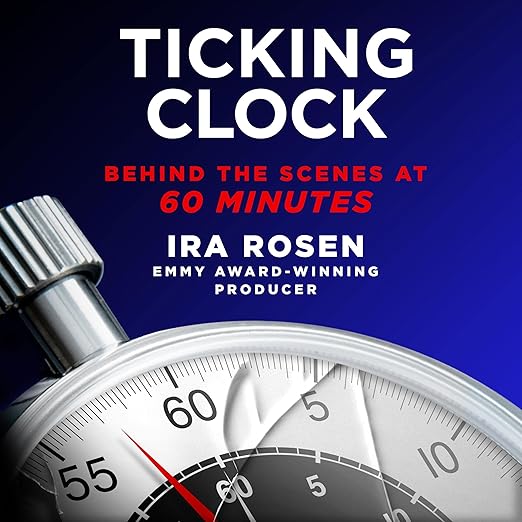
In Brief
- Narrator: Rosen self-narrates, and his producer's instinct for pacing shows. The anecdotes arrive with the rhythm of someone who has spent decades knowing exactly when to land a detail.
- Subjects: Investigative journalism, television news culture, the Mike Wallace mythos
- Tone: Insider, propulsive, occasionally unsettling
- Bottom line: Rosen's decades behind the camera make this the most credible account yet of how 60 Minutes actually worked.
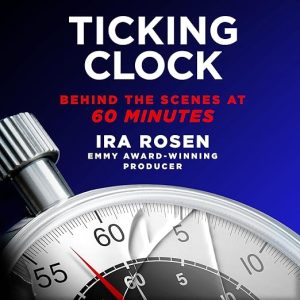
Ira Rosen walked into the 60 Minutes offices in June 1980, and the career that followed put him behind some of the most consequential televised journalism of the last four decades. Ticking Clock is the audiobook that makes sense of all of it: a behind-the-scenes account from a two-time Peabody Award-winning producer who was not a peripheral observer but a central participant. He was Mike Wallace's top producer. He was in the room.
The opening scene that sets the stage is not a dramatic investigation or a famous face but a culture. Competitive, ruthless in its pursuit of the scoop, shaped by enormous egos and enormous talent operating in proximity. Rosen's framing from the first pages is that 60 Minutes invented TV investigative journalism, and his argument for that claim is the book itself: four-plus decades of evidence delivered with the kind of detail that only direct access produces.
The Mike Wallace sections are the spine of the first half, and they're worth the listen on their own. Rosen was close enough to see both the interview mastery and the temper, and he writes about both without reverence or score-settling. Wallace's techniques: the preparation, the misdirection, the long silence after an answer that invites the subject to fill the void and usually say something they regret, are described with enough specificity to function as an actual primer on investigative interviewing. Reviewer Glynn Young, who has been through media training many times, describes learning "what it was like to face the camera and a hostile interviewer" in a way the training itself never delivered.
The second half expands to Rosen's time at ABC News Primetime Live and 20/20, where the competitive environment among Diane Sawyer, Barbara Walters, Chris Wallace, Anderson Cooper, and Chris Cuomo produced its own set of power plays and personality clashes. Rosen handles these with the same combination of candor and precision he applies to 60 Minutes: enough specificity to be credible, enough restraint to avoid the impression of simple score-settling. The Ghislaine Maxwell episode, handled carefully but with detail, is among the more striking passages in the book's second half.
Rosen's Timing Instinct Drives the Chapters
Rosen self-narrates, and the choice matters. His delivery has the rhythm of someone who has spent decades knowing when to introduce a revelation and how long to hold it. The pacing of the audiobook reflects a producer's instinct for structure. The chapters arrive with the sense of someone who understands that information, like television, is a sequence of decisions about timing. Reviewer MPWI describes the book as reading "like a ticking clock: every chapter unearths an explosive revelation," and the audio format amplifies that quality considerably because Rosen controls the delivery.
The book also functions as a portrait of a specific era in American journalism that no longer exists. The 60 Minutes model: long-form investigative reporting on network television, command of the national conversation, the mythology of the news magazine format, occupied a cultural position that streaming fragmentation has since dissolved. Rosen is writing about that world from inside it, which gives the account a texture that retrospective histories can't replicate. The episode about unearthing revelations from inside the Trump White House, treated as one chapter in a longer career, carries weight precisely because it's contextualized within decades of prior investigations rather than treated as the climax of a partisan narrative.
Research Detail Slows an Otherwise Brisk Pace
The book runs 11 hours and 9 minutes, and a few stretches in the middle, particularly the detailed reconstruction of specific story research processes, will test listeners who come for the personality drama rather than the journalism craft. Rosen is equally interested in both, but the procedural detail occasionally slows momentum. Readers expecting consistent tabloid energy will find those sections demanding.
The bill of fare includes some genuinely surprising material, particularly around Steve Kroft, whose personal complications reviewer Bill notes were revelatory, and the extended treatment of the competitive dynamics at 20/20, which carries undercurrents the subjects themselves may dispute. Rosen is careful with sourcing, but some of his colleagues are unlikely to agree with his characterizations. That tension is baked into the project: insider accounts of famous institutions are almost always contested, and Ticking Clock will certainly prompt responses from the people it depicts.
What the book captures particularly well is the human cost of working at the intersection of news and celebrity. Rosen writes about producers, correspondents, and sources with the kind of detail that only proximity provides, and that proximity reveals not just the professional machinery but the personal consequences of being inside it for decades. The competitive pressure at 60 Minutes and later at ABC News wasn't merely professional. It shaped careers, created adversaries, and occasionally compromised decisions that should have been made on editorial grounds alone. Rosen doesn't flinch from those moments in his own history, which is part of what makes the book credible.
Investigative Reporters Get an Honest Account
The natural audience is anyone interested in television journalism, investigative reporting, or the institutional history of American news. That's a broad category, but Rosen earns it. The book works both as a career memoir and as a detailed account of how 60 Minutes actually built its stories, from dangerous and unreliable sources to final broadcast. Journalism students and working journalists will find the craft sections particularly useful and worth returning to.
Listeners who want a hagiography of the golden age of TV news should look elsewhere. Rosen is honest about the failures, the compromised decisions, and the moments when ambition overrode judgment, including his own. Skip this if you're expecting a celebration. Seek it out if you want the real account of how the most successful news show in American television history actually operated, delivered by someone who was there for most of it.
Frequently Asked Questions
Does Ira Rosen's self-narration work for the audiobook format of Ticking Clock?
Very well. Rosen's instinct for pacing, developed over decades of producing television, translates directly into how he delivers revelations and holds back information. His narration has the rhythm of someone who understands timing as craft, which makes the investigative anecdotes land with more weight than a hired voice would typically achieve.
How much of this audiobook focuses on Mike Wallace specifically?
Wallace dominates the first half, with Rosen providing both the interview techniques that made him legendary and the temperament that made him difficult. As the book moves to Rosen's ABC years with Diane Sawyer, Barbara Walters, and others, Wallace recedes, but the portrait established early shapes the entire account of how 60 Minutes operated.
Is Ticking Clock a reliable account, or is it primarily a score-settling memoir?
Rosen is candid about conflicts and competitive dynamics but generally restrains the score-settling impulse that can undermine insider accounts. The Macmillan Audio production includes a prologue read by the author that sets the tone for what follows: credible, specific, and grounded in access rather than grievance.
At 11 hours, does this audiobook sustain its energy throughout?
Mostly. The Mike Wallace sections and the ABC News personality conflicts are the most propulsive, while some of the middle chapters on story research process are more procedural and demanding. Listeners primarily interested in the interpersonal drama may find the craft-focused sections slower, but the overall pacing reflects a seasoned producer's sense of how to structure a long narrative.