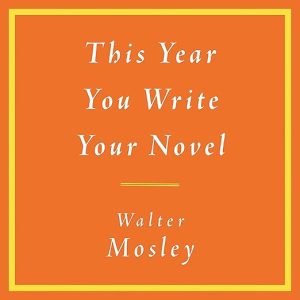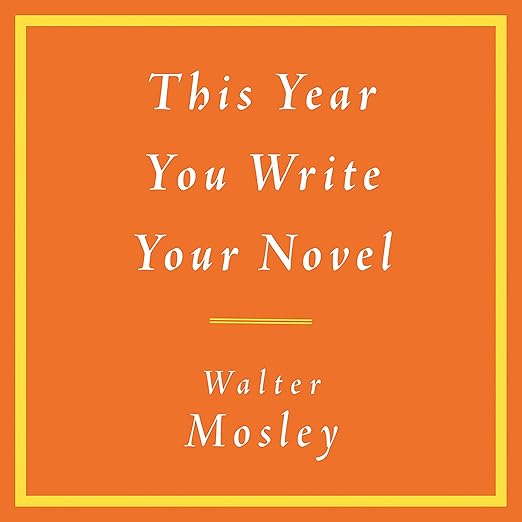
Walter Mosley has written more than fifty books, and he doesn't use that credential as a bludgeon. This audiobook, narrated by Dion Graham, is This Year You Write Your Novel, and it is notable precisely for what it refuses to do: it doesn't promise shortcuts, doesn't inflate the romance of the writing life, and doesn't pad out advice that can be stated plainly. At under two and a half hours, it is one of the more efficiently deployed writing guides available in audio, and Mosley earns the brevity because he knows exactly what a beginner needs to hear and what can wait until later.
Building a Daily Regimen That Fits Your Schedule
The Seattle Post-Intelligencer called it "no-nonsense advice that is sure to set beginning writers along the righteous path to real authorhood," and that's accurate in a way that actually understates the book's usefulness. Mosley organizes his guidance around concrete tasks rather than abstract encouragement. He talks about building a daily writing regimen that fits your actual schedule, not some idealized version of a writer's day. He addresses how to locate the narrative voice that belongs to your specific story rather than a borrowed register you admire in someone else's work. He explains how to move past the first difficult sentences and into the momentum of a story. Each point is illustrated with enough specificity to be actionable rather than aspirational. The Los Angeles Times described it as "a straightforward, friendly guide," and the friendliness is real - Mosley isn't condescending, and he trusts you to follow through. But don't mistake the warmth for softness. His central argument is that you either treat writing as a daily discipline or you don't finish the book. That's the deal. With 27-plus novels to his credit, Mosley could easily overload a reader with craft theory, but reviewer Marta Ferguson notes he "doesn't waste time" and "trusts the soon-to-be-writers reading his book to take his advice." That restraint is itself a lesson in what good writing instruction looks like.
Graham Lets the Lawn Get Shaggy Aloud
The case for the audio format here is stronger than it might first appear. Dion Graham's narration gives Mosley's voice a particular texture: confident but not performative, warm but not precious. This is a book about establishing a creative routine, and hearing it read aloud creates a different relationship with the material than skimming bullet points on a page. Graham doesn't dramatize the advice; he delivers it as a conversation, which is exactly the register Mosley intended. The 2-hour-18-minute runtime also makes this something you can absorb in a single session and then return to specific sections. Graham's reading of Mosley's instruction to let the "lawn get shaggy and the paint peel from the walls" while you write carries a different weight spoken aloud than in print - it sounds like genuine permission rather than a stylistic flourish. The book covers material that other writing guides often handle vaguely: how to determine the right narrator for your specific story, how to build dynamic characters without resorting to formula, how to revise a first draft into something structurally sound. These aren't gestures toward craft - they are operational instructions from a writer who has followed them for decades. The section on revision is especially well-constructed: Mosley distinguishes between the broad structural work of a second draft and the line-level refinement that comes later, which is a distinction many beginning writers find immediately clarifying when they encounter it stated this plainly.
Built for Literary and Crime Fiction Writers
Two things are worth noting before you begin. First, Mosley's orientation is toward literary fiction and crime fiction - the genres where his own career has lived. If you're writing in a highly structured genre like hard science fiction or legal thriller, some of his advice on narrative voice will require translation. The principles apply, but the examples he reaches for tend to come from the territory he knows best, and the fit isn't always direct. Second, the book is intentionally narrow in scope. It covers first draft and early revision, and it stops there. It doesn't address querying agents, submitting to publishers, or the architecture of a writing career. That focus is a feature: Mosley is telling you to write the thing first and worry about the rest later. But go in with calibrated expectations about how much ground the guide covers. One reviewer who published three mysteries using craft books over the years reports finding Mosley's approach distinctive precisely because of the confidence he brings from his own output - he's not hedging the advice or offering alternatives. He's telling you what works, and trusting you to apply it. That confidence transfers through Graham's narration with unusual directness.
Stalled Novelists Get a Clarifying Reset
Aspiring novelists who have started and stalled more than once will find this audiobook genuinely useful. So will experienced writers who are stuck in their current project and need someone to reset the terms. Mosley's framing - write daily, take it seriously, don't wait for inspiration - is not a revelation, but hearing it stated plainly by someone with his track record has a clarifying effect that more diffuse writing advice rarely achieves. Writers who prefer exhaustive comprehensive guides covering every aspect of craft and publishing may want something longer and broader. Those already well past their first novel will find little here that surprises them. But for the person who genuinely wants to finish a first novel and hasn't managed it yet, this short, direct audiobook is the kind of specific intervention that actually changes behavior rather than simply validating the desire to write.
Before You Listen
Is this audiobook useful for someone who has never started a novel, or is it aimed at writers who are already partway through?
Both. Mosley addresses the completely blank-page problem directly, including how to get past the first difficult sentences. But the sections on daily routine and revision are equally useful for writers who have stalled midway through a draft.
Does the audiobook version include all the content from the print edition?
Yes, the audiobook covers all of Mosley's guidance including the tips on narrative voice, character development, daily writing habits, and the revision process. Nothing appears to have been abridged.
Does this audiobook cover the business side of being a novelist - querying, publishing, agents?
No. Mosley is deliberately focused on writing and completing the manuscript itself. The audiobook ends before the publishing conversation begins, which is an intentional choice - finish the draft first, then deal with everything else.