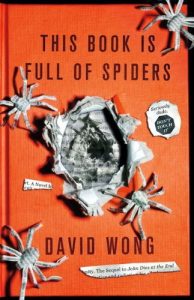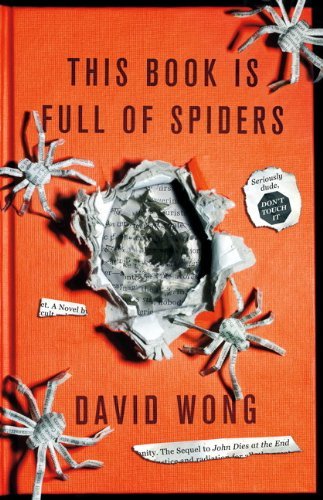
David Wong's This Book Is Full of Spiders does something that sequels almost never manage: it finds a premise that could not have existed in the first book, uses the established relationship between David and John to full effect, and escalates the horror without losing the specific comedic voice that made John Dies at the End so unexpectedly compelling. As an audiobook, it is the kind of listening experience where you will find yourself replaying a passage not because you missed something, but because Nick Podehl's timing on a particular line was precise enough to warrant immediate repetition.
The setup is elegant in its self-awareness: David and John find themselves in a zombie apocalypse with no actual zombies. The population's paranoia, fed by decades of zombie movies and games, has manufactured the outbreak that the books and films always promised. The shape-shifting entities that are actually doing the damage are worse than zombies in every measurable way, but the public has pre-loaded its response and is executing it regardless. The satire is genuinely incisive while the horror is genuinely upsetting, that combination is much harder to sustain than it sounds.
Our Take on This Book Is Full of Spiders
Wong, the pen name for Jason Pargin, has a specific authorial voice that occupies an uncomfortable space between horror and comedy. The discomfort is intentional. This Book Is Full of Spiders treats the apocalypse as something that can happen in the background while the protagonists worry about mundane problems, which mirrors the actual psychology of crisis more accurately than most disaster fiction. David and John are not reluctant heroes so much as people who cannot quite convince themselves that the situation is someone else's problem, no matter how many times they try.
The novel began as an online serial before its print publication, and that origin shows in the pacing, there is a propulsive quality to the chapter structure, a tendency to end sections at exactly the moment when continuing feels compulsory. That quality translates well to audio. This is a book that does not accommodate easy stopping points, which is either an asset or a problem depending on your listening circumstances. One reader noted purchasing it for a family member in prison, which is an unusual recommendation context but not an uninformative one, this is material that functions as genuine, sustained escape.
Why Listen to This Book Is Full of Spiders
Nick Podehl has narrated multiple well-regarded fantasy and science fiction titles, and his work here is among his best. The specific challenge of David Wong's narration is that the first-person voice is simultaneously self-deprecating and oddly authoritative, David knows he is in over his head, knows that his own account of events may not be reliable, and suspects that the reader's awareness of this is part of the situation. Podehl navigates this meta-awareness with a casual precision that makes the comedy land and the horror arrive without warning. He does not play the jokes; he delivers them with the deadpan of someone who genuinely cannot believe this is happening again.
The relationship between David and John is the emotional foundation, and the audiobook's extended runtime of nearly fifteen hours gives that relationship room to develop under pressure in ways that shorter works in the horror-comedy space rarely manage. The friendship feels earned rather than asserted, which matters when the story asks you to care about its survival.
What to Watch For in This Book Is Full of Spiders
The synopsis notes the original John Dies at the End received over 70,000 downloads as an online serial and sold 60,000 additional copies in all formats, this is material with a genuine following, and that following exists because the tonal balance is real, not a marketing claim. But the tonal balance is also the book's primary challenge for listeners who approach it with fixed expectations. If you want straightforward horror, the comedy will feel like an intrusion. If you want straightforward comedy, the moments when Wong reaches for genuine dread will catch you off guard. The book wants both responses simultaneously, and achieving that requires a specific kind of acceptance from the listener.
New listeners should ideally have encountered John Dies at the End first. The relationship context, the specific lore around the entities that David and John have repeatedly encountered, and the sense of David as a narrator with a complicated relationship to his own reliability all benefit from the first book's setup. That said, This Book Is Full of Spiders is more self-contained than most sequels in horror fiction, the new premise carries its own momentum, and Wong recaps enough of the relevant history that the experience is not dependent on prior knowledge.
Who Should Listen to This Book Is Full of Spiders
Readers who found John Dies at the End funny and unsettling in roughly equal measure should move directly to this one. Genre readers who feel that horror fiction has abandoned serious comic possibility will find Wong's approach a corrective. Fans of Nick Podehl's narration work in fantasy and science fiction should treat this as mandatory listening, his performance here ranks with his best work and demonstrates a range that genre fiction occasionally underutilizes.
Listeners who want their horror or their comedy delivered cleanly and without genre interference should look elsewhere. This Book Is Full of Spiders is fundamentally committed to the discomfort of the hybrid register. That commitment is the source of everything that makes it work.