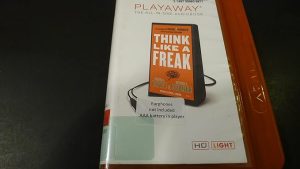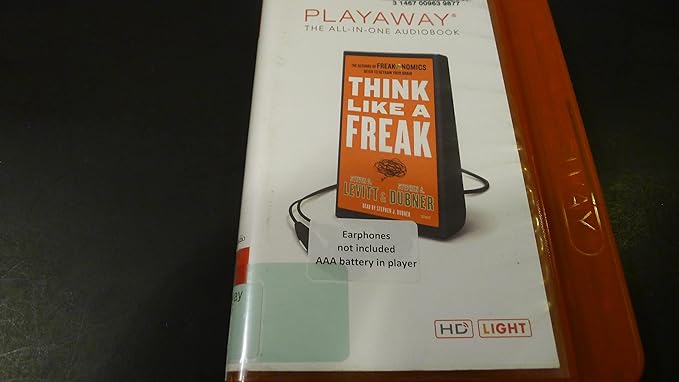
Steven D. Levitt and Stephen J. Dubner built one of the most recognizable intellectual brands of the early twenty-first century on a simple premise: if you apply economic rigor to questions nobody thought economics had any business answering, you get both surprising answers and a useful framework for thinking about everything else. Think Like a Freak is their most self-conscious entry in that project, an audiobook that steps back from presenting contrarian findings as journalism and instead tries to transfer the methodology itself. Narrated by co-author Dubner across seven hours and five minutes, it functions as a decision-making handbook that draws on the authors' existing body of research while framing each lesson as something directly applicable to how listeners approach their own choices, plans, and moral assessments.
Quitting and Not Knowing Are the Strongest Chapters
The central argument is deceptively simple: most people approach problems with pre-loaded assumptions that guarantee mediocre solutions. Levitt and Dubner call this thinking like a grown-up, and they spend the audiobook dismantling that posture chapter by chapter. The structure jumps freely between contexts, from competitive eating champions to an analysis of why Nigerian scam emails are so obviously unconvincing, and that breadth is both the book's strength and its occasional weakness. Each chapter functions as a self-contained lesson, which suits audio consumption and makes natural listening breaks easy to find, but it also means the intellectual payoff is front-loaded in most sections rather than accumulated across an arc. The book is explicitly a sequel to the Freakonomics franchise rather than a standalone intellectual project, and it works best when listeners bring curiosity rather than expectations of a sustained linear argument.
The chapters on admitting you don't know something and on the strategic value of quitting are the strongest in the audiobook. Both resist the self-help genre's pull toward relentless optimism and instead make a rigorous economic case for intellectual humility and knowing when to cut losses. The material on persuasion is thinner, relying more on anecdote than on the kind of data-driven argument that made the Freakonomics brand famous. Listeners hoping for a full-throated sequel to the structural inequality analysis of the first book will not find it here; the scope is deliberately narrower, focused on individual decision-making rather than systemic patterns. That's a reasonable choice given the book's positioning, but it's worth knowing before you start. The density of genuinely surprising findings per hour remains high throughout, and the writing never confuses accessibility with shallowness.
Dubner's Insider Rhythm Across Seven Short Hours
Dubner's narration is the primary reason to choose audio over print here. As someone who spent years translating Levitt's economics into compelling prose and radio scripts before co-writing these books, he understands the rhythm of each argument. He knows when to slow down and let a surprising statistic breathe and when to accelerate through a familiar setup toward its punchline. The co-author dynamic gives his delivery an unusual authority: he isn't performing someone else's ideas from the outside, he helped originate them, and that insider relationship to the material comes through in small calibrations of tone that a hired narrator couldn't replicate. Listeners who came to this book through the Freakonomics Radio podcast will immediately recognize the register, relaxed but never casual, curious but never meandering.
The format also benefits from the chapters' self-contained structure. At just over seven hours, the audiobook moves efficiently, and the short chapter lengths make it easy to absorb in the kind of fragmented listening sessions that commutes and daily routines allow. Dubner's delivery is comfortable at conversational speed without ever feeling rushed, which means listeners who process spoken information differently from written text will find the arguments fully accessible. The 4.4 rating across more than 5,600 reviews reflects a broad audience that spans economic enthusiasts, general readers drawn by the Freakonomics brand, and professional audiences looking for a framework rather than inspiration alone.
Competitive Eating Opens With the Real Method
The audiobook's compressed runtime means some arguments feel truncated when they could have benefited from another case study or two. The discussion of incentive design, which is arguably the most practically applicable material in the book, moves quickly in a way that the complexity of the subject doesn't fully support. The treatment of moral questions is also lighter than listeners expecting the ethical depth of some of Levitt's academic work might want; the book is oriented toward cognitive flexibility rather than moral philosophy, and it doesn't pretend otherwise. The competitive eating chapter, which opens the book, is genuinely illuminating as a demonstration of how reframing a problem produces different solutions, and it's worth paying close attention to how Levitt and Dubner apply the framework there because it models the thinking style the rest of the book is trying to cultivate.
Freakonomics Fans and Frequent Decision-Makers Will Benefit
Listeners who enjoyed Freakonomics or Thinking, Fast and Slow and want a companion volume focused on applied thinking rather than theory will find genuine value in this audiobook. Professionals who make frequent decisions under uncertainty and want a framework rather than inspiration alone will find the material directly usable. The audiobook is less suited to anyone expecting narrative depth or emotional engagement; this is a book of ideas moved along by examples rather than a story with characters. Dubner's narration makes it a strong choice for commute listening, with chapters short enough to complete between stops and arguments clear enough to retain without notes. Those who have read the Freakonomics series extensively may find some foundational material familiar, but the explicit methodology framing of Think Like a Freak offers enough fresh application to justify the time.
At a Glance
- Read by: Stephen J. Dubner, co-author of Freakonomics, reads with conversational authority and natural comic timing, giving the book's counterintuitive arguments the delivery they need to land.
- At its heart: Behavioral economics, unconventional decision-making, persuasion and incentives
- Vibe: Brisk and pleasantly combative
- Short version: Levitt and Dubner's methodological playbook is better in audio than in print because Dubner's performance models the very quality of agile, unguarded thinking the book is trying to teach.