In Brief
- Narration: Virtual Voice narration; performance is functional but lacks the warmth and emphasis variation of a human narrator, which affects engagement with practical content.
- Themes: Credit repair, score improvement, financial recovery
- Mood: Practical and direct, aimed at listeners who need actionable steps rather than theory
- Verdict: A short, organized credit fundamentals guide that works best for listeners at the beginning of their financial recovery journey.
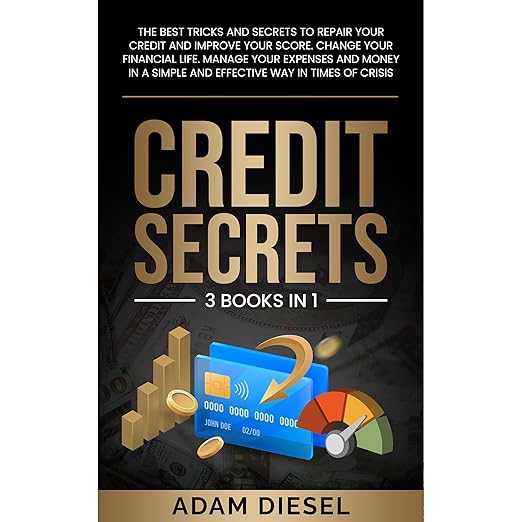
Credit Secrets: The Best Tricks And Secrets To Repair Your Credit And Improve Your Score appears in the Audible catalog as part of Adam Diesel's Wealth Creation series, positioned as entry-level guidance for listeners navigating credit scores, credit repair, and foundational financial management. At three hours, this audiobook is structured for efficiency rather than depth, covering a broad range of credit topics in a format that prioritizes accessibility over comprehensive analysis.
The framing is practical throughout. Diesel structures the material around what credit scores are, why they matter, how they are calculated, and what steps move them in a positive direction. The curriculum covers credit reporting, payment history, length of credit history, the mechanics of credit letters, and a sequence of strategies aimed at reaching a 700-plus credit score. For listeners who find financial topics intimidating, the accessible framing is a genuine asset. For listeners already comfortable with the fundamentals, the material will feel familiar.
Virtual Voice Can't Stress What Matters Most
The Virtual Voice narration requires honest acknowledgment. AI-generated narration has improved considerably, but for practical, instructional content, the absence of a human narrator's emphasis and intuition shows. Passages that a skilled narrator would naturally stress for importance arrive at the same flat cadence as transitional sentences, which can make it harder to gauge which pieces of advice are foundational and which are supplementary. This is not a dealbreaker for motivated listeners, but it requires more active engagement from the listener to compensate.
Sixty-Two Ratings Reward the Clear Organization
The content itself is organized clearly. Diesel moves from definitional material, what a credit score is and how it is calculated, into more actionable territory around the specific factors that raise or lower scores, the role of credit cards in credit building, and the process of disputing inaccurate entries on credit reports. The inclusion of credit score myths is a useful corrective; many people operate on misunderstandings about how scores work, and clearing those up early in the audiobook is structurally sensible.
At sixty-two ratings averaging 4.7, the community response is positive and consistent. Reviewers note the easy-to-follow structure and practical applicability. One reviewer who self-identifies as having learned a significant amount reflects what this kind of introductory guide is designed to produce: foundational clarity for listeners who previously lacked it.
Three Direct Hours, Plus a Companion PDF
The three-hour runtime is a genuine feature for this audience segment. Many credit and personal finance audiobooks bury practical guidance under extensive backstory or motivational framing. Diesel moves directly to actionable content, which suits listeners who want a usable framework rather than a narrative experience. The coverage of credit myths specifically, addressing common misconceptions like the belief that checking your own credit hurts your score, adds immediate value by correcting damaging misunderstandings before they cost the listener money or time.
The inclusion of a PDF companion, available in the Audible library with purchase, extends the utility beyond the audio runtime. Written reference materials for credit topics serve a practical function: credit letters, dispute processes, and scoring factor checklists are the kind of content that readers want to return to rather than simply absorb once. Having those materials in a downloadable format alongside the audio addresses a real need in this genre.
For listeners recovering from financial setbacks, whether from job loss, medical debt, or earlier financial inexperience, the practical, nonjudgmental framing of the material is appropriate. Diesel does not spend time on blame or backstory. The focus is on the path forward from wherever the listener currently stands.
Complex Credit Situations Need More Than This
The three-hour runtime means this is necessarily an overview rather than a comprehensive guide. Topics like the Fair Credit Reporting Act dispute process, which can be a significant tool for listeners dealing with erroneous entries on their credit reports, are introduced rather than developed in depth. Listeners dealing with complex credit situations, including collections accounts, bankruptcies, or identity theft, will likely need more specialized resources than this volume provides.
The Virtual Voice narration, while functional, will not suit all listeners. Some find AI narration perfectly adequate for instructional content; others find it distracting enough to affect comprehension and retention. If you have had negative experiences with Virtual Voice audiobooks in the past, that is worth weighing before purchase.
The title's length and slightly promotional framing in the synopsis, with the call-to-action phrasing, suggests this was conceived alongside a digital book product rather than purely as standalone audio. The content itself is more grounded than the title suggests, but managing that expectation upfront prevents disappointment.
Credit Beginners Get Their Best Starting Point
This audiobook is best suited for listeners at the beginning of their credit education, people who do not yet have a clear picture of how credit scores work, what factors influence them, or how to begin repairing damaged credit. The accessible framing and short runtime make it an appropriate starting point before moving to more detailed resources.
Experienced investors and listeners with established credit management practices will find the coverage too introductory. For listeners dealing with severe credit damage requiring specialized legal or financial guidance, this is a foundation rather than a solution. Those comfortable with Virtual Voice narration and seeking a quick, practical orientation to credit fundamentals will find the content delivers on its stated purpose.
Frequently Asked Questions
Is this audiobook narrated by a human voice or an AI-generated narrator?
Credit Secrets uses Virtual Voice, an AI-generated narration. The delivery is functional but lacks the natural emphasis variation of a human narrator, which matters more for instructional content than for fiction. Motivated listeners can compensate with active attention, but the experience differs from a professionally narrated title.
Does this audiobook come with any supplementary materials?
Yes. A PDF companion is included with purchase and available in your Audible library. For credit-related content, including reference materials on credit letters and dispute processes, written materials are useful to have on hand, so the PDF addition is a practical benefit.