Quick Take
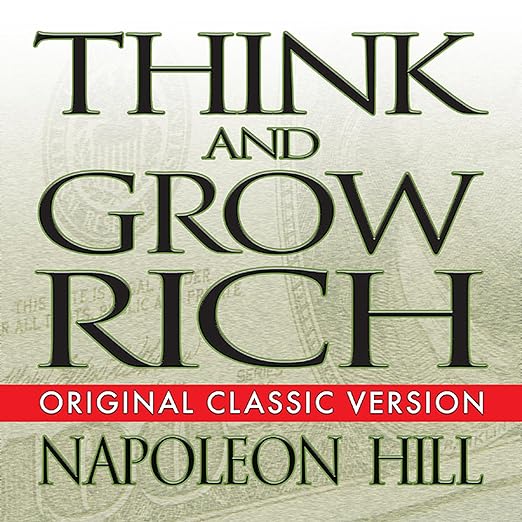
- Narration: Erik Synnestvedt delivers the 1937 original text with period-appropriate gravitas, keeping the rhetorical style from feeling dated while honoring its cadences.
- Themes: Desire as precondition for achievement, the role of belief in material success, mastermind alliances
- Mood: Earnest and aspirational, with the confident authority of early 20th-century self-improvement writing
- Verdict: The original 1937 text holds up better than many of its descendants, and Synnestvedt’s narration makes the philosophical architecture more accessible than reading Hill’s prose cold on the page.
I came back to Think and Grow Rich for the first time in several years, this time in audio rather than print, and what struck me was how differently it lands when Synnestvedt reads it aloud. The prose style of the 1937 original is formal and declarative in ways that can feel slightly airless on the page. In audio, those qualities become something closer to a sermon or a lecture, and the material opens up. Hill wrote this as a distillation of conversations with more than five hundred of the wealthiest and most accomplished Americans of his era: Ford, Edison, Rockefeller, Firestone, Carnegie, three US presidents. The audiobook text is explicitly the original edition, which several reviewers specifically value over the many updated versions that have circulated in the decades since.
One reviewer who holds a doctorate in leadership described it as inspiring, which carries weight precisely because it comes from someone who has read widely on the subject. The observation that many of today’s motivational speakers trace back to this source is accurate and worth sitting with. Think and Grow Rich is not derivative of anything you have heard before; most of what you have heard before is derivative of it.
Our Take on Think and Grow Rich
Hill’s thirteen steps are the structural spine of the audiobook, and they hold up with more intellectual rigor than the title’s blunt commercialism suggests. The argument is not simply that positive thinking produces wealth. It is that desire, specific and burning rather than vague and wishful, is the precondition for any achievement, and that the mechanism translating desire into results requires a combination of specialized knowledge, persistence, the mastermind principle of allied minds, and what Hill calls a definiteness of purpose. Whether you find the metaphysical framework around these ideas compelling or not, the practical observations about persistence, the role of failure in learning, and the difference between quitting and strategic withdrawal are genuinely useful and remain relevant.
Why Listen to Think and Grow Rich
Erik Synnestvedt’s narration makes the choice to read the original 1937 text feel deliberate rather than archaic. He does not modernize the delivery or soften the more period-specific language, which means listeners get the actual Hill rather than a contemporary gloss on him. Several reviewers note the specific pleasure of the writing style from the era, including words not commonly used today, and one explicitly appreciated reading the unedited version. At nine and a half hours, this is not a quick survey. Hill takes time with each principle, uses repeated examples from the lives of the historical figures he interviewed, and circles back to earlier concepts in ways that require sustained attention but reward it with cumulative understanding rather than isolated takeaways.
What to Watch For in Think and Grow Rich
The historical context matters. Hill’s vision of success is deeply American in specific ways that reflect 1930s economic and social realities, including a gender framework that has not aged well and an assumption that the listener is a man seeking professional and financial advancement. These elements do not negate the value of the core philosophical framework, but listeners who approach the text without accounting for its historical situation may find certain passages jarring. The religious and quasi-mystical dimension of Hill’s thinking, which surfaces most explicitly in the chapters on faith and the subconscious, is either the book’s deepest insight or its least defensible claim depending on your orientation toward that territory. He does not distinguish between metaphorical and literal claims here, which is either a feature or a problem.
Who Should Listen to Think and Grow Rich
Listeners who have encountered Hill’s ideas secondhand through the motivational industry and want to return to the original source will find the audiobook the most efficient way to do so. Those approaching the text for the first time who are comfortable with early 20th-century prose and philosophical rhetoric will find Synnestvedt’s narration more accessible than the print original. Listeners who require contemporary frameworks or evidence-based citation for self-improvement claims should look elsewhere. The book’s power comes from persuasive argument and accumulated historical example rather than research methodology.
Frequently Asked Questions
Is this the original 1937 text or an updated version?
This audiobook contains the original 1937 edition as written by Napoleon Hill. Multiple reviewers specifically note their preference for the unedited original over updated versions, and the publisher has kept it intact.
How does Erik Synnestvedt’s narration handle the period-specific language and rhetorical style?
Synnestvedt delivers the text with formal gravity appropriate to its era without making it feel like a museum piece. He does not modernize the cadences, which preserves the original’s rhetorical power while making it more accessible in audio than on the page.
Is the book’s philosophy still relevant given it was written in 1937?
The core framework around desire, persistence, specialized knowledge, and collective effort translates across contexts. The gender assumptions and some cultural specifics are dated, but multiple reviewers across generations find the practical observations as applicable today as when they were written.
What is the mastermind principle that Hill describes, and does it hold up?
Hill’s mastermind principle describes the amplified intellectual and motivational power that emerges when two or more people coordinate in a spirit of harmony toward a definite purpose. The concept has become foundational in entrepreneurial communities and leadership literature, suggesting it has held up as a practical framework even if its metaphysical explanation is debatable.