Quick Take
- Narration: Eric Jason Martin delivers a measured, respectful performance suited to deeply serious historical material; his pacing serves the gravity of the subject.
- Themes: Armenian Genocide, Ottoman imperial decline, psychology of mass atrocity
- Mood: Somber and rigorously scholarly, with moments of devastating human weight
- Verdict: The most thorough and psychologically sophisticated account of the Armenian Genocide available in audiobook form, indispensable for anyone serious about understanding how it happened.
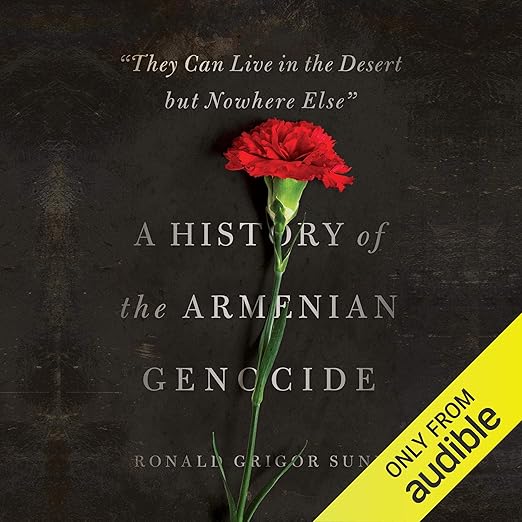
I started listening to this one on a night when I had set aside a few hours for something demanding. Ronald Grigor Suny’s title comes from a German diplomat’s account of what the Young Turk leadership intended for the Armenians: that they could live in the desert, but nowhere else. By the time Eric Jason Martin had finished reading the first few chapters, I had stopped multitasking entirely. This is not background listening. It is an account that requires you to be present with it.
Suny is a scholar who brings unusual personal stakes to his subject. As reviewer RPA in Virginia noted, he is the grandson of Armenians who were deported during the Genocide, yet as a historian he writes with a non-partisan agenda and a command of sources in Turkish, Armenian, Armeno-Turkish, German, French, and English that very few other scholars can match. The audiobook runs just over fifteen and a half hours and is published by Audible Studios, which signals a production investment appropriate to the material.
Our Take on They Can Live in the Desert but Nowhere Else
What distinguishes Suny’s history from earlier accounts is his insistence on explaining not just what happened and when, but why. That question, the psychological and political conditions that allowed a government to conclude that the elimination of a minority population was necessary for state survival, is the book’s central preoccupation. Suny was the first historian to systematically explore the psychological factors alongside the international and domestic events that led to genocide, and the combination gives the book a depth that purely event-based histories of the same period lack. Reviewer Ronald S. Bogdasarian described the opening scholarly review of the peoples and history of the Caucasus as brief, dense, and very engaging, which is a fair characterization of how Suny handles the foundational material: he does not assume prior knowledge but does not condescend to readers who have it.
Why Listen to They Can Live in the Desert but Nowhere Else
The book’s treatment of the Young Turks is one of its most important contributions. Suny shows convincingly that the great majority of Ottoman Armenians were loyal subjects who wanted to remain within the empire rather than secede to Russia, directly contradicting the Young Turk leadership’s paranoid conviction that the Armenian population represented an internal threat. He traces how that belief, steeped in what he calls imperial anxiety and anti-Armenian bias, hardened into a program of deportation and mass killing. The account of the archival documents and eyewitness testimony is meticulous in the way that the best historical scholarship is: specific enough to be convincing, documented enough to be checkable, and presented with the kind of intellectual honesty about uncertainty that separates rigorous history from advocacy. Reviewer Linda M McKay, herself a second-generation Armenian, called it the best book she had read on the subject and praised Suny for presenting the result in the most well-understood version she had encountered.
What to Watch For in They Can Live in the Desert but Nowhere Else
This is a demanding listen. The fifteen-plus hours of material is dense with historical context, political actors, and geographic specificity that requires concentration. For listeners who come in with limited background on Ottoman history or the dynamics of the First World War’s eastern front, the early chapters especially will require patience and possibly supplementary reading. Suny wrote for a mixed audience of scholars and informed general readers, which means the book is more accessible than pure academic monographs while remaining more demanding than popular history. Eric Jason Martin’s narration is measured and clear, but the seriousness of the material means there is no lightening of tone, no narrative relief. This is a chronicle of mass death and requires a listener who is prepared for that sustained encounter. The centenary of the Genocide was the occasion for several major scholarly works, and this remains the most comprehensive single-volume English-language account of how it happened.
Who Should Listen to They Can Live in the Desert but Nowhere Else
Anyone seeking a serious, comprehensive understanding of the Armenian Genocide and its historical causes will find this the most authoritative available audiobook. Listeners of Armenian heritage who want the scholarly record documented with the precision Suny brings will find the experience both painful and necessary. Students of genocide studies, comparative history, or the dynamics of imperial collapse and minority persecution will find this essential. Casual history listeners looking for a lighter engagement with the period should know that this is a demanding work that does not accommodate a half-attentive approach. The weight of the subject demands, and receives, full attention.
Frequently Asked Questions
How does Suny’s account differ from other histories of the Armenian Genocide?
Suny’s primary contribution is his systematic exploration of the psychological factors alongside the political and military ones. Where earlier histories tended to focus on what happened and document the events, Suny focuses on why: the specific fears, biases, and imperial anxieties of the Young Turk leadership that hardened into a genocidal policy. He also draws on a wider range of sources in more languages than most previous accounts, including Turkish, Armenian, Armeno-Turkish, German, French, and English.
Is this audiobook appropriate for listeners with no prior knowledge of Ottoman history?
It is accessible but demanding for newcomers. Suny opens with what reviewer Ronald Bogdasarian called a brief, dense, but very engaging scholarly review of the peoples and history of the Caucasus region, which provides necessary context. However, the full fifteen hours are enriched significantly by some prior familiarity with the First World War’s eastern front and the general structure of the late Ottoman Empire. Patient listeners willing to work through the early chapters will be rewarded.
How does Eric Jason Martin’s narration handle such emotionally difficult material?
Martin’s approach is measured and respectful throughout, appropriate to material that includes eyewitness testimony and accounts of mass killing. He does not dramatize in ways that would feel inappropriate; instead, he maintains a consistent gravity that allows the historical content to carry its own weight. Several listeners familiar with the subject noted the narration was suited to the scholarly register of the text.
Does the book address current Turkish denial of the Armenian Genocide?
Yes. Suny explicitly frames the book as an effort to cut through nationalist myths, propaganda, and denial, and the gap between Turkish and Armenian versions of events is addressed directly. He works from archival documents and eyewitness accounts rather than from either side’s official narrative, and his conclusions are supported by the scholarly consensus that the events of 1915-1916 constitute genocide regardless of ongoing official Turkish denial.