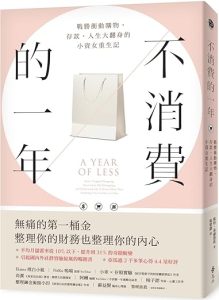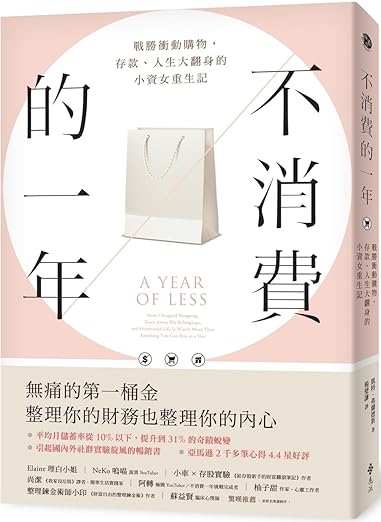
The Year of Less arrived in my listening queue during a period when I was thinking hard about accumulation. Not money specifically, though that was part of it. More the accumulation of things, subscriptions, commitments, the low-grade noise of having more than I needed in every dimension of my life. I had read minimalism books before, and I was wary of this one for the same reason I am wary of most of them: they tend to treat simplification as an aesthetic choice available to anyone with enough discipline and taste, and they tend to avoid the messier territory underneath the decluttering, the question of why the accumulation happened in the first place.
Flanders does not avoid the messier territory. That is the thing that distinguishes this from the decluttering-as-lifestyle category. The shopping ban she embarked on for a full year is the container of the story, but what is inside the container is something much more uncomfortable: a reckoning with compulsive spending as a coping mechanism, a pattern connected to an earlier period of problematic drinking, an examination of what she was using things to manage that things cannot actually manage. She is not writing a guide to minimalism. She is writing a memoir about what she discovered when she took away one of her primary methods of emotional regulation and had to face what remained when nothing was left to quiet it.
Flanders reads her own book, and at five and a half hours, this is the right decision in a way that is different from, say, a business author reading their career framework. A memoir about shame, compulsion, and recovery requires a voice that has lived the material. When Flanders describes the specific feeling of adding something to an online cart even when she knew she was not going to buy it, just to feel the brief dopamine of the selection, her narration carries a recognition that a professional narrator could not access in the same way. She knows exactly what that felt like because she did it for years before she stopped.
Her reading style is not polished in the traditional audiobook narrator sense. She does not have the full range and technical precision of a professional voice actor. What she has instead is the quality that matters most for this material: she sounds like someone telling the truth. The moments of vulnerability land with a weight that a performed reading would not achieve, and the moments of hard-won clarity sound like genuine arrival rather than scripted insight delivered from a remove.
Highlights
One of the book's most useful insights is the way the shopping ban functions as a diagnostic rather than a solution. When Flanders stopped spending, she did not simply stop spending and immediately feel better. She discovered all the specific triggers and emotional states that spending had been covering over. The restlessness after an uncomfortable social interaction. The reward after finishing a difficult project. The soothing that a new purchase provided after a bad week when nothing else seemed to help. Each category of spending had a corresponding emotional function, and removing the behavior made the function visible for the first time.
This is where the book intersects with the addiction recovery literature it occasionally references. Flanders is honest that her sobriety from alcohol predated the spending ban and that the two were connected, part of a larger pattern of using external things to manage internal states that she had not yet learned to sit with directly. The year of less was not just about money. It was about learning what the spending had been quieting all along.
Weak Spots in The Year of Less
Personal finance memoir has a tendency to structure itself around transformative numbers: the debt paid off, the savings rate achieved, the net worth finally reached. Flanders includes numbers, and the financial progress she makes during the year is real and documented. But she is careful not to let the numbers become the story's organizing frame, because she understands that the numbers were not the point. The point was what happened internally when she stopped using purchases to manage her emotional life, and the financial outcomes, real as they are, are secondary to the psychological story she is trying to tell honestly.
This is also where the book's limitations are clearest. At five and a half hours, there is only so much excavation that can happen. Readers who want extensive psychological depth or a comprehensive framework for addressing compulsive spending will find this suggestive rather than systematic. Flanders is sharing her experience with considerable insight and with courage, but she is not prescribing a program that others can follow in the same way.
Is This One for You?
Listeners who recognize something of themselves in the pattern Flanders describes, the reflexive reaching for purchases, the connection between spending and emotional management, the accumulation that does not fill what it is supposed to fill, will find this genuinely moving and practically useful. The five-and-a-half-hour length is appropriate for a memoir rather than a program. Listeners looking for a structured personal finance methodology will be better served elsewhere. This is for the reader who wants the human story underneath the numbers, told by the person who lived it. The 4.2 rating across over 3,000 reviews reflects real variation in how people receive personal finance memoirs, but the listeners who found it resonant clearly found it deeply so, and that gap between the average rating and individual intensity of response is itself a signal about the kind of book this is.
- Read by: Cait Flanders reads her own memoir with honesty and vulnerability, the intimacy of self-narration essential to the book's confessional quality
- At its heart: Consumption and compulsion, financial sobriety alongside literal sobriety, what we fill our lives with and why
- Vibe: Reflective and quietly brave, with the particular honesty of someone who has decided to stop performing and just say what actually happened
- Short version: A personal finance memoir that uses a spending ban as the surface story and finds a more complicated reckoning underneath it, best experienced in the author's own voice.
Common Questions
Does Cait Flanders's self-narration hold up across the full five-and-a-half-hour listen?
Yes. Her voice is not technically polished in the professional narrator sense, but the intimacy and honesty of self-narration are exactly right for this material. The moments of vulnerability carry genuine weight because the voice belongs to the person who lived them.
Is this book primarily about frugality and saving money, or is it dealing with deeper issues?
It deals with deeper issues. The spending ban is the frame, but what Flanders examines inside that frame includes compulsive consumption, emotional regulation, recovery patterns, and the question of what we are actually seeking when we accumulate things. The financial outcomes are real but secondary.