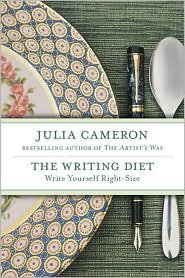
Julia Cameron built a devoted following through "The Artist's Way," a twelve-week program for creative unblocking that has sold millions of copies since its 1992 publication. The audiobook of The Writing Diet, narrated by Dina Pearlman, represents Cameron's attempt to trace a pattern she observed across twenty-five years of teaching that program: students who arrived at her workshops carrying extra weight often slimmed down over the course of the twelve weeks, not because she was teaching anything nutritional, but because something about the creative process itself seemed to interrupt the compulsive relationship with food. That observation forms the foundation of this book, and it's a more substantive premise than the cover might suggest.
Count Words Instead of Calories, Cameron Argues
Cameron is careful to frame herself correctly from the start: "I'm a creativity expert, not a diet expert." This matters, because it prevents the book from overclaiming. She isn't offering a metabolic protocol or a calorie counting system. She's arguing that many people eat not from physical hunger but from emotional need, specifically, from unfulfilled creative need, and that giving that need a legitimate outlet through daily writing practice reduces the pressure that drives compulsive eating. The journaling tools she prescribes, particularly the "Morning Pages" practice central to "The Artist's Way," serve as a kind of emotional triage, intercepting the impulse to eat before it reaches the kitchen.
The theoretical backbone is genuinely interesting. Cameron identifies food cravings as invitations to examine what you're truly craving in your emotional life, not a new idea in addiction psychology, but grounded here in the specific mechanics of creative unblocking. The instruction to count words instead of calories carries the same logic: redirect the compulsive tracking energy toward something generative rather than restrictive. For certain listeners, particularly those who have found that strict food tracking increases rather than reduces their relationship with eating, this reframe will feel immediately useful.
Where the book becomes more complicated is in its scope. Cameron is working within a framework she developed for creative unblocking, and the weight loss element sometimes reads as a secondary discovery applied backward to an existing system. The methodology is The Artist's Way methodology, with some dietary scaffolding added. For listeners already familiar with her work, this will feel like a natural extension. For those coming to Cameron for the first time via this book, it may feel like an incomplete picture.
Pearlman's Calm Delivery Suits the Morning Pages
Pearlman's narration is smooth and calm, well-suited to a book that asks you to slow down and examine your relationship with appetite. She doesn't add theatricality where none exists in the text, and she handles Cameron's occasional self-disclosure with appropriate warmth. The audiobook runs just over six and a half hours, manageable in a few sessions, and the format is conversational enough that it translates well to listening rather than reading.
The strongest sections of the audiobook are the practical ones: the specific journaling exercises, the instructions for the "Morning Pages" practice, and the chapters on using writing to interrupt the moment between a craving and acting on it. These are concrete enough to be immediately applicable, and hearing them read aloud gives them an instructional clarity that sometimes gets buried in Cameron's more philosophical passages. Listeners who respond well to directed exercises will find the audio format particularly effective for this content.
There is also real value in Cameron's emphasis on honesty over achievement. She doesn't promise dramatic results or suggest that everyone who journals will become thin. Her tone throughout is that of a writer sharing what she noticed and what worked for her students, rather than a prescriptive authority delivering guaranteed outcomes. That epistemic modesty makes the book more credible, even when its claims about the creativity-appetite connection shade toward the speculative.
Decades of Anecdote Standing In for Data
Listeners hoping for clinical evidence will be disappointed. Cameron's argument is built almost entirely on her own observation of students over decades of teaching. There are no controlled studies, no before-and-after data sets, no peer-reviewed support for the central claim. For those who need their health advice grounded in that kind of evidence, this book will read as anecdote dressed as program. Cameron's authority is experiential, not scientific, and she doesn't pretend otherwise, but that distinction matters depending on what you're looking for.
The overlap with "The Artist's Way" is also significant. If you've already worked through that book, much of what Cameron prescribes here will feel familiar, because it is. The Morning Pages, the artist dates, the identification of "creative blocks" as the root of various behavioral problems are all core Artist's Way concepts. "The Writing Diet" applies them to eating rather than to painting or writing, but the underlying system is the same. That's either a feature or a limitation depending on how much you found the original framework transformative.
There is also the question of format. The Writing Diet is organized as a program rather than a linear argument, which means it includes structured exercises interspersed with explanatory chapters. In audio, the program structure is less immediately apparent than it would be in print, where visual layout cues signal when you're reading an exercise versus when you're reading explanation. Pearlman's narration handles the transitions, but listeners who find Cameron's instructional cadence unfamiliar may take a chapter or two to calibrate to the format. Once the rhythm is established, the alternation between concept and practice becomes one of the audiobook's genuine strengths rather than a distraction.
Cameron Loyalists Curious About Their Own Eating
This audiobook is most useful for people who already engage with Cameron's creative philosophy and want to extend it into their relationship with food. It also works well for listeners who have tried traditional diet programs without lasting success and are genuinely curious about the emotional and creative dimensions of their eating patterns. Writers and artists who notice that they eat more during creative blocks will likely recognize themselves in Cameron's observations.
Skip this one if you're looking for a comprehensive nutritional program, a fitness plan, or evidence-based behavioral science. Cameron's book is a creative practitioner's personal insight, not a medical intervention, and treating it as the latter would be a misreading of what it actually offers.
Questions Listeners Ask
Does The Writing Diet audiobook work without having read The Artist's Way first?
It works, but familiarity with The Artist's Way helps significantly. Cameron's methodology in this book is built on the same tools, particularly the Morning Pages journaling practice, that she introduced in her earlier work. She explains the key concepts here, but listeners who have actually practiced them will get more out of the application to eating than those encountering them for the first time.
Does the audiobook include the actual journaling prompts Cameron uses with her students?
Yes. The book includes specific writing exercises and prompts designed to help identify emotional hunger versus physical hunger, examine creative blocks, and build a daily journaling practice. These are practical and actionable, not just theoretical, and they represent the most immediately applicable content in the audiobook.