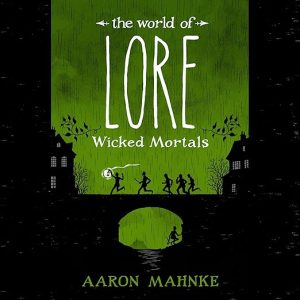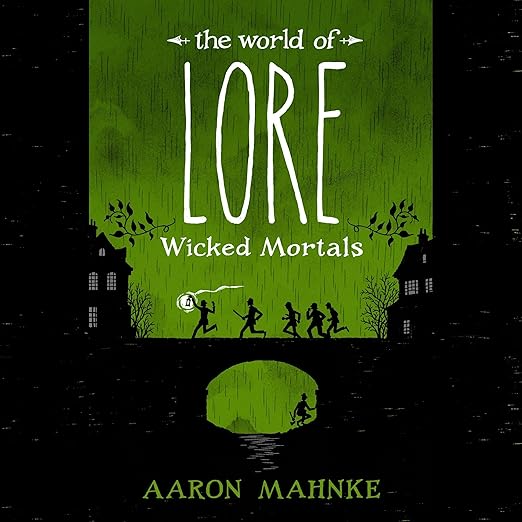
Aaron Mahnke has built the Lore brand on a specific skill: taking documented historical horrors and presenting them in a voice so measured and careful that the facts themselves become the terror. The World of Lore: Wicked Mortals, Book Two in the series and narrated by Mahnke himself, runs just over ten hours and collects accounts of real historical criminals and monsters - not supernatural creatures but human beings whose actual deeds were more unsettling than most invented ones. This audiobook expands on material from the Lore podcast and television series while including rare content not previously available in those formats.
The subjects Mahnke has selected for Wicked Mortals are worth knowing before you commit ten hours to them. William Brodie, the Edinburgh cabinetmaker who inspired Stevenson's Dr. Jekyll and Mr. Hyde, is here - the social respectability that concealed a criminal life is Mahnke's particular obsession, and Brodie is its perfect historical embodiment. H. H. Holmes, whose "Murder Castle" during Chicago's 1893 World's Fair remains one of the most documented accounts of serial predation in American history, takes up considerable space. And Bela Kiss, the Hungarian tinsmith who collected bodies in gasoline drums alongside an apparent interest in the occult, rounds out a gallery of subjects who defy the standard categories of criminal psychology.
Our Take on The World of Lore: Wicked Mortals
What distinguishes Mahnke's approach from straightforward true crime writing is his investment in historical context. Each subject arrives with enough surrounding social and cultural detail that their crimes become legible as products of specific times and places rather than as isolated aberrations. Brodie's story is partly a story about Edinburgh's two-tiered social world; Holmes's is partly a story about the Chicago World's Fair and the specific vulnerabilities of a city absorbing thousands of strangers. Mahnke does not use this context to excuse or explain away; he uses it to make the horror more precise. That precision is what elevates the book above the genre average.
The reviewer who noted that this book made them wonder what other "gems" they had missed by avoiding nonfiction is responding to exactly this quality. Mahnke writes about historical evil with the seriousness of a historian and the pacing instincts of a thriller writer, and the combination is unusual enough to convert readers who thought they had no appetite for the genre. The listener who came to the book without podcast experience and was "delighted" by what they found is confirming that the material works independently of the Lore brand familiarity - you do not need to be a fan to get value from this volume.
Why Listen to The World of Lore: Wicked Mortals
Mahnke self-narrating is not merely convenient; it is structurally important to how the material works. The Lore podcast voice - deliberate, slightly formal, with a tendency to pause before delivering the information that changes the context of everything you've just heard - is part of the brand's effect, and it carries into the long-form audio exactly as you'd hope. Listeners who discovered the book through the podcast will feel immediately at home; listeners who come to the audio fresh will understand within the first chapter why the narration style has generated such a loyal following. There is a quality of withholding in how Mahnke paces his reveals that is most effective when you can hear it rather than read it.
At ten hours and ten minutes, the book is longer than a Lore podcast season but shorter than most traditional audiobooks in the true crime genre. That length is appropriate for the depth of coverage: Mahnke gives each subject enough space to be understood as a human being before cataloging their crimes, which is both more disturbing and more instructive than a case-file approach would be. The illustrated volume described in the synopsis includes lavish imagery that the audio cannot reproduce, but the prose carries enough descriptive precision that the visual absence does not diminish the experience significantly.
What to Watch For in The World of Lore: Wicked Mortals
Mahnke's recurring preoccupation in this volume is the gap between public persona and private reality - the way extreme criminality often hid behind surfaces of social respectability, professional expertise, and community standing. Brodie's cabinetmaking reputation, Holmes's genial hotelier facade, Kiss's standing as a skilled tradesman: these public identities were not incidental to their crimes but active tools. Mahnke returns to this theme with enough frequency that it becomes the book's organizing thesis, and listeners who attend to it will find the individual case studies accumulating into a coherent argument about how evil conceals itself in familiar forms.
The series structure - Monstrous Creatures, Wicked Mortals, Dreadful Places - is worth knowing because it signals Mahnke's taxonomic intent. This volume is specifically about human evil rather than supernatural or environmental horror, and the distinction matters for listener expectations. The horrors here have documented court records and named victims. That specificity is part of what makes them more unsettling than invented monsters.
Who Should Listen to The World of Lore: Wicked Mortals
Lore podcast listeners are the obvious audience, but the book works completely independently of the podcast. True crime readers who want historical depth rather than contemporary case coverage will find Mahnke's approach distinctive - the cases predate modern forensics, which changes both their resolution and their horror. Listeners who found Wicked Mortals through the television adaptation of Lore should know the book is more detailed and more carefully paced than the episodic format allows. This is not recommended for listeners who need distance between horror content and sleep; Mahnke's measured delivery has a habit of lodging specific images in memory.
Do I need to have listened to Wicked Mortals' predecessor, Monstrous Creatures, before this audiobook?
No. Each volume in the World of Lore series covers a distinct category - Monstrous Creatures focuses on supernatural folklore, Wicked Mortals on real historical criminals, and Dreadful Places on haunted locations - and they function independently. You can start anywhere in the series without missing essential context.
How does this audiobook compare to the Lore podcast for listeners already familiar with Aaron Mahnke's work?
The book includes podcast-sourced episodes including 'Black Stockings,' 'Half-Hanged,' and 'The Castle,' as well as rare material not previously available on the podcast. For existing fans, it offers both familiar stories in Mahnke's full-length book treatment and new content. The tone and narration style are identical to the podcast.