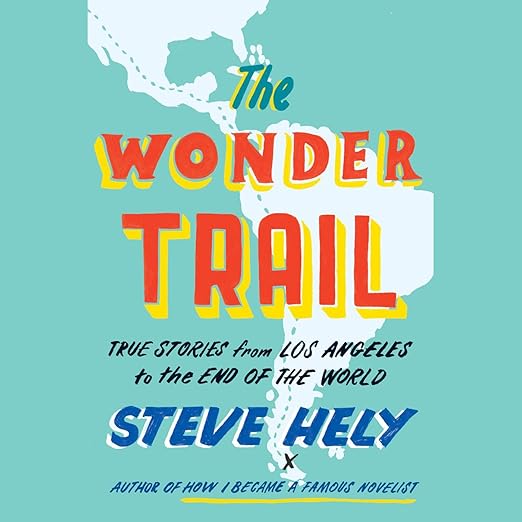
Quick Take
- Narration: Steve Hely narrates his own book, and that self-performance pays dividends – his comic timing is built into every sentence, and hearing him deliver it himself makes the absurdist observations land exactly as intended.
- Themes: travel as self-discovery, Latin American history and culture, humor as a lens for wonder
- Mood: Buoyant and rambunctious, occasionally reflective
- Verdict: If you want a travel book that reads like a friend’s very funny road trip journal with actual historical depth tucked inside, this delivers on that promise.
I put on The Wonder Trail during a stretch of particularly grey November mornings when I needed something that felt like moving. I was commuting on foot, which is about as far as you can get from Los Angeles to Patagonia, but Steve Hely has a gift for making you feel like a fellow traveler. By the time I reached the office, I’d vicariously crossed a Mexican border town and was halfway through Oaxacan street food anecdotes. The geography of the commute had completely disappeared.
Hely, a TV writer whose credits include The Office and American Dad, brings that world’s economy of observation to travel writing. The Wonder Trail covers the entire western spine of the Americas in 102 short chapters, which in audiobook form means you’re getting punchy, bite-sized dispatches from Mayan ruins, Andean cloud forests, the Panama Canal, the Galapagos, and the Atacama Desert. That structure either works brilliantly for you or it doesn’t, and reviews suggest some listeners wished for deeper dives. But for a first-person narrator who admits he’s collecting “stories, adventures, oddities, marvels, bits of history and biography, tales of weirdos, fun facts, and anything else interesting or illuminating,” the format is honest about what it is.
Our Take on The Wonder Trail
What surprised me most is how much genuine historical curiosity Hely brings alongside the comedy. One reviewer described it as landing “firmly in the center” of a Venn diagram of travel, humor, and memoir, and that’s accurate. When he passes through Cusco and Machu Picchu, or describes the Easter celebration of Popayan in Colombia, there’s actual research woven through the jokes. Hely is not just goofing around the Americas. He has done the reading, and the pop-history asides give the book more texture than the comedian-on-a-plane premise might suggest.
Where it’s less satisfying is in the emotional interiority. One reviewer noted a “heavy emphasis on psychological discovery” that felt at odds with the preference for physical travel. I’d put it differently: Hely occasionally reaches for profundity and doesn’t quite get there, and the book is far more successful when it stays in its comic lane. The moments of forced reflection feel like a TV writer who was told the book needed more “heart.” The moments of pure observation and absurdist reporting are where Hely excels without effort.
Why Listen to The Wonder Trail
The self-narration is a real asset here. Hely’s voice has a nerdy, slightly startled quality that fits the persona of someone who describes himself as hiding “moderately-badass adventurer in his skinny geek persona.” When he’s reading his own jokes, the beats are exactly right. A professional audiobook narrator would almost certainly flatten the jokes. Hearing the author navigate his own wit, even imperfectly, is the better choice for this material. His delivery during the more historical passages is less commanding, but those sections are mercifully short.
What to Watch For in The Wonder Trail
The 102-chapter structure means some destinations get only a few minutes of attention. Machu Picchu, the Amazon rainforest, Patagonia. These are places that deserve more than a quick sprint through Hely’s take on them, and occasionally the format makes the book feel like a listicle rather than a journey. If you come to this expecting the immersive slow travel of, say, Patrick Leigh Fermor or even Bill Bryson at his most invested, you’ll be frustrated. The chapters are intentionally breezy. That’s the design, not a flaw, but it’s worth knowing before you commit seven and a half hours.
One reviewer who remembered enjoying Hely’s earlier The Ridiculous Race found this one slightly less amusing, which tracks with a common pattern: solo travel books are harder to sustain than the competitive structure of a race narrative. When Hely is pushing against something, he’s funnier. The open road is occasionally too forgiving a premise for his comedic instincts.
Who Should Listen to The Wonder Trail
This works beautifully for people who have been to Latin America and want to see it reflected through a funny, curious lens. It also works for the self-described “landlocked dad” who needs a vicarious fix of adventure. If you have read Paul Theroux and found him too melancholy, or Bill Bryson and found him too sedate, Hely is the faster, sillier alternative. Listeners who want emotional depth, a single immersive narrative thread, or genuine hardship travel writing should look elsewhere. But as a companion for a commute, a long drive, or a slow weekend morning, The Wonder Trail delivers exactly what it promises.
Frequently Asked Questions
Does Hely’s TV writing background come through in the audiobook’s tone?
Very much so. The 102-chapter structure reads like a writers’ room pitch deck, with each chapter functioning as a quick, self-contained comedic bit. The jokes are tight and the observations come fast. If you enjoy the rhythm of scripted comedy, that pacing will feel natural. If you prefer sustained narrative travel writing, it may feel choppy.
Is prior knowledge of Latin American geography or history necessary to enjoy this?
Not at all. Hely writes as someone discovering these places alongside you, and the pop-history asides are designed to be accessible rather than academic. The book actually functions as a low-key introduction to the history of several countries, Mayan civilization, the Inca sites, the Panama Canal, without ever feeling like a lecture.
How does this compare to Hely’s earlier travel book, The Ridiculous Race?
Several reviewers who read both found The Ridiculous Race slightly funnier, largely because the competitive structure gave Hely more to push against. The Wonder Trail is a solo journey, which opens up more reflective passages and occasional tonal inconsistency. It’s still a strong audiobook, but readers coming from The Ridiculous Race should expect a slightly different register.
At just over seven and a half hours, is this a good commute listen or does it require more focused attention?
This is genuinely ideal commute material. The short chapters work in your favor when you’re starting and stopping, and the episodic structure means you won’t lose the thread if you’re distracted. Hely’s self-narration is conversational enough that it holds attention even at half focus. It’s not a book that rewards deep concentration so much as it rewards relaxed, ongoing company.