Quick Take
- Read by: Simon and Schuster Audio credits Michelle Williams alone, one reader with no archival material, music or additional performers listed anywhere on the record.
- At its heart: A life narrated by other people, celebrity as machinery, family and control, reclaiming a first-person account
- Vibe: Plain-spoken and direct, an afternoon-length account rather than a reckoning
- Short version: A short, candid memoir that earns its afternoon, provided you want the experience recounted rather than the events documented.
Foil stamping, shipping speed and the material of an outer cover: that is what buyers keep returning to grade on this page. An October 2023 entry praises the rose and purple foil and expects the book to look good on a shelf. Another, filed from Turkey in March 2026, thanks the seller for fast delivery and finds the outer cover material odd, noting that this is the publisher's doing rather than the seller's. The audiobook underneath runs five hours and thirty-one minutes, read by Michelle Williams.
An Actor Reads Where Spears Doesn't
Bridget, writing six days after publication, filed the most useful three stars I have read on a celebrity memoir. Neither a fan nor a detractor, and a regular reader of memoirs, that entry reports a quick and easy read, short chapters, prose pitched at an elementary level, and a book that seems written in Spears's own words with help from somebody who knows how to write while still letting her do what she wants with it. Those observations are all about sentence-level texture, which matters more in audio, not less.
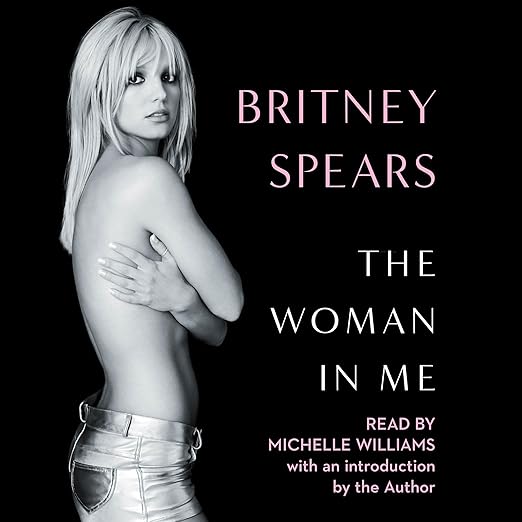
Michelle Williams is the reader, and Britney Spears is not. On a memoir sold as a woman finally speaking for herself, that is a significant structural decision, and the record states it without a word of comment. An actor performing a first-person account of losing control over your own voice is either the most pointed casting available or a straightforward practical arrangement, and the page gives you nothing to decide which. Check the credit before assuming a celebrity memoir means the celebrity reading.
Five and a half hours is short, and the shortness is the point. One quoted line in the description calls the book designed to be read in one sitting, which was a compliment paid to the printed edition and becomes a literal description of the recording: this is an afternoon, beginning to end. The brevity also tells you what the book is not, which is a comprehensive account of a career or a chronology of a legal fight.
Reception Sold Instead of Any Real Content
Bryan, writing at the end of December 2025, catches what separates this from its genre. It does not feel like a typical celebrity memoir, that entry says, it feels like somebody finally telling her story in her own words: honest, raw and very human, emotional and eye-opening and sometimes hard to take, and you come out of it seeing both her life and her music differently. That last clause is the strongest argument anybody has made for spending an afternoon here.
Blurbs are what the description consists of, almost entirely. Best-of-the-year selections from six named publications and an unspecified more, a Goodreads award, three million copies, and adjectives borrowed from four outlets: a miracle, powerful, radiant, poignant. What the copy never supplies is one sentence describing what happens inside the book. You are being sold reception rather than content, which is normal for a title this famous and still leaves a newcomer guessing at the period covered.
Memoir is the form audio serves best, and brevity helps it along. Five and a half hours is short enough to finish before the thread cools, which matters for a book whose force is cumulative rather than structural: the effect comes from hearing one person account for years of her life in sequence, without the option of skipping ahead to the episodes you already read about in the press. The format removes that temptation entirely.
Fifty-Two Ratings, Zero Mentions of the Voice
Ana-Maria Turdean, writing in February 2026, grew up with the music and came for the life behind it, confirms that the book covers Spears's story from childhood onward, and reports being unable to stop reading once she started. Note the verb. That entry, like most of the column, describes an experience with a printed book while sitting under a listing that sells a recording, and the distinction matters when you are judging a purchase from an average.
Physical objects get graded three times in five here, page layout once, and the act of reading once. Not a single entry mentions the reading, the voice, or how the recording actually sounds. Fifty-two ratings sit on top of that column, pooled across formats, so the 4.4 you are looking at is a verdict on a book rather than on a recording of one.
Fifty-two ratings spread across two and a half years is a thin column for a memoir the copy says has sold more than three million copies, and the gap tells you this listing is not where the audience landed. Whatever consensus exists about the book formed somewhere else entirely. Use the page for the credit line and the runtime, and take your sense of the memoir from the coverage the description spends its full length quoting.
A First-Person Feel Without New Revelation
Voice is what this offers rather than revelation. Anyone who followed the public story already knows its outline, and what an audio memoir adds is a first-person account of how those years felt from the inside rather than from the coverage. The runtime makes it an easy commitment, no longer than two films, and the material never asks you to hold a structure in your head while you listen.
Weigh it carefully if the performance has to be the point, since the credit belongs to an actor rather than to the author and the page offers nothing on how the reading lands. Anyone hoping for a legal chronology, a discography or an account of industry machinery will find something more personal and much less documentary. As a portrait of having your own story told by everybody else, an afternoon is a small price to pay.
Is the 4.4 on this listing a fair reflection of the written reviews?
The five visible grades run five, four, five, three and five, which average out at exactly 4.4, the same figure the counter shows across fifty-two ratings. Coincidence rather than proof, but it does mean the written column is at least representative of the number sitting above it.
How long is The Woman in Me audiobook?
Just over five and a half hours, published by Simon and Schuster Audio on October 24, 2023. That is short for a memoir, roughly the length of two feature films, and it makes this one of the few celebrity memoirs you can reasonably finish inside a single day.
Would this audiobook work for somebody who does not follow the music?
The description sells a first-person account rather than a music book, and never promises studio history or discography detail. Somebody with no attachment to the songs still gets a memoir about family, work and control, though the emotional charge lands harder when the public version of the story is familiar.