Quick Take
- Narration: Author-narrated by Angela Leslee, the performance carries the intimacy and occasional rawness of someone telling their own story rather than performing one.
- Themes: Solitude and self-discovery, the Camino de Santiago as crucible, letting go of controlling narratives
- Mood: Open-hearted, funny in places, genuinely honest about pain
- Verdict: An unpretentious Camino memoir with more emotional honesty than most of the genre, particularly valuable for those planning or dreaming of walking the route solo.
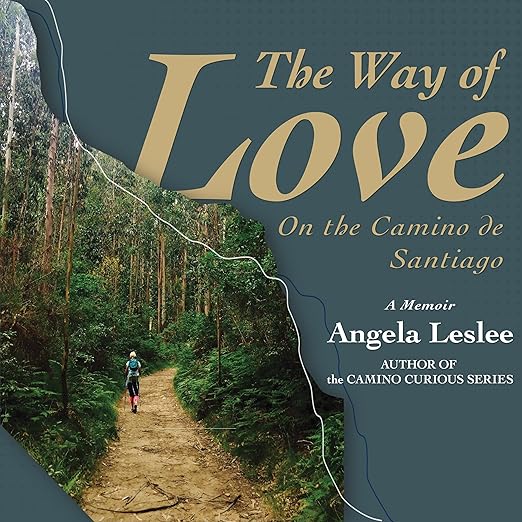
The Camino de Santiago has generated its own mini-industry of memoirs, most of them following a recognizable shape: resistance, revelation, transformation, gratitude. I have listened to several of them. Angela Leslee’s account of walking the full 500-mile French route in 2016 largely follows that shape too, but she earns it in ways that the more polished Camino narratives sometimes do not. What separates The Way of Love is a quality that reviewers consistently describe as honesty, the willingness to document the days when she wanted to quit, the moments of humiliation and fear, the cherished beliefs that the route dismantled one by one.
Leslee is not a professional writer or a journalist. She is a woman who walked the Camino alone as a more-or-less deliberate act of confrontation with her own fears, and who then wrote down what happened. The book was self-published and self-narrated, and both qualities show in ways that are ultimately assets rather than limitations. What you lose in editorial polish you gain in authentic voice, and the Camino literature that tends to last is the kind that feels like it was written to understand the experience rather than to sell it.
Our Take on The Way of Love
The specific fears Leslee confronts are worth noting because they give the book its practical stakes. She is walking alone in a foreign country, a woman of what she and reviewers describe as older age, navigating both the physical realities of the route and the psychological territory of solitude extended over forty days and 500 miles. The luxury of time she describes, the way the Camino’s enforced slowness creates space for a long look at one’s own assumptions, is something the book conveys credibly rather than asserting in the language of self-help aspiration.
One reviewer who had also walked the Camino described recognizing the physical realities precisely: the predawn starts before sunrise when the yellow street lamps are still glowing, the pain that becomes a constant companion, the particular texture of encountering the same pilgrims repeatedly across hundreds of miles. That specificity is where the memoir genre either delivers or doesn’t, and Leslee delivers it. Her account is not a highlight reel. She includes the failed days and the physical misery alongside the scenery and the epiphanies.
Why Listen to The Way of Love
Author narration always raises the question of whether the writer can actually perform their own material. Leslee can. The recording is not a professional studio production, but her voice carries the material with the naturalness that a hired narrator reading someone else’s words cannot always replicate. One reviewer described her unique turn of phrase and outrageous humor as part of what makes the account worth revisiting, and these qualities come through in her own delivery in ways that might have been softened or flattened by someone else’s interpretation.
The book is also unusually useful as a practical companion for people planning to walk the Camino. Leslee is specific about logistics, about the rhythm of the days, about what prepared her and what blindsided her. Multiple reviewers report having read or listened to it before their own Camino, finding it both inspirational and genuinely informative. One wrote directly to Leslee to say she planned to follow the advice about being on the trail before sunrise, a detail specific enough to be actionable. For a memoir to function as a practical guide without losing its emotional core is a more difficult trick than it looks.
What to Watch For in The Way of Love
The book is self-published and the prose occasionally reflects that. Leslee’s writing is clear and direct rather than literary, and the audio production quality is a step below what major publishing houses produce. If your tolerance for memoir depends heavily on crafted sentences and tight editorial structure, The Way of Love will feel rougher than the polished end of the genre.
The spiritual discovery that Leslee describes arriving at by the end of the journey is also fairly consistent with the arc that characterizes most Camino narratives. She reaches a surprising discovery, as the synopsis puts it, but readers who have spent time with this genre will likely recognize the shape of the revelation before it arrives. That does not diminish the honesty with which she reaches it, but it does mean the book works better as personal testimony than as a structurally inventive memoir.
Who Should Listen to The Way of Love
Anyone planning a solo Camino, particularly women considering the route alone, will find this memoir practically and emotionally useful in ways that glossier accounts are not. Listeners drawn to travel memoirs about walking pilgrimage routes, or more broadly to accounts of middle-life reassessment through radical physical challenge, will find Leslee’s honesty more sustaining than inspirational distance. For readers who want Camino testimony from outside the professional author class, this is one of the most authentic accounts available in audio.
Very polished prose stylists and readers who want significant literary ambition from their travel writing should look elsewhere. But for the experience of walking alongside someone genuinely grappling with what 500 miles of solitude teaches, The Way of Love earns its following.
Frequently Asked Questions
Is The Way of Love useful for someone actually planning to walk the Camino Frances, or is it more of a spiritual memoir?
Both. Leslee is specific enough about the logistics and physical realities of the route that multiple readers have used it as pre-walk preparation, and at least one reader wrote to her about applying specific practical advice from the book on their own Camino. The spiritual and emotional arc is the core of the narrative, but the ground-level specificity about pacing, the rhythm of the days, and what to expect from extended solitude makes it genuinely useful as a preparation resource.
Does the author-narrated format work here, or would the book benefit from a professional narrator?
The self-narration works well for this particular material. Leslee’s voice carries her own humor and vulnerability more naturally than a hired narrator reading someone else’s words typically can. The production quality is not at the level of major publishing house releases, which is worth knowing in advance, but the intimacy of hearing the writer’s own voice reading her own account is an asset that outweighs the production limitation for most listeners.
How does The Way of Love compare to Cheryl Strayed’s Wild as a walking-and-self-discovery memoir?
Both are accounts of women walking long routes alone as acts of deliberate confrontation with personal limits. Wild is more literarily ambitious and operates on a larger emotional scale. The Way of Love is less polished but more specifically focused on the Camino experience, with more practical texture about the route itself. Strayed is a professional author; Leslee is not, and that difference shows in the prose. For Camino-specific preparation and testimony, Leslee is more directly useful.
The synopsis mentions a ‘surprising discovery.’ Does the ending feel earned, or does it follow the standard transformation arc?
The ending follows a recognizable Camino memoir arc, and readers experienced with the genre will anticipate its shape. What Leslee earns through the preceding forty days of documented difficulty is a sincerity in arriving there that more polished and performative accounts sometimes lack. Whether the discovery surprises depends largely on how much Camino literature you have already read, but the honesty of the journey toward it is what gives the conclusion its weight.