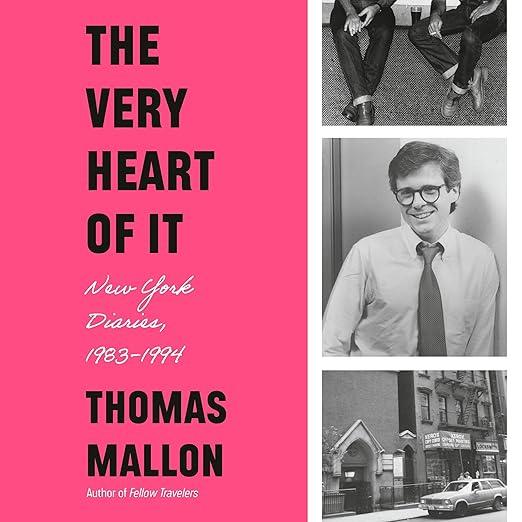
Diaries are the least edited thing a writer produces, which makes an audiobook of one a peculiar object: a man reading aloud, decades later, sentences he wrote with no audience in mind. Thomas Mallon occupies both the author and the narrator field on this record, and Random House Audio published the result in June 2025 at twenty-one hours. The entries begin in 1983, when Mallon was an unknown literature professor at Vassar, traveling in from Manhattan and reviewing books to cover the bills, and one five-star dates the span as running from that year through to 1994.
No Chapter List to Reach the Summer of 1987
What gives the book its charge is timing rather than intimacy. Mallon was keeping a daily record precisely as the AIDS epidemic surged through the city he was trying to build a life in, and the description does not soften what that meant: parties, art, and sex on one side, and on the other a lover lost to the illness and the constant awareness of his own exposure. Because it is a diary, none of that arrives shaped into a narrative of the era. It arrives as it happened, mixed in with the reviewing work, the ambitions, and the gossip, which is a harder and more honest reading experience.
Browsing is the one real cost here, and it is worth naming before anything else. A printed diary is a browsable object: you find a year, drop into a month, skip a season. A recording this long is linear by nature, and the record posts no chapter list to navigate by, so a listener who wants the summer of 1987 has no reliable way to reach it. Play it start to finish and it works. Treat it as a reference to dip into and the format will fight you the whole way.
The Terrifyingly Personal Threat HIV Represented
A five-star from June 2025 identifies the genuine surprise here: the young man keeping the journal writes as well as the established essayist and novelist did later, and the prose is already funny, exact, and thoughtful before anyone was watching. That response also calls it the longest book of the author's career by a considerable margin, and treats the length as a gift rather than an obstacle for readers who already know the novels. Readers who came to Mallon through the fiction will find the raw material of that voice being formed in real time.
The historical testimony is the other reason to spend the time. A January 2026 five-star, which discloses upfront that its author was Mallon's student at Vassar and even claims credit for one passage, describes the book as full of wit and warmth, populated with literary and political figures, and never dull. The same response identifies what most matters: the terrifyingly personal threat that HIV represented for every gay man in the eighties, and the experience of watching friends and lovers fall while carrying on with an ordinary working life.
Around that runs the professional story, which is more entertaining than it has any right to be. A debut book brings a first taste of success, the author becomes a fixture of the New York literary scene, an editorship at GQ arrives, and the daily record catches the whole ascent from the inside without the retrospective tidying a memoir would apply. The eventual romantic happiness the description promises is earned across the same pages rather than announced.
Twenty-Four Pages an Hour, Complete and Unabridged
Not everyone finishes charmed. A two-star from January 2026 dismisses the whole thing as more than five hundred pages of self-indulgent claptrap, which is a fair description of what a diary risks being when the diarist is ambitious, well connected, and writing for himself. That page count is also useful in a way its author did not intend: five hundred plus pages across a twenty-one hour reading works out at roughly twenty-four pages an hour, which is the pace of a complete unabridged reading rather than a selection of excerpts. You are getting the whole book.
The more useful warning comes from a three-star filed in December 2025, which arrived hoping for clearer insight into the political challenges around AIDS in the eighties and came away describing a somewhat tedious diary. That is an expectation problem rather than a quality problem, and it is the most important thing a buyer can know here: this is a private daily record, not an account of the activism, the policy fights, or the movement. Two of the five written entries land below four stars, so the 4.2 average across forty-two grades is holding up a column with real dissent in it.
You Will Know Inside an Hour
Readers of Mallon's novels and essays are the core audience, and so is anyone with an appetite for New York literary life at the exact moment it collided with a health emergency. Listeners who enjoy diaries as a form, meaning readers who want the texture of ordinary days rather than a thesis, will get more here than anywhere else this year. The award attention the description cites, a New Yorker book of the year and a place among NPR's Books We Love, points at the same audience: people who read for company and voice rather than for argument.
You will know inside an hour whether the arrangement suits you. If the accumulation of dinners, reviews, deadlines, and encounters starts to feel like being handed somebody's calendar, twenty hours remain and the book will not change its method to accommodate you. If instead the ordinariness is what pulls, and the dread underneath it keeps surfacing without being explained, then the length becomes the point rather than the price.