- Voice: Genevieve Gaunt brings a genuine literary ear, she reviews books for The Spectator, to Emma's self-consciously written journal voice, treating it as composed prose rather than spoken dialogue.
- Big ideas: Victorian comedy of manners, epistolary journal format, eccentric found family
- Atmosphere: Wry, warm, and a little chaotic, built for episodic rather than binge listening
- Worth it?: A satisfying continuation for existing fans, but start with Volume 1 if you're new to Emma M. Lion's world.
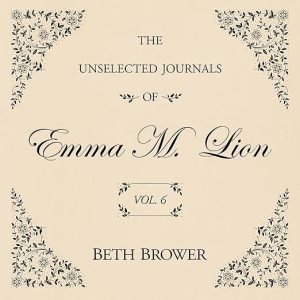
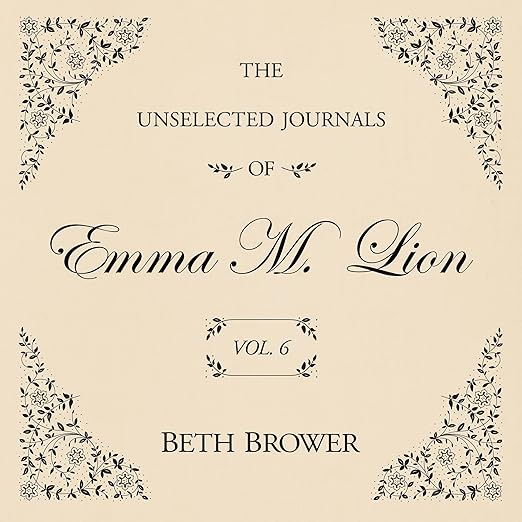
St. Crispian's, the London neighbourhood Emma M. Lion has spent five previous volumes defending, redecorating, and occasionally fleeing, is exactly where this sixth audiobook installment finds her again, and Beth Brower doesn't waste any time getting the chaos moving. The year is 1884, and Emma's plan for a charmed, studious existence lasts about as long as it takes her eccentric Cousin Archibald and formidable Aunt Eugenia to show up and dismantle it. I've followed this series volume by volume rather than in one sitting, which I think is the right way to experience it: Emma's Unselected Journals read like a friend's letters arriving in installments, not a novel built for a single binge.
Gaunt's Cambridge Double First Sharpens Her Ear
Six volumes in, the series' pleasures are exactly what they were at the start: Emma's voice is witty, self-aware, and just a little unreliable about her own motives, which makes her journal entries funnier than a straightforward diary would be. The synopsis promises delightful bedlam, and that framing holds up. Brower doesn't manufacture plot so much as let Emma's own eccentric orbit, Cousin Archibald's schemes, Aunt Eugenia's formidable disapproval, the odd denizens of St. Crispian's, generate its own low-grade chaos, and the pleasure is in how precisely Emma narrates that chaos rather than in what actually happens. This is a comedy of temperament and voice more than plot, closer in spirit to a Victorian comic diary than a conventional novel.
Genevieve Gaunt narrates, and her literary background shows in how she handles Emma's prose. Gaunt read English at Cambridge, graduating with a Double First, and reviews books for The Spectator alongside her acting work, which gives her a genuine critical ear for how a sentence is built, not just how a line reads aloud. That matters here because Emma's journal voice is self-consciously written, full of the kind of ornate, self-deprecating asides a real diarist might draft and redraft, and Gaunt performs it as composed prose rather than as spoken dialogue, exactly the right call for an epistolary comic voice like this one.
Six volumes is also a meaningful run for a comic series to sustain without losing its footing. Long-running comedy of this kind often either calcifies into repeating the same handful of beats or drifts away from what made the early entries work in the first place, and neither has happened here. Brower keeps introducing small variations, a new eccentric visitor, a fresh domestic crisis, without abandoning the tone that built the readership to begin with, a harder balancing act than it sounds for a series this dependent on one narrow, distinctive voice.
Emma Sits 'At the Top of a Fresh Month'
The production itself is a strong argument for the audio edition specifically. Tamsin Collison directs, a veteran audio director whose credited catalog runs past five hundred titles between audiobooks and dramas, and the recording was done at Strathmore Studios in London for Echo Point Books & Media. That kind of dedicated direction is unusual for a mid-series literary comedy this specific, and it shows in the pacing: comic timing in a text this dependent on rhythm and understatement needs a director as much as a narrator, and Collison's touch is audible in how cleanly Gaunt's line readings land.
Readers who already love this series say so with real specificity rather than vague praise. One reviewer opens her own review by quoting Emma directly, in Emma's own words from the book, 'I sit at the very top of a fresh month with a choice before me,' which is as good a sample of the voice as any plot summary could offer. Another reviewer, Erica Bass, singles out the supporting cast, writing simply that 'every character is interesting,' which tracks: Cousin Archibald and Aunt Eugenia both read as fully drawn comic types rather than functional foils for Emma's narration.
The title itself is worth pausing on. Calling these entries Unselected Journals rather than a memoir or a diary proper is a small, pointed joke: it implies an editor somewhere chose what to include and, more importantly, what to leave out, which lets Brower play with the idea of Emma curating her own image even while claiming total candor. That framing device gives Gaunt something specific to perform beyond comic timing alone, a narrator who is aware she's being read, deciding in real time how self-incriminating to actually be, which is a subtler note than most comic audiobooks ask a narrator to hit.
More Sketch Than Scene, by Design
This is book six, not an entry point, and the audiobook doesn't pause to re-explain who Cousin Archibald is or why Aunt Eugenia's disapproval carries the weight it does. New listeners dropped in here will follow the individual scenes fine, since each volume's chapters are fairly self-contained, but they'll miss the accumulated affection the series depends on for its emotional beats to land. The rating here comes from a genuinely small sample, just a handful of listeners so far on this specific volume, worth knowing since it reflects a devoted niche readership rather than a broad audience verdict.
Worth noting for anyone curious about the print companion: the audiobook purchase includes an accompanying PDF in your library alongside the audio, useful for a text this fond of wordplay and formal Victorian phrasing that some listeners may want to see written out.
Pacing is also worth flagging honestly. Because the series leans on accumulated incident rather than a driving plot, individual chapters can feel slight in isolation, more sketch than scene, and a listener expecting a clear throughline building toward a climax by the end of the volume should recalibrate toward episodic pleasure instead. That's a feature of the format Brower chose, an ongoing journal rather than a three-act novel, but it's worth naming plainly rather than letting a first-time listener assume something has gone missing structurally.
Austen-Adjacent Fans Will Find a New Favorite
Fans already six books deep into Emma's world need no convincing, and this volume gives them more of exactly what's kept them coming back: sharp voice, a well-drawn eccentric household, and a narrator who treats the comic prose with real literary seriousness. Anyone who enjoys Austen-adjacent comedy of manners, or the epistolary rhythms of a Provincial Lady-style diary, will likely find a new favorite here even without having read the earlier volumes, though the fuller payoff comes with the history behind it.
If you haven't read the first five volumes, start there instead of here. Jumping in at book six means missing the slow accumulation of affection for this specific cast that makes Archibald's antics and Eugenia's disapproval land as comedy rather than confusion, and a series built this much on voice and continuity rewards patience with the earlier installments first.
Do I need to have listened to the first five Unselected Journals of Emma M. Lion audiobooks before starting Vol. 6?
Yes, ideally. Each volume's individual scenes are fairly self-contained, but the affection for Cousin Archibald, Aunt Eugenia, and the St. Crispian's cast builds cumulatively, and Vol. 6 doesn't pause to reintroduce anyone.
Does Genevieve Gaunt narrate the entire Unselected Journals of Emma M. Lion series, or just this volume?
She narrates this installment, and her Cambridge-trained literary background, she also reviews books for The Spectator, suits the series' self-consciously written journal voice particularly well.
Is the audiobook edition of Vol. 6 accompanied by any bonus material?
Yes. Purchasing this audiobook includes a companion PDF available alongside the audio in your library, a nice option for a text this fond of formal Victorian phrasing and wordplay.
How much comedy, and how much genuine plot, is actually in this audiobook?
More comic voice than plot. Beth Brower builds the book around Emma's eccentric orbit and her own narration of it rather than a driving storyline, closer to a comic diary than a conventional novel with rising stakes.