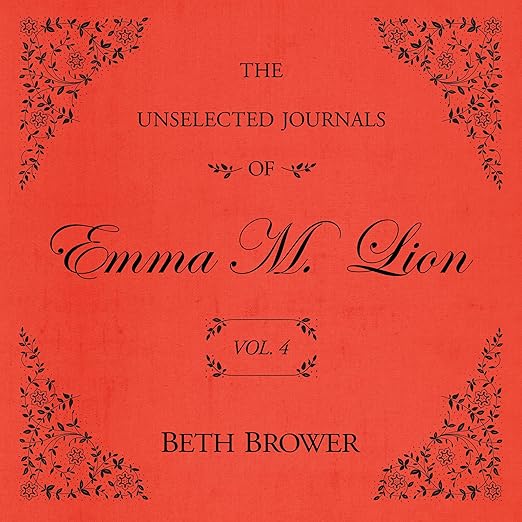
Quick Take
- Narration: Genevieve Gaunt is not merely a good fit for Emma, she is the reason the series works as an audiobook experience. Her Cambridge-educated, theatrically trained delivery gives Emma’s voice the particular texture of Victorian wit without making it feel like a performance.
- Themes: Domestic absurdity, the comedy of eccentric relatives, the pleasures of a life that refuses to be governed
- Mood: Warm and gently meandering, like a long afternoon in a comfortable room
- Verdict: Volume 4 sustains everything that made the earlier entries work, Gaunt’s narration and Brower’s prose are in perfect alignment, and the series continues to earn its devoted following.
I picked up the first Emma M. Lion volume on a recommendation I half-remembered and returned to it on a Tuesday evening when everything felt slightly too large. By the end of that session I had fallen into the particular contentment that only a few audiobook series manage to produce: the feeling that you have found somewhere genuinely good to spend an hour, and that the hour has asked nothing of you except attention. Volume 4 returned me to that feeling with no diminishment.
The premise of the series is simple enough to summarize but difficult to explain in a way that conveys why it works. It is 1883. Emma M. Lion, who narrates her own journals in the first person, with the slightly self-incriminating honesty of someone who has decided there is no point in pretending to be better than she is, has returned to St. Crispian’s, a London neighborhood populated by eccentrics she did not choose and cannot quite escape. Her plans for a studious and charming life are immediately sabotaged by Cousin Archibald, Aunt Eugenia, and the assorted inhabitants of Lapis Lazuli House. Things happen. Emma documents them with what the synopsis calls wit and a sideways amusement, which is exactly right.
The Architecture of Comic Understatement
Beth Brower’s primary tool is withholding. Emma notices things she declines to fully comment on, allows events to speak for themselves with minimal framing, and reserves her actual opinions for moments when they have accumulated enough pressure to be worth delivering. This is a technique borrowed from the great Victorian comedy writers, there are traces of Jerome K. Jerome, hints of E.F. Benson, and a structural debt to the diary-as-comic-form tradition that includes Diary of a Nobody, but Brower makes it feel contemporary rather than pastiche. Emma is not imitating a Victorian sensibility; she inhabits one, which is different.
The result is a series that reader Bridget describes as a meandering path and notes that it is just nice to spend time here. That is a precise description. This is not a plot-driven series. Events occur, complications arise, Archibald is reliably impossible, Aunt Eugenia maintains her formidable opinions about everything, and Emma documents the resulting friction with affectionate despair. If you come wanting momentum, this will frustrate you. If you come wanting company, it will deliver exactly that.
Genevieve Gaunt and the Question of Voice
The narrator credit here deserves more than passing mention. Genevieve Gaunt, who began her acting career as Pansy Parkinson in Harry Potter and the Prisoner of Azkaban, read English at Cambridge with a Double First, and has since built a substantial career across stage, audiobooks, and radio, brings to Emma M. Lion a quality that most first-person narrators never quite achieve: she makes you believe the character is speaking directly to you, in real time, slightly surprised by what has just happened.
The comedic timing is not imposed on the material. It emerges from Gaunt’s clear understanding of where the jokes live in Brower’s prose, and specifically her sense of when to pause. Emma’s humor is frequently a matter of what she says second rather than first, the punchline is often the understatement that follows a straight description of something absurd. Gaunt knows this and performs accordingly. The result is a narration that enhances Brower’s text rather than simply conveying it.
What the PDF Companion Adds and Whether You Need It
The synopsis notes that a companion PDF is available in the Audible Library alongside the audio. For a series like this, where the pleasures are primarily linguistic and the visual material would be supplemental rather than essential, the PDF is a nice addition rather than a critical one. Pure audio listeners will not find their experience diminished by its absence.
Who Should Listen / Who Should Skip
Listen to this if you like Regency and Victorian comic fiction, if you have enjoyed earlier volumes in this series, or if you are drawn to audiobooks where the narrator’s voice is itself a significant part of the pleasure. Skip this if you need plot to feel like a story is moving, Emma’s journals offer atmosphere and character above all else. Also: start at Volume 1. The accumulated familiarity with Emma’s situation and the recurring characters is load-bearing for how funny the later entries are.
Frequently Asked Questions
Can Volume 4 be listened to without the previous entries, or is this a series that must be started from Volume 1?
Start at Volume 1. The series builds its comic effect through accumulated familiarity with Emma, her household, and her recurring tormentors. Volume 4 assumes that investment is already in place.
What kind of humor does Emma M. Lion use, is it broad comedy or something more subtle?
It is subtle: dry understatement, strategic withholding, and a first-person narrator who documents absurdity with affectionate resignation. If you enjoy E.F. Benson, Jerome K. Jerome, or Diary of a Nobody, the register will feel familiar.
Does Genevieve Gaunt’s narration change across the volumes, or is it consistent throughout the series?
Gaunt has narrated the series consistently, and her performance deepens rather than changes, the familiarity she brings to Emma in later volumes reflects genuine accumulated understanding of the character.
Is there a romantic subplot in Volume 4, and does it develop meaningfully from earlier volumes?
The question of who Emma ends up with is a slow-burning thread across the series. Volume 4 continues to develop it without resolving it, the series is not rushing toward that answer, which is either a feature or a frustration depending on your patience for delayed resolutions.