- Voice: Genevieve Gaunt brings genuine literary polish and a composed, written-not-spoken quality to Emma's Victorian journal voice.
- Big ideas: Victorian comedy of manners, eccentric family dynamics, a witty unreliable narrator.
- Atmosphere: Light, witty, warmly comic.
- Worth it?: A short, delightful continuation of the series that rewards fans of Austen-and-Wodehouse-style comedy.
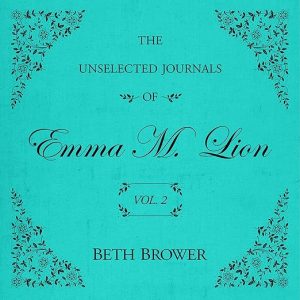
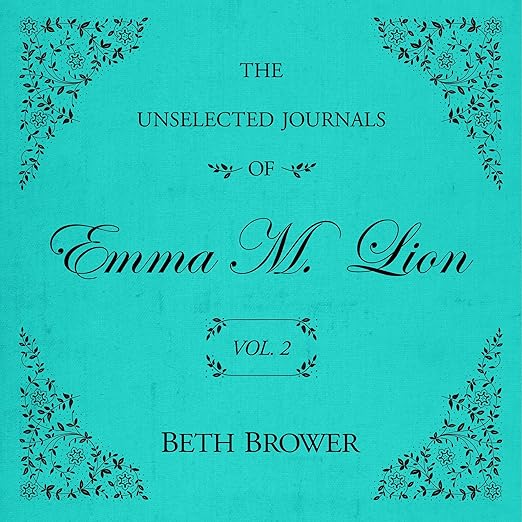
Beth Brower's Emma M. Lion is one of those rare comic narrators who is funniest exactly when she is least aware of it, and this second volume of her journals confirms the character only gets richer with a return trip. The Unselected Journals of Emma M. Lion: Vol. 2 picks up in 1883 as Emma returns to her London neighborhood of St. Crispian's, where her plans for a quiet, studious life are immediately derailed by Cousin Archibald, Aunt Eugenia, and the neighborhood's assorted odd characters. At four hours and thirty-one minutes, narrated by Genevieve Gaunt, this audiobook is short enough to finish in an afternoon and sharp enough to make you want to start it again immediately.
Carla Terry Enjoyed This More Than the First
The synopsis opens on a scene that sets the book's whole register: Emma at her desk with tea and an open window, quietly narrating the moment 'The Tenant' enters his garret next door, which tells you everything about how closely this book pays attention to small, mundane domestic detail and finds comedy inside it rather than reaching for broader farce. Brower's prose has drawn comparisons to Jane Austen, Oscar Wilde, P.G. Wodehouse, and L.M. Montgomery directly in the book's own marketing copy, and Vol. 2 earns that company specifically through Emma's narrative voice: self-aware, self-incriminating by her own admission, and never quite in on her own best jokes.
Reviewer Carla Terry captured the volume's forward momentum simply: 'I enjoyed this volume so much more than the first! It seems to be getting much more interesting! Funny, charming, very entertaining!' That sense of escalation matters for a journal-format series like this one, where the risk is always that later volumes simply repeat the charm of the first without building anything new. Vol. 2's returning cast, Cousin Archibald's eccentricity and Aunt Eugenia's formidable presence chief among them, suggests Brower is using this installment to deepen relationships already established rather than simply reintroducing the same jokes for a new audience.
St. Crispian's itself functions almost as a character in the series, a fictional London neighborhood specific enough in its social texture, the tenant next door, the assorted odd denizens the synopsis mentions, that it reads as lived-in rather than a generic period backdrop. Brower's decision to keep the entire series confined to this one small patch of 1883 London, rather than sending Emma out into wider Victorian society, concentrates the comedy: repeated proximity to the same eccentric neighbors across volumes lets small character traits compound into genuinely funny running bits rather than one-off jokes that vanish after a single chapter.
Gaunt Has Narrated Fleming Before This
Genevieve Gaunt is exceptional casting for this material, and not just because of her range as a performer. A Londoner born and bred who read English at Cambridge and graduated with a Double First, Gaunt brings genuine literary fluency to a text that is, in essence, a piece of stylized Victorian prose performing as a spoken journal. She treats Emma's voice as composed and written rather than casually spoken, which matches how a well-educated Victorian woman like Emma would actually experience her own internal narration: self-conscious, a little performative, aware that she is telling a story even to herself.
Gaunt's own career adds unusual credibility to the casting: she played Pansy Parkinson in Harry Potter and the Prisoner of Azkaban, has narrated Ian Fleming's The Spy Who Loved Me, and reviews books for The Spectator when she isn't acting or narrating. Director Tamsin Collison, whose credits span more than five hundred audiobooks and dramas including a Thandiwe Newton reading of Tolstoy's War and Peace and a dramatisation of Mansfield Park, brings a directorial hand that shows in the production's polish; this was recorded at The Strathmore Studios and produced by Echo Point Books & Media, an independent bookseller in Brattleboro, Vermont, and that care is audible in how cleanly the comic timing lands.
Collison's own background as a lyricist and librettist, commissioned by companies including English National Opera and the Royal Opera House, brings an unusually literary, rhythm-conscious sensibility to directing spoken-word comedy specifically, evident in how naturally Gaunt's line readings land their punchlines without ever feeling rushed toward the next joke.
Angiegirl Fell 'Madly in Love' with an Earlier Book
At four and a half hours, this is a genuinely short listen, closer to a long novella than a full novel, and Emma's journal format means the book prioritizes voice and incident over plot momentum in the traditional sense. Listeners expecting a driving narrative arc with rising stakes should recalibrate: the pleasure here is episodic and observational, closer to spending time with a witty friend's diary than following a plotted story toward a single climax, which is either a feature or a real limitation depending entirely on what a listener wants from their comic fiction.
This is also, unambiguously, Volume 2 of an ongoing series, and while it works reasonably well without having heard Volume 1 first, reviewer Angiegirl's excitement, comparing her feelings to falling 'madly in love with The Q' from an earlier Brower series, suggests real cumulative pleasure builds for listeners who start from the beginning. New listeners jumping in here specifically for Vol. 2 will follow the plot fine but will miss some of the character groundwork already laid with Cousin Archibald and Aunt Eugenia back in the first volume.
Worth knowing before purchase: this audiobook comes with an accompanying PDF available alongside the audio in a listener's library, a detail worth factoring in for anyone who likes to follow along with reference material specific to the physical edition, though the audio performance itself stands entirely on its own without requiring that companion document.
Kris Calls Them 'The Most Delightful Characters'
Fans of Wodehouse's Jeeves stories, Austen's social comedy, or the specific pleasure of a witty, unreliable first-person narrator documenting her own embarrassments will find Emma M. Lion an easy, immediate fit. Reviewer Kris, who has followed the series across its first several volumes, described meeting 'the most delightful characters that I don't want to stop reading about,' and that kind of immersive attachment to Emma and her circle, more than any single plot event, is what the series is really selling to a new listener.
It is also a strong pick for listeners who specifically want short, well-produced literary audio for a single afternoon or a short trip, since the runtime and the self-contained journal format make it easy to finish in one or two sittings without an unfinished commitment sitting on the shelf afterward.
Listeners who need a strong plot engine, mystery, romance, or action driving every chapter forward should look elsewhere; Emma M. Lion's charm is entirely in voice and observation, and anyone who finds Victorian domestic comedy slow rather than delightful will likely find four and a half hours of it a poor match regardless of how well made the production is.
Questions Listeners Ask
Is Genevieve Gaunt's narration a good fit for this audiobook's Victorian journal format?
Yes. Her Cambridge English background and stage experience show in how she treats Emma's voice as composed, written prose rather than casual speech, matching how the character would actually experience her own journaling.
Is The Unselected Journals of Emma M. Lion: Vol. 2 audiobook more plot-driven or a character piece?
It's a character piece. The pleasure is in Emma's voice and her observations about the eccentric people around her rather than a tightly plotted, rising-stakes narrative.