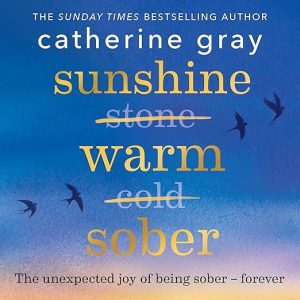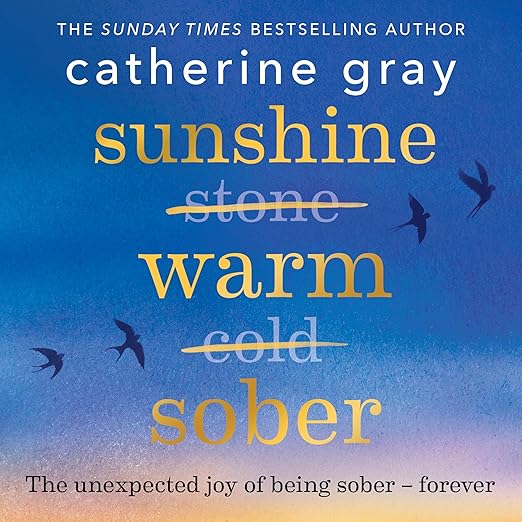
Catherine Gray calls herself a 'retired wreckhead' early in this audiobook, and that self-description tells you everything about the tone she's going for. This is not a hushed, reverent recovery memoir. It's Gray's follow-up to her surprise bestselling book of the same core title, and the synopsis attached to this listing describes it explicitly as a sequel, now in her ninth year sober, turning her attention from her own drinking story toward the bigger, messier questions surrounding it. I listened to this one over several mornings on the walk to the train, which felt fitting given how much of Gray's writing here is about rebuilding ordinary routines without alcohol propping them up.
A Retired Wreckhead Bringing in Experts
What makes this audiobook work is Gray's refusal to let her own experience stand in for everyone's. She brings in experts and case studies rather than relying purely on her own nine years of sobriety, and the shift shows in how she handles a question like whether alcohol functions as a kind of parenting aid for exhausted parents, or why cocaine and drinking so often travel together. Reviewer Jeni B. describes her as telling her story 'in real time, no filters,' which is a fair description of the read overall. Gray does not perform recovery wisdom from some settled distance. She's still figuring pieces of it out in front of you, and the audiobook is more interesting for it.
The case-study material is where the book earns the 'gritty' half of its own self-description. Gray doesn't just ask whether someone can be 'once an addict, always an addict,' she sits with how unsatisfying most answers to that question actually are. One reviewer, Cricket, put it bluntly: this is 'less a memoir, and more about the facts concerning alcohol addiction,' a reasonable way to set expectations before pressing play. If you came for a linear personal story with a beginning, crisis, and resolution, you'll find one, but it keeps getting interrupted by research, expert interviews, and Gray's own second-guessing, the more honest structure for a subject this messy.
A wider cultural argument runs underneath the personal material too: Gray pushes back directly against what she calls the 'propaganda' around drinking, the idea that a sober life is inherently duller or colder than a drinking one. She doesn't argue this in the abstract. She builds her case through the specific, sometimes uncomfortable questions the synopsis leads with, treating alcohol's social permission structures around work, parenting, and dating as things worth interrogating rather than accepting as background noise. That argument gives the book a sharper edge than a typical sobriety memoir, closer to cultural criticism than confession.
Gray Narrating the Specific Cadence of 'No Bloody Ta'
Gray narrating her own material is close to essential here. A hired narrator could deliver the jokes about being a 'boozehound' or being sober but not 'stony,' but they couldn't replicate the specific cadence of someone who has actually lived inside both identities, drinker and sober person, and knows exactly where the punchlines and the real fear sit next to each other. Her comic timing around lines like 'no bloody ta' depends on a British directness that reads as performance-adjacent on the page and lands as pure personality in her own voice.
The audiobook format also suits how Gray structures her argument, moving briskly between a provocative question, a piece of research, and a personal admission, without the visual breathing room a printed page gives a reader to pause and reflect. Listened to in sequence, that briskness becomes propulsive rather than exhausting. Kindle Customer's five-star review calls the author 'genuine' and someone who 'really knows this subject,' and that credibility comes through most clearly in audio, where hesitations, emphasis, and the occasional self-deprecating laugh do work that print simply can't.
Nine years into sobriety, Gray also has enough distance from her own drinking story to be genuinely funny about aspects of it that a newly sober narrator couldn't touch yet. The audiobook's early stretch, riffing on how 'stone cold sober' sounds like a threat rather than an achievable, even enjoyable state, sets a self-aware tone that carries through the heavier chapters later. That balance of humor and real stakes is difficult to fake in performance, and here it clearly isn't being faked.
The Same Title as Her 2017 Debut
This audiobook carries the exact same title, 'The Unexpected Joy of Being Sober,' as Gray's original 2017 breakout memoir, even though the synopsis attached to this specific listing describes a follow-up work written from her ninth sober year. That's worth pausing on before you buy: if you're looking for her very first sobriety memoir, the one that made her name, double check the listing details and sample the audio before committing, since the title alone won't tell you which book you're actually getting.
Structurally, this is closer to a hybrid of memoir and journalism than a straight narrative memoir, and listeners expecting a chronological arc from rock bottom to redemption may find the case-study chapters and expert interviews slow the momentum. It rewards listeners who already know the shape of a sobriety story and want the harder follow-up questions instead: how do you actually stay safe, from other people and from yourself, once the crisis chapter is behind you. That's a narrower promise than the first book made, and a genuinely different kind of listen.
The rating base here, 4.5 stars across 746 reviews, is a meaningfully larger sample than most memoirs in this category get, and the specific praise pattern, readers calling out the research alongside the personal writing, matches what the audiobook itself delivers, a reassuring sign for anyone still deciding whether to spend a credit on it.
Listeners should also expect Gray's specifically British vocabulary and turns of phrase woven throughout without translation or softening for an international audience, which adds real personality but occasionally requires a moment of context-guessing for listeners outside the UK.
Company Past the White-Knuckle Early Months
This audiobook is best suited to listeners already sober, or seriously considering it, who want company past the white-knuckle early months, the ones the original memoir mostly covers. It's also a strong pick for anyone whose interest in sobriety culture is more analytical than personal, since Gray brings real research alongside the memoir voice, addressing parenting, safety, and identity questions that a lot of recovery writing skips entirely. Listeners who appreciated Gray's very first book but want something beyond a repeat of the same emotional beats will find that this sequel deliberately goes somewhere new.
Skip this one if you specifically want Gray's original debut memoir and haven't read or heard it yet; start there first, since this sequel assumes you already know her basic story and is written as a continuation, not an introduction. Listeners wanting a tightly plotted single narrative rather than a research-and-memoir hybrid may also find the structure looser than expected.
In Brief
- Narration: Catherine Gray narrates her own sequel with unfiltered, real-time honesty that a hired voice could not fake.
- Themes: Sobriety culture, alcohol myths, safety and identity in long-term recovery
- Mood: Candid, witty, occasionally confrontational
- Verdict: A strong pick for anyone past early sobriety who wants research alongside memoir, less so for someone wanting a purely linear personal story.
Do I need to have listened to Catherine Gray's original Unexpected Joy of Being Sober audiobook before this one?
The synopsis frames this as a direct sequel written from Gray's ninth sober year, so some familiarity with her original story helps, though the case-study and research material stands on its own even without it.
Does this audiobook rely on personal memoir or does it include outside research?
Both. Reviewer Cricket describes it as 'less a memoir, and more about the facts concerning alcohol addiction,' and Gray blends her own story with expert interviews and case studies throughout.
Is Catherine Gray's narration different from a professional voice actor reading her work?
Yes. She narrates it herself, and the real-time, unfiltered quality reviewers point to depends specifically on hearing the author's own voice rather than a performance of her words.
Does the title on this audiobook listing match the sequel described in the synopsis?
Not exactly. What's printed as the title on this listing matches Gray's original 2017 breakout memoir, while the material underneath is actually the follow-up she wrote in her ninth sober year, so it is worth confirming which specific book you are actually getting before you spend a credit on it.