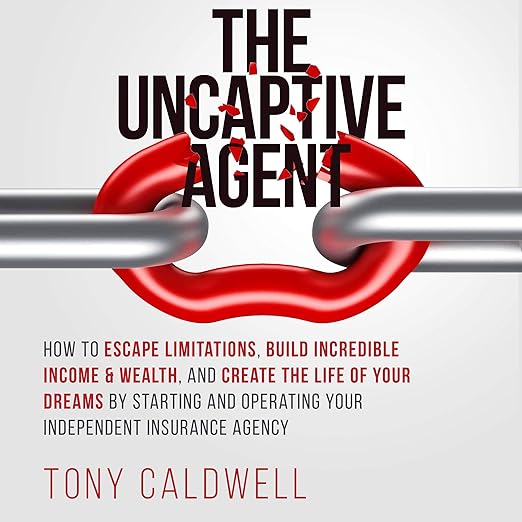
Quick Take
- Narration: Tony Caldwell narrates his own book, and his conviction as a practitioner comes through in a way that adds credibility a professional narrator could not replicate.
- Themes: Entrepreneurial independence, vision-building, the psychology of going independent
- Mood: Energizing and practical, with genuine warmth toward its target audience
- Verdict: A niche-specific audiobook that delivers exactly what independent insurance agents need and almost nothing that non-agents require.
There are audiobooks that speak to a general audience and there are audiobooks that speak to exactly one kind of person. The UnCaptive Agent is firmly the second kind, and I want to say that with no criticism implied. Tony Caldwell has written a book for people who want to leave captive insurance agency arrangements and build their own independent agencies, and he has done it with the specificity and practical depth that actually serves that reader. I came to this one as a researcher rather than a potential practitioner, and I found myself pulled into the argument more than I expected.
Caldwell starts with vision: he argues that before you can build a successful agency, you have to be able to articulate your dream with enough clarity to make the day-to-day grind meaningful. That is a different starting point than most business how-to books, which tend to jump directly to tactics, and it creates a more durable foundation for the practical guidance that follows. The book frames independence not just as a financial opportunity but as a way to build something that genuinely benefits your community, which is an unusual framing for the genre and one that resonates in the reviews.
Our Take on The UnCaptive Agent
The structure of the book is unusual for its genre: Caldwell pairs mindset work with concrete checklists rather than treating them as separate phases. The vision-articulation exercises are interleaved with the operational steps, which mirrors how actually starting a business feels, where identity questions and logistical questions arrive simultaneously. Reviewers who work in insurance consistently praise this interweaving. The book also includes links to downloadable tools, which is not a common feature in audiobooks and adds practical value for listeners who need templates and checklists rather than just inspiration. That interweaving is one of the reasons practitioners consistently recommend the book to colleagues who are on the fence about independence: it speaks to where the hesitation actually lives, which is not in the operational details but in the identity shift required.
Why Listen to The UnCaptive Agent
Caldwell narrates his own work, and for this category of book, that choice matters. He is not performing motivation; he is sharing specific experience from inside the industry. His voice carries the authority of someone who has done what he is describing, and reviewers consistently notice that credibility. At six hours and fifteen minutes, this is a short audiobook by business standards, and that restraint is a virtue: Caldwell says what he needs to say and stops. One reviewer described it as appropriate for “both a new from scratch agent or experienced agent” who wants to rethink current processes, which accurately reflects its range.
What to Watch For in The UnCaptive Agent
The book’s value is almost entirely contingent on your relationship to the insurance industry. If you are considering going independent, or are already independent and want a framework to stress-test your operations against, the specificity is its greatest strength. If you are a general business listener hoping to extract transferable entrepreneurship principles, you will find some useful ideas, but the insurance industry context is pervasive enough that the book does not abstract easily. The pitfalls Caldwell identifies, such as underestimating startup capital requirements and misjudging carrier relationships, are insurance-specific rather than broadly applicable.
Who Should Listen to The UnCaptive Agent
The target listener is clear: someone who is currently a captive agent, seriously considering independence, or in the early stages of operating their own agency. That person will find this book more useful than almost anything else in the business genre for their specific situation. Experienced independent agency owners may find some of the material familiar, but reviewers in that category still report finding value in the systematic presentation and the downloadable resources. General business listeners curious about entrepreneurship should look elsewhere for a broader applicable framework. If you have been sitting on the decision to go independent and find yourself needing something that makes the practical path feel navigable rather than overwhelming, this is likely the most efficient use of six hours you will find in the business audiobook category.
Frequently Asked Questions
Does Tony Caldwell’s self-narration add authority, or would a professional narrator have served the material better?
Reviewers consistently favor the self-narration. Caldwell is a practitioner speaking from inside the industry, and that authenticity comes through in his delivery in ways a professional narrator would not replicate. The performance is competent if not theatrical, which suits the material.
Are the downloadable tools mentioned in the audiobook actually accessible to audio listeners?
The book references links to downloadable resources, and these should be accessible through the publisher’s site or companion materials. Check the Audible product page or Author Academy Elite’s website for the current access method, as link formats can change.
Is this book relevant for someone who has already been independent for several years?
Reviewers with existing independent agencies report finding value in the framework as a diagnostic tool, using it to check their current operations against Caldwell’s structure. It is most useful for newcomers but not without value for experienced operators who want an outside framework.
Does the book address specific carriers or is it general enough to apply across the insurance market?
Caldwell addresses carrier relationships as a category without advocating for specific carriers, which keeps the book applicable across segments of the market. The strategic advice around choosing and managing carrier relationships is general enough to transfer broadly within the industry.