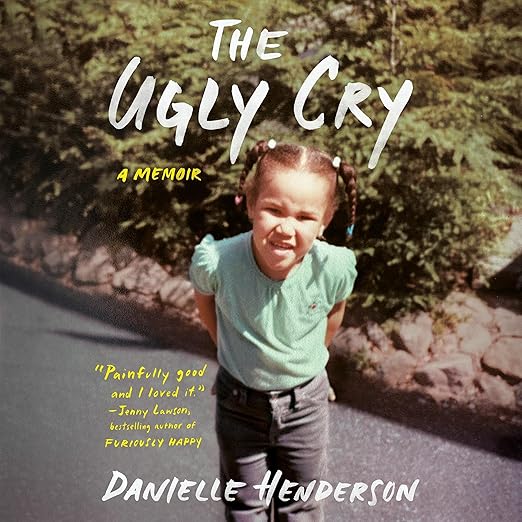
What happens to a ten-year-old when her own mother chooses a drug-addicted, abusive boyfriend over her? This audiobook answers that question through the specific, unsentimental lens of Danielle Henderson's grandmother, a woman capable of saying, in the exact words the synopsis preserves, 'if you fight that motherf**ker and you don't win, you're going to come home and fight me.'
Abandoned by her mother at ten, Henderson was raised instead by grandparents who, by the synopsis's own account, believed their child-rearing days had ended back in the 1960s. What follows is not a simple redemption arc: she grew up Black, weird, and overwhelmingly uncool in a mostly white upstate New York neighborhood, absorbing horror movies and Sassy magazine in equal measure, wearing black eyeliner as lipstick. The synopsis frames the grandmother's harshness and her love as inseparable, not as a contradiction the book has to resolve, and that refusal to soften either side of the relationship is what several blurbs single out. Elizabeth Gilbert's included praise calls it a strong, funny, heartbreaking memoir with a voice completely its own, and People magazine's line, that comedy equals tragedy plus time, turns out to describe the book's actual tonal balance with real accuracy.
Drgnldy's short review adds a plainer, more personal register to the mix: identifying with many parts of the book, laughing and cringing in roughly equal measure, calling it worth the read without needing Gilbert's or People's more polished language to make the case. That range, from a celebrated novelist's blurb to a four-word verdict from an ordinary reader, suggests the book connects across very different kinds of attention.
Praise across the five attached reviews is close to unanimous, and one supplies a genuinely charming detail about how books like this find readers at all: Dawn Korzekwa discovered it while completing a Kindle Book Challenge, needing a title from a Best of 2021 list to unlock an achievement called the Chart Topper, and ended up delighted by what amounted to a random assignment. Debra Fernandez praises Henderson's capacity to hold a person's full complexity at once, describing what is beautiful and what is awful without collapsing one into the other, while Barbara Brittain calls the writing the most authentic voice encountered in a memoir of this kind.
The synopsis's most precise line about what the grandmother actually gave Henderson is worth sitting with directly: a faith in her own capabilities that the world would not have most Black girls possess. That framing does real work, separating the grandmother's harshness from simple toughness for its own sake and naming it instead as a specific, deliberate transmission of self-belief against real social odds. It also explains why the book insists on holding love and difficulty together rather than choosing one lens over the other; the gift and the hardship come from the same source.
Why The Ugly Cry Works as an Audiobook
Henderson narrating her own material is close to the ideal case for memoir audio: a book this dependent on tone, holding grief and comedy in the same sentence without either canceling the other out, benefits enormously from the author's own sense of when a line is meant to land as a joke and when it is meant to land as a gut punch. Rebecca's review specifically credits the voice as authentic and real, and given that Henderson is both the person who lived these events and the person reading them aloud, no interpretive layer sits between the writer's original comic timing and what a listener actually hears.
The grandmother's blunt advice about fighting back, quoted directly in the synopsis, is a useful preview of the book's actual register: profane, protective, and completely unsentimental, a different texture than the softer, more redemptive tone many family memoirs default to. Listeners drawn to that specific kind of loving harshness will find the synopsis's chosen pull-quote is not an outlier moment but representative of the whole.
Weak Spots in The Ugly Cry
Exactly one counted vote sits behind the 4.6 badge here, and a lone whole-star grade simply has no fraction in it to explain a decimal figure like that, so treat the number as a placeholder until more listeners weigh in, especially with five glowing written reviews already sitting on the page beneath it. Listeners sensitive to frank language should also note upfront that the grandmother's own vocabulary, preserved directly in the synopsis, is not softened anywhere in the marketing copy, a reasonably reliable signal for what the full seven and a half hours actually sound like.
Growth here does not follow a linear success story in the conventional sense; growing wise, per the synopsis's own phrase, gets as much attention as growing up, so listeners expecting a tidy arc from hardship to triumph should expect something messier and more specific instead. The book's own closing framing, that it redefines family to include everyone who shares a version of this story, is a real argument, not just a warm sentiment tacked on at the end. Extending that redefinition to the millions of people the synopsis says share her story is an ambitious claim for a single memoir to make, and it only works if the specific details, the exact insult, the exact magazine, the exact age she was abandoned, stay specific rather than softening into something more universally relatable and generic.
Should You Listen to The Ugly Cry?
Memoir readers who want family love rendered honestly, contradictions intact, instead of smoothed into an inspirational template, will find exactly that here. Anyone who trusts a recommendation from Elizabeth Gilbert, whose blurb appears directly on this listing, or who responds to a voice unafraid of profanity in service of real tenderness, should find this a natural fit.
Readers who prefer their family memoirs gentler in tone, or who are sensitive to frank language even when it comes from a place of love, would do well to preview a few minutes first. Listeners hoping for a conventional hardship-to-success arc may also find the book's more specific, less tidy shape different from what the description's warmth initially suggests.
The Short Version
- Narration: Danielle Henderson reads her own memoir, giving the comic timing and emotional pivots the full authority of lived experience.
- Themes: Grandmother's tough love, family redefined, coming of age Black and uncool
- Mood: Funny, frank, and unsentimental
- Verdict: Henderson's own narration makes this blunt, funny grandmother-and-granddaughter memoir feel completely earned instead of sentimental.
Does the language in this audiobook get as frank as the grandmother's quoted advice?
Yes. The synopsis preserves the grandmother's profanity directly rather than softening it, and reviewers describe the same unsentimental, blunt register running through the whole memoir. Listeners sensitive to strong language should expect it throughout, not just in that one preview line.
Is Danielle Henderson's own narration a strength for this audiobook?
Very much so, based on the material itself. A memoir built on tone shifts between grief and comedy benefits from the author reading it, since the same person who lived the events also controls exactly how each line is timed and delivered.
What kind of childhood does this audiobook memoir actually cover?
Henderson's own, after her mother chose an abusive boyfriend over her at age ten. She was then raised by grandparents in a mostly white upstate New York neighborhood, growing up self-described as Black, weird, and uncool, shaped by horror movies and Sassy magazine.
What does the 4.6 rating on this audiobook actually reflect?
Very little on its own, since a single counted vote cannot carry a decimal figure like 4.6 by itself. Five written reviews sit beneath that badge, nearly all enthusiastic, which is a far more informative signal than the number alone provides.