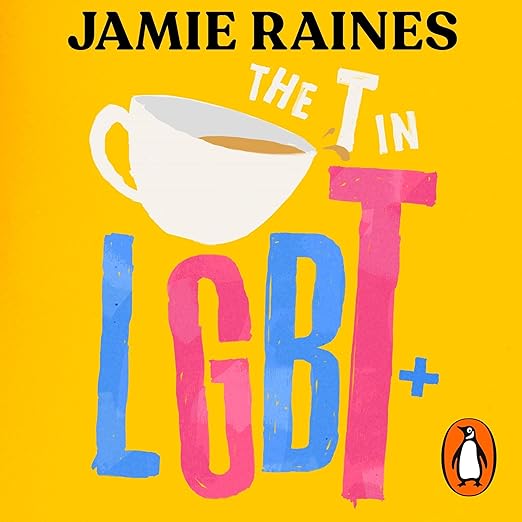
Jamie Raines spent twelve years living the process he narrates in this audiobook, and that lived familiarity is audible from the first few minutes. He opens by placing himself precisely: a 29-year-old trans man from the UK who knew he was a boy at four, found the language for it at sixteen, and has spent more than a decade on testosterone since, alongside top and bottom surgery and a legal change of sex. He's candid about the fact that he only realized he was trans by accident at sixteen, a detail that undercuts any tidy narrative of always having had clear language for his own identity, even though he says he knew he was a boy as early as age four. That specificity matters, because The T in LGBT isn't structured as a single continuous memoir so much as a guide built outward from Raines's own timeline, hormones, surgery, the legal paperwork, interwoven with other trans voices he's gathered along the way so that his experience never has to stand in for everyone's.
Raines's YouTube Channel Feels Educational and Warm
What makes this work as an audiobook specifically, rather than just readable content that happens to be narrated, is Raines's own comfort in front of a microphone. He's spent years building a YouTube channel documenting his transition, and one reviewer, L.Taylor, names that background directly, noting the book feels just like his channel: educational without ever losing its warmth. That translation from video to audio isn't automatic. Plenty of successful YouTubers read flat or over-rehearsed once the visual half of their performance is taken away, but Raines keeps the same conversational directness here that presumably built his channel's audience in the first place. That YouTube background also explains the book's dual-audience design in a way a traditionally trained ghostwriter could never replicate, his channel has spent over a decade building an audience that includes both trans viewers and cis allies watching side by side, and the book carries that same built-in inclusiveness into its structure rather than picking one audience and speaking past the other. He isn't performing expertise so much as sharing a timeline he lived through personally, and the audiobook format suits that kind of first-person testimony better than a clinical guide read by a professional narrator ever could. Penguin's production keeps things simple, no dramatized reenactments or layered sound design, just Raines talking directly to the listener, which is exactly the right call for material this personal.
Helping Her Recognize Dysphoria Suppressed for Decades
The book's structure is its best design decision. Rather than treating Raines's own experience as universal, since one trans person's story, however compelling, is never universal on its own, he builds in a chorus of other trans voices sharing their own experiences at different stages: realizing they're trans, starting hormones, considering surgery. That polyphonic approach means a listener questioning their own identity gets more than one template for what transition can look like, and it means a parent or friend trying to understand a loved one's experience isn't stuck generalizing from a single case study. Fenise's review describes the book helping her recognize gender dysphoria she'd been suppressing for nearly three decades, which speaks to how effectively Raines's candor gives listeners permission to recognize themselves in his account even when their own circumstances differ substantially. Laura's shorter review calls it informative, funny, and compassionate, a combination that's harder to pull off than it sounds when the subject matter includes surgery, legal battles, and family strain alongside the humor Raines works in. That polyphonic structure also distinguishes this from a more familiar shelf of single-narrator trans memoirs, where one person's account, however well told, has to carry the full weight of representing an experience that varies enormously person to person. The book holds a 4.8 rating across 299 ratings at the time of this review, an unusually strong consensus that suggests the multi-voice approach is landing with exactly the range of listeners it was designed for.
Testimony First, Reference Material Second
This is explicitly a UK perspective. Raines is British, and while gender dysphoria and the emotional arc of transition translate across borders, some of the specific process details, healthcare pathways, legal name-change procedures, may not map cleanly onto a listener's own country, so it's worth keeping that distinction in mind rather than assuming every practical detail applies universally wherever you happen to live. The audio purchase also includes a companion PDF, which suggests some content, resource lists, reference material, may be easier to absorb in print than by ear. Listeners who want the full value of the package might want that PDF open rather than relying on audio alone for every detail. And while L.Taylor is careful to frame her own interest as support rather than persuasion, not everyone approaching this book is doing so from a place of already being comfortable with the subject matter. If you're picking this up specifically for clinical or medical detail rather than a lived account, know that this is testimony first and reference material second, so calibrate your expectations before pressing play. Fenise's review goes further than most, titling her praise excellent LGBTQ+ reference and required reading for transgender listeners specifically, a strong claim worth noting, though it also underlines that this book leans toward advocacy and lived testimony rather than neutral, clinical detachment.
A Realistic Single-Week Commute for the Curious
Trans listeners just starting to ask questions are the obvious core audience, but Raines built this for a wider circle than that alone. Parents and family members supporting a recently out child or relative, the situation Laura describes after a pre-teen family member came out, get a genuinely accessible entry point here rather than a clinical pamphlet full of jargon. Allies looking to support without overstepping, L.Taylor's stated goal exactly, will find Raines models that balance himself throughout: informative without being preachy, personal without demanding the listener adopt any particular position on anything. At just over five hours, it's also a realistic single-week commute commitment for anyone curious but not yet ready to invest in a longer, denser LGBTQ+ memoir.
If you're after a clinical medical guide rather than a lived account, look elsewhere first. This is testimony and shared community experience, not a textbook, even though it does cover hormones and surgery in real detail along the way. And because Raines's own frame of reference is British throughout, listeners outside the UK should treat the specific institutional and legal details as a starting point for their own research rather than a direct map of their own country's process.
Key Details
- Narration: Jamie Raines self-narrates with the same conversational warmth that built his YouTube following, translating a visual medium into audio without losing its ease or humor.
- Themes: gender transition as a personal timeline, chosen community and allyship, the gap between clinical process and lived experience
- Mood: Warm and direct, personal rather than clinical
- Verdict: An accessible, self-narrated audiobook that works equally well for questioning listeners and the family and friends trying to understand them.
Frequently Asked Questions
Is this audiobook only useful for listeners who are questioning their own gender identity?
No. The synopsis and attached reviews both point to a dual audience, listeners exploring their own identity and allies or family members, like Laura's pre-teen relative, trying to understand someone else's transition.
Does the audiobook cover experiences beyond Jamie Raines's own transition?
Yes. Beyond his personal timeline, the book weaves in personal stories from a range of other trans voices specifically so no single journey is presented as universal.
Is the medical and legal information in this audiobook specific to the UK?
Yes, Raines narrates from his own British experience, so healthcare pathways and legal procedures described may not directly match the process in other countries.
Do I need the companion PDF to get value from the audiobook alone?
The audio stands on its own as a narrative guide, but the included PDF likely holds reference material that's easier to absorb in print, so pairing the two gets you the full resource.