Quick Take
- Narration: The narrator field credits Bryan Stevenson for the foreword only; the synopsis quotes AudioFile and the New York Times both praising Kevin R. Free's performance for the book itself.
- Themes: Wrongful conviction, death row survival, criminal justice reform
- Mood: Grave and reflective, with real hope threaded through the hardest material
- Verdict: A strong, well-performed memoir let down only by a confusing narrator credit on the listing itself.
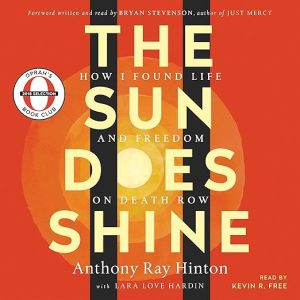
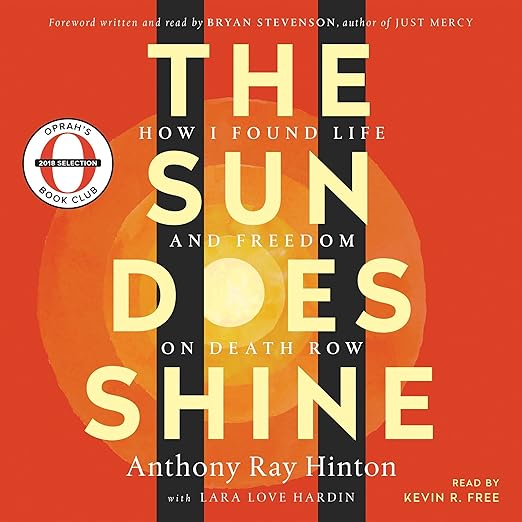
The Sun Does Shine is a memoir audiobook built around thirty years Anthony Ray Hinton spent on death row in Alabama for a capital murder he did not commit, and the credit listed for this recording tells only part of the story of who is actually reading it.
The Narrator Credit Covers Only the Foreword
Hinton was twenty-nine, arrested, and convicted despite what the synopsis calls a case of mistaken identity, and he spent his first three years on death row, in his own account, in agonizing silence and anger before resolving to find a way to actually live through the next twenty-seven. Fifty-four of the men held near his cell were executed during that time. With help from civil rights attorney Bryan Stevenson, author of Just Mercy, Hinton won his release in 2015.
Here is the detail worth flagging plainly: the narrator field on this listing reads Bryan Stevenson, foreword, meaning that credit covers only the brief introduction Stevenson wrote and read for the production. The synopsis itself quotes AudioFile magazine praising a different performer entirely for the bulk of the book, writing that Kevin R. Free narrates in an honest, easy style and captures the Southern rhythms of Hinton's speech with a natural cadence. The New York Times, also quoted in the synopsis, credits Free with flashes of anger cast over a deep humility. Free, not Stevenson, appears to be the voice carrying the majority of this nine-hour audiobook.
Only twenty-nine at the time, and in his own recollection stunned and confused when first charged, Hinton believed the truth would simply prove his innocence and set him free. What actually followed instead was thirty years of appeals, and the book's central tension is how someone survives that long a wait for a system to correct its own mistake.
Tutu's Blurb Restores Faith in Humanity's Goodness
This was Oprah's Book Club's Summer 2018 selection, and Archbishop Desmond Tutu's blurb, quoted directly in the synopsis, calls it a story that restores our faith in the inherent goodness of humanity. Reader reviews back that up with real specificity: kcalldesign read it over three nights until three in the morning and then gave a copy to a friend for her birthday, and KWyly's review poses the same question repeatedly, essentially asking how anyone faces death row knowing they are innocent.
Eleven ratings are on record here, and they land at fifty-three out of a possible fifty-five, two stars short of every vote being a perfect five. Sue's more measured four-star review still calls it a good book and specifically praises what it reveals about the justice system's treatment of people who cannot afford a strong legal defense, even while stopping short of a full five stars.
M&M and Me Widens the Lens Beyond Hinton
M&M and Me's review widens the lens beyond Hinton's individual case, arguing the book exposes how compromised the broader justice system can be for anyone without money for a strong defense. That reading treats the memoir as social critique as much as personal survival story, a framing several of the other reviews echo in less explicit terms.
Kindle Customer's review, writing from Australia, notes the book moves between childhood memories in a loving but poor family and adulthood behind bars, showing how Hinton made sense of both halves of his life at once. That structure, moving between formative years and the decades in prison, gives listeners context for how Hinton became the person capable of surviving what came next.
KWyly Recalls Witnesses Who Lied on the Stand
Beyond the narrator-credit gap already noted, this is unflinching material: wrongful conviction, twenty-seven years of solitary-adjacent confinement, and the executions of fellow inmates are all recounted directly rather than softened. A Kindle Customer review from Australia specifically thanks Hinton for sharing this powerful story, which gives some sense of how personally the account lands even for readers far removed from the Alabama justice system it describes.
The synopsis notes this book sits at the intersection of memoir and legal history, and readers coming for a straightforward true-crime thriller pace may find the book's reflective, spiritual passages, focused on hope and imagination as survival tools, unfold more slowly than a pure procedural would.
KWyly's review lingers on a specific, hard detail: witnesses who lied on the stand and police who believed they had the right man despite clear evidence otherwise. Listeners who want a comfortable distance from real institutional failure should know this book names that failure directly rather than treating it abstractly.
Sue's review adds one more useful caution, describing the reading experience as personal rather than purely informational and noting that the book's emotional weight comes as much from Hinton's own reflection on his flaws and growth as from the injustice itself. Listeners expecting a purely procedural account of the legal case may be surprised by how introspective long stretches of the memoir are.
Free Earns Praise Past a Misleading Narrator Field
Readers of memoir, wrongful-conviction narratives, and criminal justice reform will find this one of the stronger entries in the genre, helped by genuinely praised narration from Kevin R. Free once you look past the misleading narrator field.
Anyone drawn to Bryan Stevenson's broader work will find a natural pairing here; readers of Just Mercy specifically will recognize the same attorney from the other side of a case, and Stevenson's foreword adds a short but direct bridge between the two books.
Steer clear only if detailed accounts of death row, including specific executions of people Hinton knew, would be too difficult to sit with right now. For most listeners interested in the subject, this is a well-regarded, well-performed account worth the nine hours.
Common Questions
Who actually narrates The Sun Does Shine audiobook?
The listed narrator, Bryan Stevenson, only wrote and read the foreword. According to trade quotes in the synopsis, Kevin R. Free narrates the book itself, with AudioFile magazine praising his honest, easy style and the New York Times crediting him with capturing real emotional range across the account.
How is Bryan Stevenson connected to The Sun Does Shine audiobook?
Stevenson, a civil rights attorney and author of Just Mercy, represented Anthony Ray Hinton and helped win his release from death row in 2015. Stevenson also wrote and read the audiobook's foreword, though the bulk of the narration belongs to Kevin R. Free instead.
Was The Sun Does Shine audiobook an Oprah's Book Club pick?
Yes, it was Oprah's Book Club's Summer 2018 selection, and the synopsis includes praise from Archbishop Desmond Tutu alongside the AudioFile and New York Times quotes specifically praising the narration itself, a step up from the more common publisher marketing blurbs found on most listings.
How long is The Sun Does Shine audiobook?
It runs nine hours and eleven minutes, covering roughly thirty years of Hinton's life, from his 1985 arrest through his 2015 release. Eleven listener ratings are on file, averaging four point eight, with five written reviews backing that reception up in detail.