Quick Take
- Narration: Jonathan Yen reads with calm authority that suits the book’s meditative, case-study structure without either over-dramatizing the healing narratives or draining them of life.
- Themes: Shamanic energy healing, the body as a site of transformation, Indigenous wisdom applied to contemporary illness
- Mood: Contemplative and quietly astonishing, structured like a conversation with an elder rather than a lecture
- Verdict: Best for readers already curious about energy healing and shamanism; skeptics will need significant openness to engage with Villoldo’s framework on its own terms.
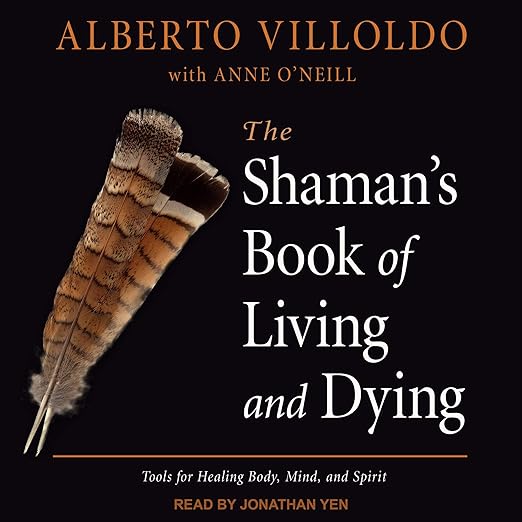
Alberto Villoldo occupies an unusual position in the contemporary spirituality publishing world. He holds a doctorate in psychology and spent 25 years studying healing practices with Amazon and Andean shamans, which gives him credentials in both directions that most authors in his genre lack. I listened to The Shaman’s Book of Living and Dying on a slow Saturday morning when I was in the mood for something that would ask something of me, and Jonathan Yen’s narration delivered the material with exactly the measured gravity it requires.
The book is structured as twelve case studies, each presenting a patient whose physical or emotional condition was addressed through shamanic energetic techniques that Villoldo has spent decades developing and refining. A dancer who could barely walk. A businesswoman freed from chronic headaches who discovers the benefits of an integrated interior life. A young woman who confronts her past and recovers from crippling depression. Each case is told as a patient-practitioner dialogue, which gives the material an intimacy and specificity that abstract spiritual instruction rarely achieves. The case-study structure also makes the book considerably more accessible than Villoldo’s more theoretical works.
Our Take on The Shaman’s Book of Living and Dying
What distinguishes this from standard self-help spirituality is the embedded argument about what shamanic practice actually is. Villoldo is not asking readers to believe in magic as a replacement for medicine. He is presenting a framework in which the body’s capacity for self-healing is vastly greater than Western medicine typically acknowledges, and in which a shaman’s role is to assist the patient in accessing that capacity rather than to perform healing on them. Whether that framework is persuasive will depend entirely on where you stand going in, but the case studies make the abstract concrete in ways that are genuinely compelling regardless of prior belief. The specificity of each case study prevents the material from floating into vague inspiration.
Why Listen to The Shaman’s Book of Living and Dying
Jonathan Yen’s narration is a genuine asset here. The patient-practitioner dialogue format could easily become clinical or, in the other direction, overly dramatic. Yen navigates between those extremes with consistent warmth, and the eight hours and forty minutes move at a pace that never feels rushed or padded. Existing Villoldo readers, who reviewers note will find this consistent with his other work, will appreciate the case-study format as a change from his more instructional books. The title encompasses both living and dying, and Villoldo does address how shamanic practice relates to the end of life, which gives the book a weight and completeness that a purely healing-focused text would lack.
What to Watch For in The Shaman’s Book of Living and Dying
A terse one-star review in the reader data flags that this book was not what the reviewer expected. That response, while not informative about the specific objection, points to a real risk with this material. Listeners who approach The Shaman’s Book of Living and Dying expecting conventional medical or psychological content, or who are firmly skeptical of energy healing as a concept, will find the framework difficult to inhabit even as an intellectual exercise. Villoldo’s claims about growing a new body that ages differently are presented with the confidence of a practitioner rather than the caution of a researcher, and that register will read as credible or overreaching depending entirely on the listener’s starting position.
Who Should Listen to The Shaman’s Book of Living and Dying
Readers already familiar with and interested in shamanic traditions, energy healing, or Indigenous medicine will find this a rich and specifically structured overview of Villoldo’s clinical practice. Fans of his earlier books will find the case-study format a useful complement to his more instructional work. Open-minded listeners curious about non-Western approaches to healing will find the concrete case studies a more accessible entry point than abstract theory. Committed skeptics of alternative medicine are unlikely to find the book persuasive and may be frustrated by the absence of evidentiary framing. The 4.7-star rating with 59 reviews suggests a devoted readership that finds the material transformative on its own terms.
Frequently Asked Questions
Is Alberto Villoldo’s framework in this book compatible with conventional medicine, or does he present it as an alternative?
Villoldo presents shamanic practice as complementary to rather than replacing conventional medicine, though he makes significant claims about the body’s healing capacity. Readers with chronic illness should approach with awareness of that distinction.
Do I need to have read Villoldo’s earlier books to engage with The Shaman’s Book of Living and Dying?
No. This book works as a standalone. Prior readers note it is consistent with his other work, but the case-study structure makes it accessible as a first point of entry into his practice.
How does Jonathan Yen handle the patient-practitioner dialogue sections throughout the 8-hour runtime?
Yen maintains clear differentiation between the practitioner and patient voices without overstating the contrast. The dialogues feel like conversations rather than performances, which suits the material’s meditative quality.
What is the connection between the book’s title and its actual content? Is dying addressed alongside healing?
Yes. Villoldo addresses how shamanic practice relates to the dying process as well as healing, which gives the book a broader and more complete view of what he calls the shamanic tradition around the full arc of life.