Quick Take
- Narration: Rhonda Byrne narrates her own work with a reverent, measured delivery that matches the book’s tone of spiritual revelation, believers in the material will find it reinforcing; skeptics may find it heightens the book’s more unsubstantiated claims.
- Themes: Law of attraction, positive thinking and manifestation, the relationship between belief and outcome
- Mood: Aspirational and earnest, with an evangelical undercurrent
- Verdict: One of the bestselling self-help audiobooks of the past two decades, its value depends almost entirely on your prior openness to its central claims.
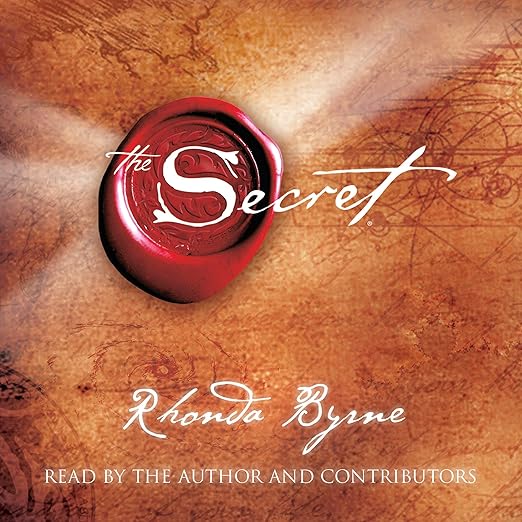
The Secret has been around long enough now, first published in 2006, a global bestseller almost immediately, still generating devoted readers nearly twenty years later, that reviewing it requires some clarity about what kind of review this is going to be. I am not here to adjudicate the law of attraction as a metaphysical proposition. What I can do is assess this as an audiobook: how it is constructed, how it is delivered, and what kind of listener is likely to get something real from it.
Rhonda Byrne narrates her own book, and the delivery is deliberate, measured, and clearly intended to feel like received wisdom. She speaks at a pace that gives each sentence room to settle, which functions well if you are receptive to the material and can feel slightly theatrical if you are not. The book’s structure is essentially one extended argument: the law of attraction governs all experience, your thoughts are frequencies that attract corresponding realities, and understanding this allows you to deliberately create the life you want. Byrne illustrates this through a combination of historical figures she credits with knowing the secret, modern-day teachers she interviews, and testimonials about eradicating disease, accumulating wealth, and achieving goals previously considered impossible.
Our Take on The Secret
At four hours and twenty-four minutes, the audiobook is not long, but it does not need to be. The core argument is stated clearly in the first hour and then elaborated through example and testimony for the remainder. Byrne’s framing, that this knowledge has been suppressed or obscured across history, available only to a knowing few, gives the material the quality of revelation, which is part of why it resonates so strongly with listeners who arrive ready to receive it.
The reviews are genuinely moving in places. One listener describes using the concepts to shift her family from a mindset of stress and lack to one of gratitude and purpose. Another describes a personal journey of significant difficulty, a difficult childhood, broken family circumstances, and credits the law of attraction with meaningful change. These are not small things. Whether the mechanism Byrne describes is accurate to how change actually happens is a separate question from whether the book catalyzes real transformation in some of its readers.
Why Listen to The Secret
If you are open to the possibility that thought patterns and emotional orientation shape experience in measurable ways, this audiobook will give you a systematic framework for working with that idea. Byrne draws from a tradition that includes figures ranging from Confucius to Carnegie, presenting the law of attraction not as a new invention but as the rediscovery of something ancient. For listeners who have had experiences that feel consistent with the book’s claims, it functions as validation and elaboration.
The audio format has an advantage over the print version here: Byrne’s voice carries the book’s spiritual register more effectively than text alone. There is a quality to her delivery, unhurried, certain, warm, that the material requires. The testimonials from other teachers and practitioners, woven throughout, add vocal variety and reinforce the sense of communal discovery that the book is trying to create.
What to Watch For in The Secret
The book makes very large claims about health and physical reality, specifically, that thought can influence illness and healing in direct ways. These claims are not supported by scientific consensus, and listeners who are navigating serious medical situations should be aware of that gap. The book is not meant as a replacement for medical care, but it does not always make that limitation explicit.
Listeners who approach the book skeptically will find the testimonials circular, people who believe the law of attraction report that it works, which does not tell you much about whether it would work in the absence of that belief. The book is also somewhat repetitive by design, cycling back to its core claims to reinforce them, which some listeners experience as affirming and others find frustrating.
Who Should Listen to The Secret
Listeners who are drawn to positive thinking, manifestation practices, or spirituality-adjacent self-help will find this the foundational text of its genre and worth engaging with directly. Skeptics who prefer evidence-based approaches to personal development will find the central claims unsatisfying. This is a book that requires a particular kind of meeting halfway, and only you know whether you are willing to bring that.
Frequently Asked Questions
Is The Secret consistent with religious faith, or does it conflict with it?
Reviewers from religious backgrounds report varied experiences. Some find it complementary to their existing beliefs about prayer and intention. Others find the framing, which presents the law of attraction as a universal law rather than a gift from God, in tension with their faith. Byrne draws from multiple traditions without aligning specifically with any one.
How does the audiobook compare to the film version of The Secret?
The book expands significantly on the film, providing more structured guidance on applying the law of attraction across specific life areas including health, money, and relationships. The audio narration by Byrne herself gives it a different quality than the film’s visual presentation.
Is this the right starting point, or should I read other law-of-attraction books first?
The Secret is widely considered the entry point for this genre in modern popular culture. It covers the core framework clearly and accessibly. Later books by Byrne and others in the same tradition build on this foundation.
Does the audiobook include the testimonials from the teachers and contributors featured in the film?
Yes, Byrne incorporates wisdom from the teachers featured in the original film throughout the book, though the audio version is narrated solely by Byrne rather than featuring their individual voices.