Quick Take
- Narration: The updated edition’s preface is read by Oprah Winfrey, whose genuine long-term engagement with the material gives the audio an unusual warmth of introduction.
- Themes: Authentic power versus external power, intentional living, the evolution of human consciousness
- Mood: Expansive and philosophical, approaching the spiritual with a scientist’s rigor and a poet’s ambition
- Verdict: A book that has shifted readers’ worldviews for three decades, the audio edition gives those ideas new life for a generation encountering them for the first time.
There are books that appear in your life at the wrong moment and wait. A reviewer who received The Seat of the Soul as a gift twenty years ago and only reached it after reading Deepak Chopra’s recommendation captures something real about this kind of book: it requires a particular readiness, and most readers find it when they need it rather than when they plan to. I think that is true of the audio version as well.
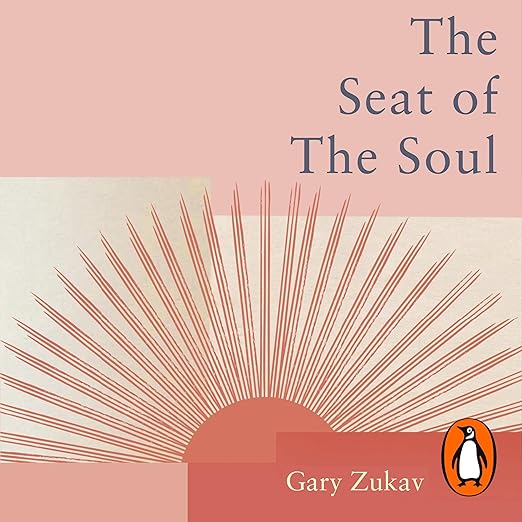
Gary Zukav published The Seat of the Soul in 1989, and it has sold millions of copies in the decades since. This updated Penguin Audio edition adds prefaces by Oprah Winfrey and Maya Angelou alongside a new foreword by Zukav himself, plus an extensive study guide. The result is both a re-release and a recontextualization: the book that changed readers’ lives in the 1990s is now framed by three decades of influence, and that framing is not incidental.
Our Take on The Seat of the Soul
Zukav’s central argument is that humanity is in the process of shifting from a phase defined by the ability to manipulate and control external circumstances, what he calls external power, to one where harmony, cooperation, and reverence for life become primary. He calls this authentic power, and the book’s project is to show what living from that framework looks and feels like in practice. The range of topics covered is broad: intention, karma, the relationship between the soul and personality, multisensory perception, spiritual partnership. Zukav moves through these with what one reviewer calls a scientist’s eye and philosopher’s heart, which is an accurate description of his method.
One reviewer who first read the book at nineteen describes it as igniting a personal journey to become the best version of themselves by living a more fulfilled conscious life full of intention. Another bought five extra copies to give to friends. Those responses reflect the book’s particular appeal: it is not abstract philosophy. It is philosophy with a direct address to the reader’s own life, and that directness is what has sustained its readership across generations.
Why Listen to The Seat of the Soul
Oprah Winfrey’s preface is not a celebrity endorsement layered onto an unrelated text. Winfrey has discussed this book for decades as a formative influence, and her reading of the preface carries the weight of genuine engagement rather than promotional obligation. That quality of personal endorsement, from her, and from Maya Angelou, whose preface appears alongside, sets a particular tone for the audio experience. You arrive into the main text understanding that what follows has mattered deeply to people whose own thinking you may already trust.
The ten-plus hour runtime allows Zukav to develop his ideas without compression. This is not a book that summarizes well, the architecture of the argument requires sustained engagement, and the audio format rewards it. For listeners who encountered the book in print years ago, the updated edition’s additions make revisiting it worthwhile. For new listeners, the study guide material provides useful supplementary scaffolding.
What to Watch For in The Seat of the Soul
Zukav’s framework is spiritual in ways that may be challenging for listeners who approach questions of consciousness from a strictly materialist perspective. He uses terms like karma, soul, and non-physical teachers without apology and without the hedging that more cautious writers apply to such language. Multiple reviewers note that the philosophy is accessible to non-practitioners of any specific tradition, which is broadly true. But Zukav’s worldview is committed to a set of metaphysical claims, and listeners who are skeptical of those foundations will find the book resistant to engagement.
The book’s age is also worth acknowledging. Published in 1989, some of the examples and cultural references feel dated. The updated edition’s prefaces and foreword help contextualize the work, but the main text is essentially unchanged, and a few passages reflect the concerns of a particular cultural moment rather than universal timelessness.
Who Should Listen to The Seat of the Soul
This book is for listeners at a juncture, a divorce, a career change, a period of loss, a season of searching, who want a framework for thinking about how to live that goes deeper than productivity or habit formation. It is also for readers who have already encountered Zukav’s ideas secondhand, through Oprah’s platforms or other spiritual self-help writers, and want the primary source. Skip it if you are looking for something evidence-based in the scientific sense, or if spiritual frameworks that include non-physical dimensions of experience feel incompatible with your worldview. But if those questions interest you, this is one of the most sustained and ambitious treatments of them in popular writing.
Frequently Asked Questions
Is this the full text of the book or an abridged version?
This updated edition from Penguin Audio includes the full text along with prefaces by Oprah Winfrey and Maya Angelou and a new foreword by Zukav, so it is more complete than earlier audio releases.
What does Oprah Winfrey’s involvement in the narration actually mean for the listening experience?
Winfrey reads the preface she wrote for this updated edition. Her engagement with the material is genuine and frames the main text usefully, but she does not narrate the full book.
Is The Seat of the Soul compatible with listeners from specific religious traditions?
Zukav draws on spiritual concepts without aligning to a single tradition. Reviewers from various backgrounds report finding it compatible with their existing beliefs, though its metaphysical framework is distinct from orthodox religious teaching.
How does this book compare to other foundational spiritual self-help titles like The Power of Now?
Zukav is more philosophical and structurally complex than Tolle, with a longer conceptual arc. Both address authentic presence and intentional living, but The Seat of the Soul is more concerned with the mechanics of how the soul and personality interact than with the phenomenology of present-moment awareness.