Key Details
- Narration: Ryan Hicks delivers clean, professional instructional narration that keeps the method's structure easy to follow.
- Themes: Nonfiction book-writing process, overcoming author fear, structuring ideas into a publishable manuscript.
- Mood: Practical and encouraging, grounded in process rather than motivational hype.
- Verdict: A credible, structured guide for first-time nonfiction authors, honest about its own place in a crowded genre.
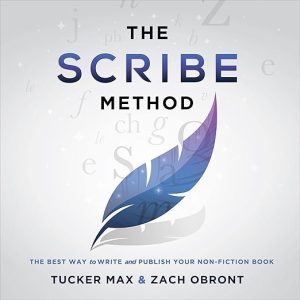
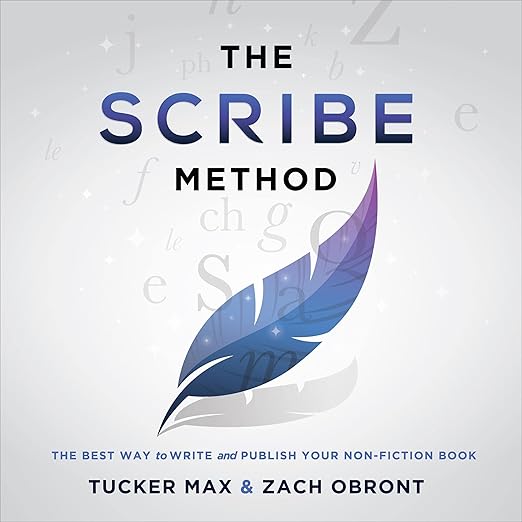
Tucker Max spent years hearing the same fear from would-be nonfiction authors circling his publishing company, Scribe: the idea is good, but is it good enough, and even if it is, what if nobody cares once the book actually exists? The Scribe Method audiobook opens by naming that fear directly rather than pretending it away, then spends just over ten hours walking through the specific, sequential process Max and his team built after helping thousands of authors move from blank page to finished, professionally structured book. I listened to a good chunk of this stretched across a week of early mornings before actual work started, coffee in hand, and the instructional pacing held up well to that fragmented, session-by-session listening pattern.
Max Argues Against His Own Industry's Upsells
What earns this book real credibility, beyond Max's own bestselling track record as an author, is how directly it argues against the industry it could easily have joined. One reviewer, M. Dombrow, specifically praises the book for including 'a chapter about how crappy' the typical expensive-course upsell model is, rather than functioning as a 150-page advertisement for a premium program the way so many adjacent writing guides quietly do. That kind of self-awareness is rare in the how-to-write-a-book category, and it changes how the rest of the instructional content lands.
The method itself is genuinely structured rather than motivational filler dressed up as steps. Reviewer Michael B, a first-time author, describes it covering everything from setting realistic expectations to confronting specific fears to identifying your actual target audience, in that order, which suggests Max and his team built the book around the real sequence authors get stuck at rather than an idealized version of how writing is supposed to work.
Max's own career arc adds real weight to his authority here. He built his initial reputation on I Hope They Serve Beer in Hell, a very different kind of book from this one in tone and subject, before pivoting toward building an actual publishing company around helping other people's books get made. That trajectory, bestselling author to founder of a service built on replicating that success for others, is precisely the kind of earned expertise this genre often only claims rather than actually possesses.
The synopsis itself is structured almost entirely as a cascade of questions, is my idea good enough, how do I structure it, what if it's bad, what if no one cares, and that rhetorical choice doubles as a teaching device before the book even properly begins. Naming the specific fears in the author's own voice, rather than describing them abstractly, mirrors exactly the kind of direct, plainspoken communication The Scribe Method argues nonfiction writers should be using in their own books.
Hicks Lets Structural Advice Carry Itself
Ryan Hicks narrates with the clear, professional register instructional nonfiction like this needs, keeping the emphasis on comprehension rather than performance. That restraint matters more than it might sound like for a book built around genuinely useful, occasionally dense process detail, a narrator who tried to inject excitement into structural advice about outlining and chapter organization would work against the material rather than for it, and Hicks consistently makes the right call to just let the content carry itself.
At ten hours, this sits comfortably in the range where a nonfiction how-to guide can go deep without overstaying its welcome, and one reviewer's caveat, that some content will feel redundant to anyone who has already read several other books about writing, is worth taking seriously as a scope-setting detail rather than a knock against quality. This works best as either a first deep dive into book-writing process or a genuinely comprehensive one for someone ready to commit to a single authoritative source rather than continuing to sample from many.
Experts Turning Real Knowledge Into a Book
Anyone who has already worked through multiple other writing-craft or publishing-process books should expect some real overlap here, since foundational advice about structure and audience naturally repeats across the genre. The same reviewer who raises this point still calls the book worth it for 'some real gems' layered into familiar territory, which is a fair way to set expectations: this is comprehensive rather than groundbreaking on every single point, and its value comes from thoroughness and sequencing rather than novelty.
This is squarely a nonfiction-writing guide, and fiction authors looking for craft advice on plot, character, or scene construction will not find their specific needs addressed here. The Scribe Method is built around the particular challenges of turning expertise or personal experience into a structured, marketable nonfiction book, and it stays disciplined about that scope throughout.
This book's clearest audience is a working professional or expert, someone with real knowledge or experience already but no background in publishing, rather than an aspiring novelist or hobbyist writer. Scribe's own business model serves exactly that client base, and The Scribe Method reads as a genuine distillation of the process they use with paying clients, not a scaled-down teaser withholding useful information behind a paywall.
This is squarely built for professionals and subject-matter experts translating real expertise into a book, doctors, consultants, entrepreneurs, coaches, rather than for someone starting from a blank slate with no existing knowledge base to draw on. Listeners without an established area of expertise they are trying to turn into a manuscript may find some sections assume more raw material to work with than they currently have.
Reviewer J.D. specifically praises the print or ebook edition's formatting as 'easy to read and highlight,' a compliment that does not translate directly to audio the way plot description or narration quality would. Listeners planning to actively mark up specific passages for later reference should consider pairing the audiobook with a text edition, since the audio experience alone will not preserve that highlighting workflow.
First-Time Nonfiction Authors Get Real Structure
This is an excellent fit for first-time nonfiction authors intimidated by the idea of structuring an entire book from scratch, especially anyone paralyzed by the specific fears Max opens with, whether the idea is good enough, whether the book will actually get read, whether the whole effort will simply be wasted. It also works well for authors who have tried and abandoned a manuscript before and want a genuinely sequential process to restart with rather than more abstract inspiration.
Skip this one if you are already deep into your third or fourth writing-craft book and specifically need advanced-level, non-redundant material, or if your project is fiction rather than nonfiction. For the audience it targets, first-time or struggling nonfiction authors who need real structure and a plan they can trust, it delivers precisely what its reviewers describe: a comprehensive, credible alternative to the expensive-course industry it openly critiques.
Before You Listen
Is The Scribe Method audiobook useful for fiction writers, or just nonfiction authors?
It is built specifically for nonfiction authors. Fiction writers looking for craft advice on plot or character will not find their needs addressed here.
Does this audiobook feel like an advertisement for Tucker Max's Scribe publishing company?
No, and reviewers specifically praise it for the opposite, the book directly critiques the expensive-course upsell model rather than functioning as a pitch for one.