Before You Press Play
- Narrator: Richard Pryal doesn't have narration credits I could find elsewhere, but a poetry anthology built from several translators' distinct registers is a real technical test for pacing and tonal shifts.
- Subjects: Sufi mysticism, the craft of poetic translation, contemplative spirituality across faiths
- Tone: Meditative and unhurried
- Bottom line: A rewarding, unusually well-curated entry point for anyone drawn to Rumi's poetry or to translation as a craft in its own right.
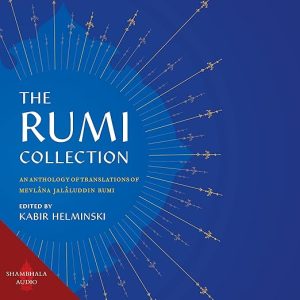
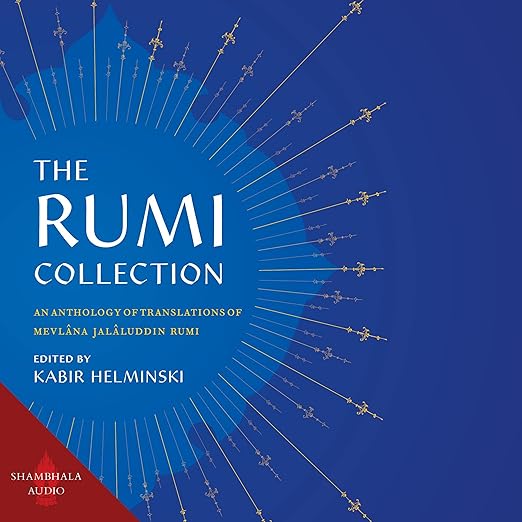
Rumi never intended his poetry for silent, solitary reading, and translating his thirteenth-century Sufi verse into contemporary English is already an act of interpretation before a single word gets recorded. This audiobook edition adds a second layer on top: Richard Pryal reading aloud verses assembled by Kabir Helminski, a Sufi teacher who has spent more than forty years translating Rumi's own work. The Rumi Collection doesn't offer one definitive English Rumi; it offers a curated gathering of several translators who each spent real time trying to render his work faithfully into another language entirely.
Helminski Curates Barks Alongside His Own Tradition
What distinguishes this particular anthology from a generic 'greatest hits' Rumi collection is Helminski's own credibility inside the tradition he's translating. He and his wife Camille direct the Threshold Society, a nonprofit dedicated to the Mevlevi tradition Rumi himself founded, which means the selections here come from someone situated inside the living practice of Sufism, not simply an admirer of the poetry from outside it. Reviewer XeninuX calls this specific collection a favorite precisely because Helminski 'includes many poems and passages translated by other people as well,' giving listeners 'the best selection of translations chosen by a true expert' rather than one person's singular interpretive lens.
The multi-translator structure also means the audiobook's tone shifts noticeably from poem to poem: some contributors lean toward looser, more contemporary American phrasing, while others in the collection stay closer to a more formal register. Reviewer Pebo's description of Rumi as 'universal appealing to all instincts east and west' actually describes this collection's translation strategy as much as it describes Rumi's original poetry, since the whole point of gathering multiple translators is to let more than one English idiom carry the material.
Coleman Barks' contributions are worth understanding specifically: his looser, contemporary-American renderings, not built from direct knowledge of Persian but reworked from earlier, more literal scholarly translations, are largely responsible for introducing Rumi to a mass English-language audience in the late twentieth century. His presence in this anthology alongside Helminski's own more traditionally grounded approach means listeners get both the accessible, poetry-shelf-familiar version of Rumi and a more historically situated alternative within the same collection, a genuinely useful contrast for anyone curious about how translation philosophy shapes the same original poem.
The three attached reviews, thin as they are, still show meaningful range in how listeners connect with the material: XeninuX responds primarily to the translation quality itself, Pebo to Rumi's universal emotional accessibility, and Jeremy to the writing's power across a faith divide. That spread, three very different entry points into the same six-hour anthology, suggests the collection genuinely works for multiple kinds of listeners rather than appealing narrowly to one specific audience.
Verses Built for Recitation Across Eight Centuries
Poetry built for oral transmission, and Rumi's verses were composed to be recited and sung long before they were fixed on a page, arguably belongs in audio more naturally than in silent reading. Six hours and five minutes is a substantial runtime for a poetry collection, suggesting real depth and breadth rather than a slim sampler, and the format lets a listener absorb individual poems the way ghazals and quatrains were originally meant to land: aloud, with real space around each line.
Reviewer Jeremy, who identifies himself as a Christian rather than a Muslim listener, makes an important point about the collection's reach: 'you cannot deny his writing capability,' he says, regardless of the reader's own faith background. That crossover appeal is central to why this audiobook works as an introduction for listeners outside the Sufi tradition specifically, since Helminski's curation is explicitly framed as accessible 'whether you are new to Rumi's work or a longtime admirer.'
Rumi himself lived in thirteenth-century Konya, in what was then the Sultanate of Rum, and his death inspired his followers to found the Mevlevi Order, still known today by the whirling dance ceremony most Western audiences associate with Sufism generally. Helminski's own Threshold Society continues a version of that same tradition, which means this audiobook connects a listener not just to translated words on a page but to a continuous living practice stretching back roughly eight hundred years, a genuinely rare kind of unbroken lineage for any literary tradition to claim.
Pryal's Pacing Choices Go Largely Untested
This listing is thin on evidence, and it shows in the review count: only three reviews exist for a six-hour anthology, not much to go on next to the enormous scale of Rumi's overall reputation. Richard Pryal himself appears to have no prior audiobook credits I could track down, so his specific pacing choices, how he handles the shift between translators' differing registers, can't be independently confirmed against reviewer testimony the way a more heavily reviewed narrator's work could be.
The tag attached to this listing, 'Words, Language & Grammar,' also undersells what the book actually is; this is a spirituality and poetry anthology, not a language-instruction title, and listeners browsing by that tag specifically may pass right over a collection that has nothing to do with grammar study. The broader genre classification (education-learning, literature-fiction, religion-spirituality) reads closer to accurate, but the specific tag is worth flagging as a likely cataloging mismatch.
Listeners drawn in by Barks' famous, highly accessible renderings specifically should know this collection is broader and occasionally more demanding than a single-translator bestseller anthology; Helminski's own selections and the contributions from Andrew Harvey and Robert Bly carry a more scholarly, tradition-conscious register at points. That range is the collection's whole appeal, but it does mean the experience shifts in register more than a single-voice, single-translator collection would.
A six-hour multi-translator anthology also invites a practical listening strategy worth naming: rather than moving start to finish in one extended sitting the way a novel demands, this collection rewards returning to individual poems repeatedly, since much of Rumi's imagery deepens on a second or third encounter rather than yielding everything on first listen.
Comparative Translation Fans Over Biography Seekers
This audiobook rewards listeners drawn to contemplative poetry, comparative translation, or Sufi and broader Islamic mystical thought, whether they're already Rumi readers looking for a fresh multi-voice edition or complete newcomers who've only encountered his lines secondhand in quote compilations. Anyone curious about how translation itself works as a craft, how the same original poem can sound entirely different depending on who's rendering it into English, will find this collection unusually well suited to that specific curiosity.
Listeners hoping for a single consistent translator's voice throughout, or a strictly chronological introduction to Rumi's biography and historical context, should adjust expectations; this collection prioritizes breadth of translation over any one translator's unified style, and readers wanting deep biographical grounding should pair it with a dedicated Rumi biography.