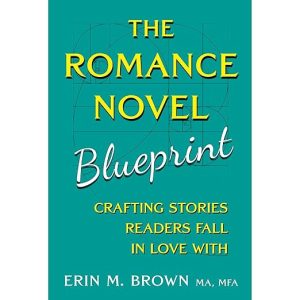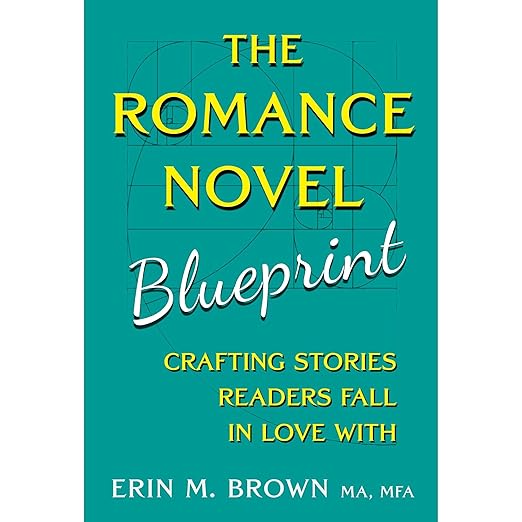
Writing craft audiobooks tend to fall into one of two failure modes: they are either too abstract to be immediately useful, or so focused on checklists and genre formulas that they produce technically correct but emotionally inert stories. The Romance Novel Blueprint, written by Erin Brown MA MFA, a story consultant and contest judge with more than thirty years of experience in the field, navigates between those failure modes with more sustained success than most titles in this space. The audiobook version makes the material accessible as a working resource during writing sessions or revision passes, though the Virtual Voice narration is a limitation worth naming at the outset.
Brown's central argument is both simple and counterintuitive in its implications: romance fiction fails not because writers misapply tropes or choose the wrong genre conventions, but because they build stories around plot mechanics rather than around the emotional transformation of their characters. The blueprint she offers is structural in the sense that it provides a working framework, but the framework is built around internal emotional states rather than external events. That distinction is not just pedagogical positioning for a craft guide. It is the difference between a story readers describe as predictable and one they describe as deeply satisfying even when they recognized every beat as it arrived. The inevitability of a well-constructed romance is a feature, not a flaw, when the character transformation feels genuinely earned.
Naming the Sagging Middle Every Romance Hits
Reviewers of this title include both emerging writers looking for foundations and experienced novelists with substantial publishing histories. One reviewer who described themselves as having many years of writing experience called this a refresher that also introduced genuinely new frameworks, and another described it as breaking down complex concepts including character arc, plotting, and emotional momentum into navigable steps that are specific to romance while remaining applicable to strong storytelling generally. That range of utility is the mark of a craft book working at the level of underlying principle rather than surface technique. Brown is not teaching writers what romance readers currently want from the market. She is teaching them how emotional logic functions in fiction, which is a more durable skill across subgenres, market cycles, and career stages.
The coverage of relationship-driven scenes is where the book is most practically useful. Brown addresses how to write intimacy that actively deepens the story's emotional stakes rather than interrupting them, how to build chemistry through conflict rather than through attraction declared by the narrative, and how to address the structural problem romance writers know as the sagging middle, where the relationship has begun but the resolution has not yet arrived and the story risks losing momentum. Her diagnostic framework, which helps writers identify exactly what is flattening their romance rather than just that something is not working, is described by reviewers as immediately applicable rather than theoretically interesting but practically opaque.
Built for a Revision-Pass Listening Session
At 7 hours and 55 minutes, this is a workable length for a listening session during a revision pass of your own manuscript. The structure of the book maps usefully to the structure of a novel, moving from character design through relationship arc through scene craft through resolution, which means a writer can navigate to the section relevant to their current problem rather than needing to consume the full audio sequentially. That modularity is a real practical feature for a working craft resource.
Brown's professional credentials are worth understanding before you invest the time. She is not primarily a genre novelist drawing on her own creative practice. She is a judge for major romance writing contests and a story consultant who has worked with both emerging and experienced writers across workshops, coaching sessions, and live speaking events. That professional frame gives her a comparative view of what separates publishable romance from work that does not connect with readers, and she draws on that comparative perspective throughout the guide rather than working purely from subjective opinion about what she personally finds satisfying in the genre.
Emotional Disconnection Gets Named With Precision
Pay close attention to the sections on emotional disconnection. Brown identifies several specific patterns that produce romance stories where the relationship feels technically correct but does not generate the reader investment the author intended. These sections are the most diagnostic of the guide, and writers who have finished manuscripts that feel close but not quite right will likely find their specific problem named here with enough precision to make the path forward visible.
The framework's emphasis on character transformation as the primary engine of romance, rather than external obstacles as the primary engine, is worth sitting with for longer than it initially seems to require. Brown is asking writers to rethink what the story is actually about at the structural level, not merely to adjust surface elements. That reframe is more demanding than the checklist approach but produces more resilient results across different romance subgenres and different market conditions, because it addresses the underlying logic rather than the surface conventions.
For Writers Whose Romance Feels Constructed
Romance writers at any career stage who are struggling with emotional flatness, pacing problems in the middle act, or relationships that feel constructed rather than genuinely felt will find this directly useful. It is also a strong option for writers coming from other genres who are approaching romance for the first time and want to understand its emotional logic rather than just its genre conventions. Skip it if you are purely looking for trope selection guidance, market positioning advice, or word count strategies. Brown is teaching craft principles, and everything else is outside her scope here. The Virtual Voice narration is a genuine limitation but not a disqualifying one for a guide of this quality and specificity.
A Few Questions About The Romance Novel Blueprint
How does the Virtual Voice narration affect using this audiobook as an active craft resource?
Virtual Voice handles the instructional content adequately but with less tonal variation than a skilled human narrator would bring. For a craft guide where emphasis and tone carry meaning, this is a meaningful limitation. Writers planning to use this as a reference resource may want to complement it with the print edition for sections requiring annotation.
Does this audiobook focus on any particular romance subgenre, or is the framework broadly applicable?
Brown explicitly addresses writers across subgenres. The framework is built around emotional architecture and character transformation, which apply equally to contemporary romance, paranormal, historical, and other subgenres. The examples draw from multiple corners of the genre rather than privileging any single market category.