At a Glance
- Voice: Mark Bramhall delivers a weathered, pitch-perfect performance as PJ Halliday, holding dark comedy and genuine grief in the same breath across nearly 12 hours.
- Big ideas: Second chances, family dysfunction, grief and humor in collision
- Atmosphere: Darkly comic and unexpectedly warm
- Worth it?: Annie Hartnett's road-trip novel earns its emotional payoff through Bramhall's narration and a refusal to make loss tidier than it actually is.
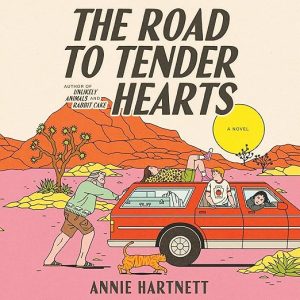
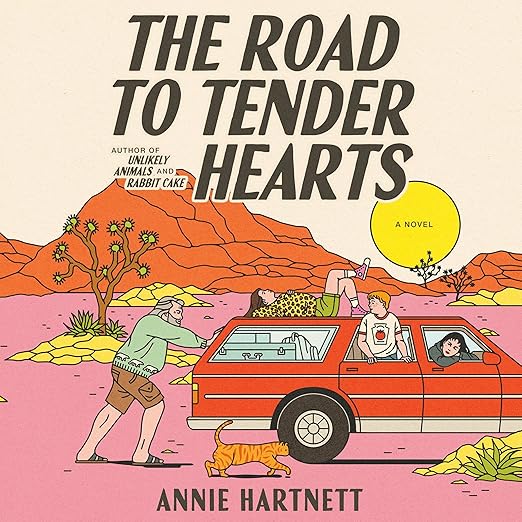
PJ Halliday makes a terrible guardian. Annie Hartnett's National Bestseller opens with that uncomfortable truth embedded in a darkly comic frame: a sixty-three-year-old lottery winner with three heart attacks on his record, a dead eldest daughter, a collapsed marriage, and a standing reservation at the Pondville bar is not the obvious candidate to shepherd two orphaned kids across the country in an audiobook that somehow turns all of this into something warm and life-affirming. Mark Bramhall narrates, and from his first line you understand exactly why this material needs a voice that can hold grief and absurdity in the same breath without dropping either.
Hartnett, who gave us Rabbit Cake and Unlikely Animals, has a specific gift: she writes characters who are visibly failing at life and makes you root for them anyway. PJ's plan to drive from Massachusetts to the Tender Hearts Retirement Community in Arizona to court his newly widowed high school sweetheart, Michelle Cobb, is preposterous on its face. The fact that he recruits his adrift daughter Sophie and a death-predicting therapy cat named Pancakes only compounds the implausibility. But implausibility, handled with Hartnett's timing, becomes a feature rather than a flaw.
Bramhall's Weathered Warmth Makes Pancakes Ambient
What distinguishes Hartnett's approach from standard road-trip fiction is her refusal to let comedy soften the edges of real loss. PJ is not funny because he is harmless; he is funny because he is genuinely broken and still trying. Bramhall captures this through a weathered warmth in his delivery, a voice that suggests a man who has been through enough that he no longer bothers pretending. His PJ lands somewhere between exasperating and deeply sympathetic, which is exactly the tonal balance the material requires. One reviewer described laughing out loud even when reading quietly, and that tracks: the humor here catches you off guard because the emotional stakes are real.
The supporting cast is rendered with similar care. Sophie's aimlessness in her twenties is observed with precision rather than condescension. The orphaned kids bring their own griefs. And Pancakes, the cat with the nursing-home track record for identifying who is about to die, functions as a kind of ambient memento mori, a reminder that this road trip is happening against a background of genuine mortality. PJ has already had three heart attacks. The physical stakes are not metaphorical. Bramhall handles the tonal shifts between comedy and weight with the kind of control that only comes from really understanding what the text is doing.
John Irving Calls This a Miraculous Novel
John Irving called this a miraculous novel, and while the word gets overused, the claim has grounding here. Hartnett works in a tradition of American comic fiction that takes human frailty seriously, closer in spirit to Richard Russo than to lighter ensemble comedies. The road trip is not just a plot device; it is a structural argument that healing requires movement, requires the friction of proximity with people you would rather avoid. PJ cannot outrun Sophie's disappointment in him. The orphaned kids cannot outrun what they have lost. The journey forces reckoning.
For audiobook listeners, Bramhall's performance is the essential point of contact. He differentiates the characters clearly without resorting to caricature. His comic timing in the lighter scenes is reliable; you will hear him find the exact beat before delivering a line that lands. His emotional restraint in the harder scenes is equally accomplished. The 11 hours and 48 minutes pass faster than you would expect for a novel with this much narrative texture. NPR and Lit Hub both named it among their best books of the year, and the accolade holds up on audio.
Michelle Cobb's Reunion Defies the Obvious Beat
Watch for the way Hartnett embeds genuine surprise into what looks like predictable territory. The reunion with Michelle Cobb is not the scene you expect. Sophie's arc does not resolve in the obvious direction. The cat's abilities are left in productive ambiguity, comic on the surface and quietly unsettling if you sit with them. Reviewers have noted that Hartnett weaves multiple storylines with a smoothness that makes the complexity feel effortless; when any one thread is stripped away, the other characters lose dimension, which is the highest compliment to the structural work underneath.
The novel's treatment of grief is also worth attending to carefully. This is a book about multiple losses, the eldest daughter, the marriage, the relationships broken by time and bad decisions, and Hartnett does not resolve them so much as put them in conversation with the possibility of repair. PJ's question at the heart of the novel, whether his heart can take another chance at love and parenting, is both literal given his medical history and figurative in every other sense. The audiobook format, with Bramhall's voice inhabiting that ambiguity across nearly 12 hours, makes the stakes feel immediate in a way that silent reading sometimes diffuses.
Fans of Russo and Strout Will Feel at Home
Listeners who found Richard Russo's Nobody's Fool or Elizabeth Strout's Olive Kitteridge rewarding will recognize Hartnett's register here: comedically alive, emotionally serious, populated by characters who are more complicated than they first appear. This is also a strong choice for anyone who responds well to ensemble fiction, since the car holds enough mismatched personalities to sustain the long middle of the trip without losing momentum. Fans of Mark Bramhall's voice work will find him fully in his element with material this tonally layered.
Skip it if you need your road-trip fiction to stay in a single lane, either purely comic or purely elegiac. Hartnett refuses that clarity, and if tonal blending frustrates rather than satisfies you, this one will feel unresolved. Also, the subplot involving the orphaned children takes a few hours to integrate organically into the larger ensemble. But for listeners who stay with it, the payoff is genuine and the ending earns its warmth without sentimentalizing what came before it.
Frequently Asked Questions
Is The Road to Tender Hearts audiobook suitable for listeners who have not read Hartnett's previous books?
Completely standalone. No prior knowledge of Rabbit Cake or Unlikely Animals is needed. This is a self-contained novel with its own cast and setting, though fans of Hartnett's earlier work will recognize her characteristic approach to dark-comic ensemble fiction.
How does the Pancakes subplot work in the audiobook format? Does the death-predicting cat come across as gimmicky?
In Bramhall's hands it reads as a running dark joke with genuine unease underneath. The cat's ability is never played for cheap suspense; it functions as an ambient reminder of mortality in a story already preoccupied with second chances and limited time.