Quick Take
- Narration: Tim Sinclair delivers the material cleanly and with appropriate authority, a professional read that matches the book’s business-casual register.
- Themes: Intellectual property strategy, entrepreneurial risk, innovation protection
- Mood: Confident and accessible, a law school lecture stripped of intimidation
- Verdict: One of the most practically useful intellectual property guides available in audio, particularly valuable for entrepreneurs navigating patent strategy without legal training.
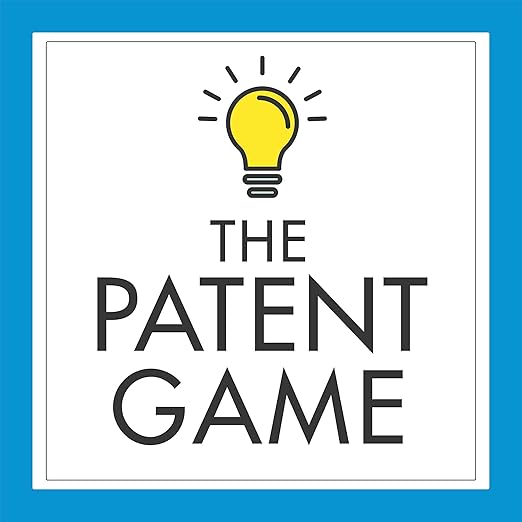
I spent part of a rainy Thursday afternoon listening to The Patent Game, which felt appropriate given that the book is fundamentally about waiting, waiting for the right moment to file, waiting for grants, waiting to see whether a competitor moves first. Vance VanDrake III has written something that solves a genuine problem: the gap between knowing you need patent protection and understanding what kind and when. He is a patent attorney and co-founder of multiple early-stage companies, and that dual perspective, legal expertise plus entrepreneurial experience, is what separates this book from the standard IP textbooks that attorneys recommend and clients never finish.
The core premise is elegant. VanDrake reframes the entire patent process as a game with knowable rules, identifiable players, and strategic moves. The first half of the book covers fundamentals, what patents are, what they protect, how prior art works, what makes a claim strong or weak, using game analogies that land without being condescending. The second half is a strategic playbook: eighteen distinct patent strategies, each with an introduction, a play-by-play with diagrams, and a real-world example. That structure is unusual and genuinely useful. Most IP guides tell you how the system works. This one tells you how to play it.
Our Take on The Patent Game
The reviews are unanimously strong, and for once the uniformity feels earned rather than suspicious. One reviewer with decades of patent experience and dozens of grants described the book as summing up almost everything I have learned and then some. A professional toy inventor called it the book they have been looking for throughout their career. An entrepreneur said it made the whole landscape finally intuitive. These are not vague endorsements, they describe specific outcomes, which is the most reliable indicator of a useful book.
What VanDrake does particularly well is contextualize patent strategy within the business realities that actually determine whether protection matters. He references Shark Tank and Fortune 500 companies not as dropped names but as context for different strategic situations. A solo inventor and a multinational corporation need different approaches to the same question, whether and how to patent, and the eighteen-strategy framework genuinely accommodates that range. The book does not pretend there is one right answer. It gives you the tools to find your own.
Why Listen to The Patent Game
Tim Sinclair’s narration is well-suited to the material. He brings a measured authority that matches the book’s register, knowledgeable but accessible, serious but not dry. The eight-and-a-half-hour runtime feels appropriate for the content density. This is not a book you drift through; it rewards attention because the strategic sections build on each other. Sinclair’s pacing gives the listener time to process rather than rush, which matters when the concepts require some holding in mind before they cohere.
One caveat worth naming: this is a guide to understanding the patent game, not a replacement for a patent attorney. Multiple reviewers make this point themselves. The book explicitly positions itself as preparation for working with legal counsel rather than a substitute for it. That is honest and appropriate, and it should calibrate expectations. You will finish The Patent Game better equipped to have smart conversations with an IP attorney and to evaluate their advice, which is exactly what the book promises, and a significant improvement over arriving at that conversation unprepared.
What to Watch For in The Patent Game
The game analogy carries the book’s first half effectively but can occasionally feel slightly strained when applied to the more procedural aspects of patent prosecution. Those sections are still clear; they just sit a little less naturally in the framework than the strategic material does. It is a minor friction in an otherwise cohesive structure.
Listeners with existing technical backgrounds in specific industries may find that the examples do not always align with their sector. The book is necessarily generalist in its real-world illustrations, drawing from consumer products, software, and manufacturing. The principles transfer, but the application will require some extrapolation for highly specialized fields like biotech or semiconductor IP, where the strategic landscape has additional layers of complexity.
Who Should Listen to The Patent Game
This is essential listening for first-time entrepreneurs, inventors, and innovators who have ideas worth protecting but no framework for thinking about how to protect them. It is also valuable for startup founders entering their first conversations with IP counsel and wanting to show up informed. Experienced IP professionals will find little new, but they are not the target audience, the book knows exactly who it is for and serves them exceptionally well.
Frequently Asked Questions
Does The Patent Game cover international patents, or is it focused on the US system?
The book’s examples and framework are primarily US-centric, drawing on the USPTO process and US patent law. International patent strategies and PCT applications are touched on but are not the book’s primary focus.
Is this suitable for someone with no legal background at all?
Yes, that is explicitly the target audience. VanDrake uses game analogies and plain language throughout, and the diagrams referenced in the text (which appear in the companion materials for audio listeners) help anchor the more technical concepts.
How current is the patent law information in this audiobook?
The audiobook was released in December 2024, which means the strategic framework reflects current patent doctrine. US patent law evolves through case law and USPTO rule changes, so for time-sensitive filings, verify current requirements with an attorney.
After listening, will I be able to draft a patent application myself?
No, and the book does not suggest that. Its purpose is to make you a more informed participant in the patent process, someone who can evaluate strategies, ask better questions, and make smarter decisions in collaboration with a patent attorney rather than deferring blindly.