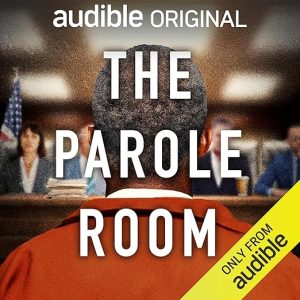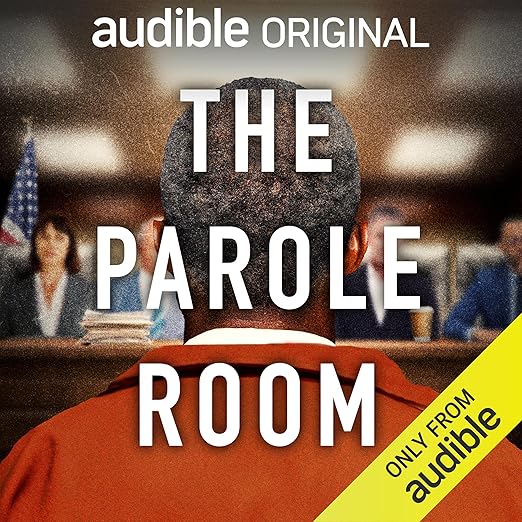
Nineteen rejections in fifty years is the kind of statistic that would end most stories before they start, and that's precisely why The Parole Room works as well as it does as an audiobook. Johnnie Veal was convicted of murdering two police officers in 1970, and this production builds its entire tension around his twentieth parole hearing: will five decades of incarceration, and whatever transformation happened inside them, finally be enough, especially given that Veal has consistently maintained his innocence. That last detail is the structural knife twisting through the whole thing. How do you convince a parole board you've reformed when reform implies guilt you refuse to claim?
Podcast winner of the George Polk Award is not a phrase attached lightly. The Polk Awards, administered by Long Island University, rank among American journalism's most respected honors, historically recognizing work that requires genuine investigative access and sustained reporting rather than a single strong interview, which sets real expectations for the depth this audiobook is working from.
What We Made of It
What separates The Parole Room from a standard true-crime retrospective is its refusal to resolve the central question early. The synopsis frames it directly: what is prison time even supposed to accomplish? That's not a rhetorical flourish tacked onto marketing copy, it's the actual organizing question of the piece, and the production takes listeners inside the parole room itself for the tense, granular deliberations most true-crime content skips entirely in favor of the crime itself.
The pedigree here is serious: a George Polk Award winner from Ben Austen, the writer behind the critically acclaimed book Correction and the producer behind You Didn't See Nothin, a Pulitzer Prize and Peabody Award-winning podcast. That's not incidental background; it's the reason the material earns the intimacy it's going for rather than sensationalizing a fifty-year-old double murder.
At four hours and twenty-five minutes, this plays less like a traditional audiobook memoir and more like a tightly produced audio documentary series, consistent with its description as a podcast winner. The compact runtime suggests deliberate editing rather than exhaustive completeness, favoring the emotional and procedural core of Veal's case over surrounding context that a longer treatment might have included.
It's also worth situating this within a broader trend of serious audio journalism finding a second life as a standalone audiobook release. Investigative podcast series increasingly get repackaged this way specifically because the medium rewards it: a listener who might never seek out a print true-crime book will readily press play on something that already sounds like the format they're used to consuming.
It's worth adding context for listeners newer to how parole hearings actually function as drama, since the format doesn't rely on courtroom theatrics the way a trial narrative would. A board's questions tend to circle the same handful of themes across decades, institutional conduct, expressions of remorse, release plans, which means the tension in a story like Veal's builds through repetition and incremental shift rather than a single dramatic reveal, a genuinely different narrative engine than most true-crime audio relies on.
Why The Parole Room Works as an Audiobook
Austen narrates his own material, and that choice pays off specifically because of his background. A journalist who has spent real time inside the machinery of parole and incarceration brings an authority to the delivery that a hired voice actor, however skilled, would have to fake. His prior book Correction covers adjacent ground, so this isn't a first pass at the subject; it's someone returning to territory he already knows intimately.
The show's format, described directly as vivid, emotional, and complex, plays to audio's specific strengths. Hearing tense deliberations unfold in real time, rather than reading a transcript of them, adds a dimension a print account of the same material would lose entirely. This is a case where the audio format isn't incidental to the content; it's part of what makes the content work.
The stakes extend past one man's case, too. Austen frames Veal's hearing as a lens onto the entire US justice system and, by extension, the country's relationship with punishment and redemption. Listeners interested in criminal justice reform conversations happening well beyond this one Chicago case will find the specific example doing real argumentative work.
What Might Not Land
No listener reviews or ratings commentary accompanies this particular title anywhere I could find, which leaves no crowd-sourced read on how the audio production specifically lands, only the strength of its journalism credentials to go on. That's worth knowing going in, even though a George Polk Award is a meaningfully strong substitute for reader consensus.
The subject matter is heavy and specific: the decades-old killing of two police officers, ongoing claims of innocence, and the mechanics of a parole system that has said no nineteen times already. Listeners should be prepared for a genuinely uncomfortable, unresolved moral question rather than a tidy verdict on Veal's guilt or innocence.
Because this began as audio journalism rather than a traditional book manuscript, the pacing and structure may feel different from a conventional true-crime memoir. Expect something closer to serialized documentary storytelling, built around hearings and deliberations as recurring set pieces, rather than a single continuous narrative arc.
Listeners unfamiliar with how parole hearings actually function should know a board evaluates evidence of rehabilitation, institutional behavior, and public safety risk, often without the adversarial structure of a trial, which is part of why Johnnie Veal's insistence on innocence creates such a genuine procedural bind. Reform and innocence pull toward opposite kinds of testimony, and the hearing room has no clean way to hold both at once.
The United States maintains one of the highest incarceration rates in the world, a fact that sits underneath this story without the audiobook needing to state it directly; Veal's five decades inside the system function as a single, extreme data point inside a much larger, ongoing national conversation. Listeners drawn to criminal justice reform reporting more broadly will recognize how one meticulously reported individual case can carry weight a purely statistical treatment never could.
Who Should Pick Up The Parole Room
Listeners drawn to serious criminal justice journalism, the kind that sits with uncomfortable questions rather than delivering easy verdicts, are the clear audience for this one. Fans of Austen's other work, including Correction and You Didn't See Nothin, will recognize the same rigor and moral seriousness here, applied to a single, tightly focused case.
Skip it if you're looking for a conventional true-crime narrative built around the original crime itself; this audiobook spends its energy on the decades-long aftermath and the parole process, not on reconstructing the 1970 murders in detail. Listeners wanting a clear, comfortable resolution should also know upfront that the question of Veal's guilt is never definitively settled here.
The Short Version
- Performance: Ben Austen narrates his own investigative work, and his journalistic authority over the material shows in the delivery.
- What it covers: the purpose of long-term incarceration, the impossibility of proving reform while maintaining innocence, systemic questions about American parole.
- Feel: tense, intimate, and procedural, built around the recurring set piece of the hearing room itself.
- Our call: a serious, well-credentialed listen for anyone interested in criminal justice, though not for listeners wanting a conventional true-crime arc.
Questions Listeners Ask
Does Ben Austen's self-narration work well for this audiobook?
It does. Austen's background as the writer of Correction and the producer of the Pulitzer and Peabody-winning You Didn't See Nothin gives his narration a journalistic authority that a general-purpose voice actor would struggle to replicate.
How long is this audiobook, and does it cover Johnnie Veal's full fifty-year case?
It runs four hours and twenty-five minutes, focused specifically on building toward Veal's twentieth parole hearing after nineteen prior rejections, rather than exhaustively covering every year of his incarceration.