Quick Take
- Performance: Tina Brown narrates this reporting personally, folding three decades of access into the performance itself.
- What it covers: royal reinvention, institutional scandal, three decades of access journalism
- Feel: Sharp and gossipy, with real reporting underneath
- Our call: A strong choice for royal-watchers who finished The Diana Chronicles and want the story brought current.
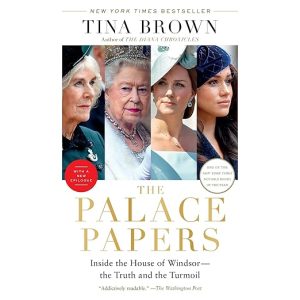
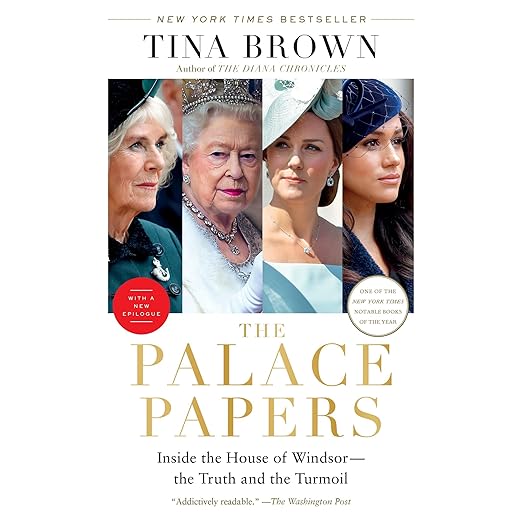
Tina Brown narrating an account of the British royal family that Brown spent decades reporting is the kind of production choice that changes how a listener hears every sentence, and The Palace Papers audiobook leans into that fully. Random House Audio put this one out in April 2022 at just over eighteen hours, picking up where Brown's earlier book, The Diana Chronicles, left off, and tracking the House of Windsor through Queen Elizabeth II's later years, Prince Charles's marriage to Camilla Parker Bowles, the rise of Kate Middleton, the downfall of Prince Andrew, and Harry and Meghan's exit from royal duties. That is a lot of ground for eighteen hours to cover, and the synopsis frames the whole arc around Queen Elizabeth II's private vow after Diana's death, that the family would never again let one member's popularity threaten the institution the way Diana's had.
A Review That Cuts Off Before Explaining His Conduct
Stephanie Mattson's review calls this the most satisfying account of the modern royals encountered so far, praising its complex and exhaustive information and calling it the most balanced royal history read to date, crediting Brown with gathering 'every bit of expertise that could be rounded up.' MommaLayne's review picks up the same throughline from The Diana Chronicles, describing being captivated by Brown's exploration of the royal family's attempts to transform after Diana's death, and singling out the emotional complexity Brown brings to figures from Queen Elizabeth II's 'quiet resilience' to Charles's long-anticipated marriage to Camilla.
Not every review is uncomplicated praise. Galla's four-star review pushes back specifically on the idea that this is scandalous gossip dressed up as history, calling it instead 'a fairly objective explanation of events' anchored in background detail, though the review also flags that Andrew is the one royal family member the book treats without much sympathy, a treatment Galla's review says he has earned through his own conduct, though the review itself cuts off before spelling out exactly what that conduct was. Reviewer Tricia Recommends adds a practical caveat: real repetition sits inside these eighteen hours, and the sections on UK tabloid coverage specifically tested that reviewer's patience enough to prompt some skimming, even while calling Brown's narrative style, sharp with 'just the right amount of snark,' what carried the listen through to the end.
Keeping Up With the Windsors, With Keats
A wall of press validation backs up the synopsis here: a Notable Book of the Year nod from The New York Times, a Washington Post 'addictively readable' pull quote, and Best of the Year honors from Elle and Town & Country. The New York Times itself is quoted calling this 'frothy and forthright, a kind of Keeping Up with the Windsors with sprinkles of Keats,' a line that captures the tonal balance Michael Rogers's brief but enthusiastic review gestures at too, calling the book simply 'intelligent and highly readable.' For listeners who want the sweep of three decades of royal reporting, from Diana's death through Elizabeth's Jubilee years and into Harry and Meghan's departure, condensed into one account, that press record is doing real work to earn your eighteen hours. Elizabeth's own resolve after the loss of Princess Margaret, the Queen Mother, and Prince Philip within a short stretch of years gets its own space in the synopsis too, a reminder that this book is as much about institutional endurance as it is about any single scandal.
What separates this from a straightforward chronology, per these reviews, is Brown's willingness to needle the very subjects being covered. Tricia Recommends specifically credits the 'snark' for keeping eighteen hours from feeling like homework, and MommaLayne's praise for the emotional complexity Brown finds in even minor players suggests a writer working from three decades of access rather than secondhand research.
Brown's Voice Is Both the Prose and the Performance
Brown narrating this particular book cuts both ways. Tricia Recommends explicitly credits 'Tina Brown's narrative style' with making even the repetitive stretches bearable, which on the page usually describes prose voice, but on an audio edition narrated by the author, that voice is doing double duty as both the writing and the performance a listener actually hears. None of these five reviews separate the two out explicitly, so it is worth knowing going in that the wit reviewers keep praising is inseparable here from how Brown chooses to deliver it on the recording.
Galla's more measured four-star review is the one to read if the five-star enthusiasm elsewhere makes you suspicious: the complaint here is not about accuracy so much as about which royal gets the roughest treatment, with Andrew singled out as the one figure the book does not extend much sympathy toward. Listeners sensitive to that kind of editorial judgment in a work of nonfiction should weigh Galla's review alongside the more uniformly glowing ones surrounding it. Worth flagging separately: the synopsis on this listing breaks his own name apart with a stray mid-word character, a small but telling sign that this descriptive text was carried over from a print layout rather than written fresh for the audio edition.
A Trade-Off Built Into This Specific Edition
Readers who finished The Diana Chronicles and want Brown's reporting brought forward into the Kate Middleton and Meghan era are the clearest audience, along with anyone who wants three decades of royal history delivered with what Tricia Recommends calls real snark rather than dry chronology. Steer clear if repetition in the UK media sections is likely to bother you the way it did Tricia Recommends, who admits to skimming those parts despite otherwise enjoying the book. Listeners who prefer their nonfiction narrated by someone other than its author should also know that trade-off is built into this specific edition, since Brown reads this particular reporting throughout. Anyone weighing this against a shorter royal biography should also register the eighteen-hour commitment up front, closer to a full workweek of listening than a weekend project.