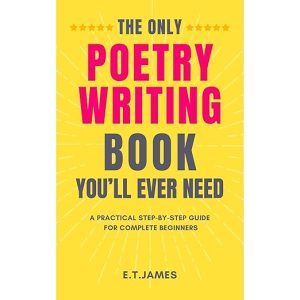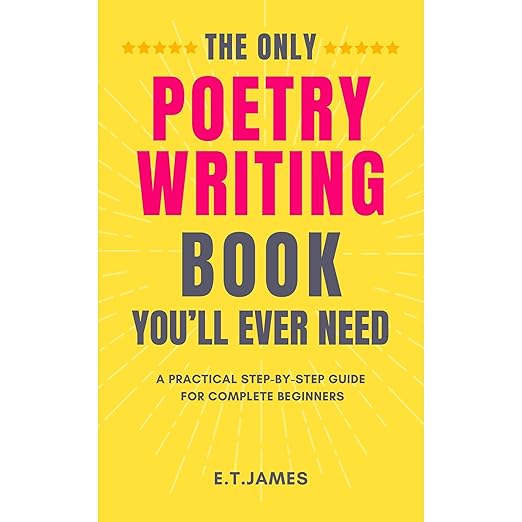
Poetry writing guides occupy a peculiar space: they try to teach something that resists instruction while being practical enough to actually help a beginner take a first step. THE ONLY POETRY WRITING BOOK YOU'LL EVER NEED, narrated in this audiobook edition via Virtual Voice, takes the practical side seriously, offering a step-by-step framework for complete beginners that does not require any prior experience or formal training.
E.T. James positions this guide squarely for people with zero experience, and the structure reflects that priority. Each chapter builds on the previous one, introducing a single tool or concept rather than overwhelming beginners with the full complexity of the form at once. The approach is comparable to learning to cook from a recipe that gives you one technique per dish rather than sending you to a culinary school kitchen on day one.
The book covers the fundamental elements of poetry: line breaks, rhythm, imagery, metaphor, and basic forms. James uses real poems as examples throughout, which is the correct pedagogical choice. Abstract explanations of rhythm mean very little until a reader can see exactly how a specific line works. The creative prompts embedded in each chapter give beginners immediate practice opportunities rather than leaving them to face a blank page alone after reading a theoretical explanation.
At one hour and fourteen minutes, this is a short audiobook, and the brevity is appropriate to the book's intentions. A comprehensive guide to all of Western poetry's traditions and forms would serve a different audience. What this guide aims to do is give someone who has never written a poem the specific, limited tools they need to write their first one, and it does that efficiently. The synopsis describes it as "a clear, encouraging introduction to writing poetry, made for real people who are just getting started," and that description is accurate.
Step-by-Step Structure Creates a Listening Rhythm
The audiobook format has a complicated relationship with creative writing instruction, because a significant part of what poetry guides do is show you things on the page. Line breaks, spacing, and visual arrangement all contribute to how a poem means what it means, and those visual elements are simply absent in audio. James's text is structured enough that the verbal explanations remain useful without the visual component, but listeners should be aware that some of the examples may be harder to follow than they would be in print.
The step-by-step structure is a genuine asset in audio format, because it creates a natural listening rhythm. Each chapter completes a small arc, introduces a concept, demonstrates it with examples, and offers a prompt. That rhythm makes the audiobook feel more like a lesson than a lecture, which helps maintain engagement across the runtime.
The book's stated audience includes people writing "for healing, expression, or just curiosity," and this breadth is worth noting. James is not training workshop poets who want to publish in literary journals. He is addressing people for whom poetry is a private practice or a form of self-understanding, and the tone reflects that orientation. Instructions are encouraging without being patronizing, and the examples are drawn from accessible traditions rather than requiring prior cultural knowledge.
Virtual Voice Struggles With a Poem's Rhythm
The Virtual Voice narration is the most significant limitation here. For a creative writing guide, the narrator's ability to read poetry with appropriate rhythm and feeling matters more than it would in a business book or history. Virtual Voice AI narration handles clear prose competently, but the reading of example poems in this guide will lack the interpretive quality that a human narrator would bring to verse. Listeners who can access the print edition alongside the audio may find the combination more satisfying.
This book carries no listener reviews at the time of writing, which makes independent verification of its effectiveness impossible. The guide's content, as described in the synopsis and extrapolated from James's stated approach, appears sound for its intended audience. But listeners who want social proof before purchasing may want to locate print edition reviews to supplement the audiobook's lack of a feedback record.
The title's capitalization, rendered in full caps in the catalog, suggests a boldness of approach that the content itself is more measured about. James does not claim this is the only poetry writing book you will need in the sense of being exhaustive. The title is aspirational marketing for a beginner guide that does what it promises without overreaching.
Consider Print if AI Narration Feels Intrusive
This audiobook is suited for complete beginners who want practical guidance on writing their first poems and are drawn to the audio format for lifestyle reasons, perhaps because they prefer to learn while on a walk or during a quiet hour at home. People who use writing as a therapeutic practice and want a structured starting point will also find the guide's encouraging tone well matched to their needs.
Listeners who should consider the print edition instead include anyone who wants to study the visual properties of poetry (line breaks, white space, stanza arrangement) and those who find AI narration intrusive for creative material. Experienced poets looking for advanced craft discussion will find this guide too introductory for their purposes. The target audience is genuinely narrow, but within that audience the book addresses a real gap.
Quick Take
- Narration: Virtual Voice narration keeps this practical guide functional but flat; the step-by-step structure translates reasonably to audio, though the creative prompts work better on the page.
- Themes: poetry craft for beginners, creative confidence, form and technique
- Mood: Encouraging and practical, structured for incremental progress
- Verdict: A sensible first step for anyone who has wanted to write poetry but did not know where to start, with the caveat that Virtual Voice narration limits the intimacy a creative writing guide needs.
Does the Virtual Voice narration work for a poetry writing audiobook, or should you read the print version?
Virtual Voice handles the prose sections adequately, but poetry examples read aloud without a human narrator's interpretive sensitivity can flatten the very qualities the examples are meant to demonstrate. Listeners who are primarily interested in the instructional framework and plan to use the creative prompts on paper may find the audiobook sufficient. Those who want to hear how rhythm and line breaks actually feel in practice should use the print edition alongside or instead.
Is this audiobook genuinely for complete beginners, or does it assume some prior knowledge of poetry?
Genuinely for complete beginners. James explicitly addresses readers with zero experience and builds each chapter from scratch. No knowledge of poetic forms, terminology, or literary history is assumed. The guide is designed so that someone who has never written a single poem can follow from chapter one to a completed draft.