Quick Take
- Narration: N.W. Edwards delivers a clean, professional read, the neutral authority of the voice suits estate planning content well.
- Themes: Estate planning, probate avoidance, asset protection
- Mood: Reassuring and methodical, like a competent attorney explaining things in plain terms
- Verdict: A clear and practically organized introduction to living trusts for readers with no legal background.
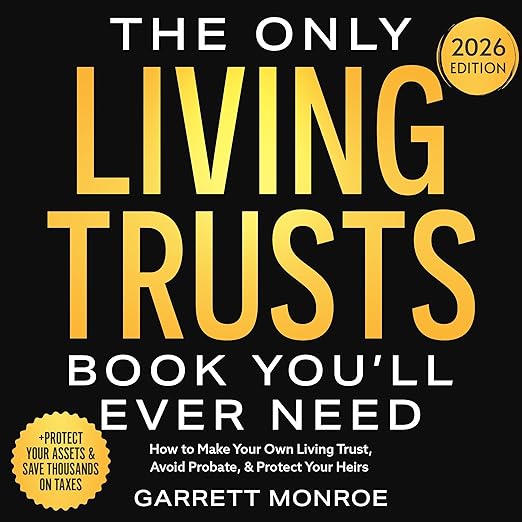
A friend of mine spent eighteen months watching her family navigate probate after her father died without an estate plan. It was expensive, contentious, and entirely avoidable. I thought about her often while listening to Garrett Monroe’s guide to living trusts, because this is precisely the book she would have pressed into her father’s hands years earlier if she had known it existed.
Estate planning titles have a reputation for being either impenetrably dry or relentlessly salesy, full of warnings designed to push you toward paying for professional services rather than actually teaching you anything. Monroe’s approach threads that needle with reasonable success. He demystifies the core concepts without pretending that a book is a substitute for an actual attorney, and he gives readers enough working knowledge to walk into that attorney’s office as an informed participant rather than a passive recipient.
Our Take on The Only Living Trusts Book You’ll Ever Need
The organizational logic is sound. Monroe begins with the foundational distinction between revocable and irrevocable trusts, the question most newcomers get wrong first, and builds from there into the mechanics of how a trust is structured, funded, and administered. The treatment of digital assets, including social media accounts, online bank accounts, and cryptocurrency, is a genuine differentiator. Most estate planning books written more than a few years ago either skip this category or handle it poorly. Monroe addresses it as a matter of course, which reflects an understanding of how modern estates actually look.
The bonus materials, the Living Trusts Creation Checklist and the Trustee Training Guide, are called out in the synopsis as PDF supplements available through Audible. In audio form you obviously cannot reference a checklist the same way you would on paper, but the content of both bonuses is woven through the narration, and the Trustee Training Guide material, which explains what a trustee is actually responsible for on a practical level, is among the most useful sections in the book.
Why Listen to This Audiobook
N.W. Edwards brings a professional, clear delivery that makes dense subject matter easier to absorb on first listen. Estate planning language has a way of accumulating, terms like grantor, trustee, beneficiary, and successor trustee appear constantly and in relation to each other, and a narrator who delivers with authority and appropriate pacing helps listeners build that vocabulary without backtracking constantly.
Multiple reviewers noted that the book changed how they think about estate planning. One reviewer describes updating his understanding of a living trust he had set up twenty-five years earlier, the book gave him a framework to evaluate what he already had against current best practices. That is a meaningful use case for the audio format, where context and comparison come through conversation-like delivery rather than static text.
What to Watch For in This Audiobook
One reviewer flagged that some information is repeated more often than necessary, which inflates the runtime without adding proportional value. At three hours and forty-seven minutes this is not a long listen, but listeners who pick up concepts quickly may find certain sections padded. The repetition reads like it was designed to reinforce key points for readers who might only skim, a reasonable print-book strategy that does not translate perfectly to audio.
Monroe also makes clear in the text that this is an orientation, not a legal document, and that readers should consult an attorney to create an actual trust. That disclaimer is appropriate and honest, but listeners expecting to walk away with a fully actionable plan will need to budget for professional advice beyond the book. The value here is preparation, not substitution.
Who Should Listen to This Audiobook
This is an excellent listen for anyone who owns property, has dependents, or has assets they would like to keep out of probate and has never seriously engaged with estate planning. It works equally well as a starting point for people in their thirties beginning to think about these issues and as a catch-up for people in their fifties or sixties who know they have been putting this off. Listeners with existing trusts will find it useful for reevaluating what they have. Those looking for jurisdiction-specific legal advice will need to go further.
Frequently Asked Questions
Does this book explain the difference between a will and a living trust?
Yes, and the distinction is central to the book. Monroe explains why a living trust avoids probate in a way that a will does not, and walks through the practical implications for how your estate is administered after death.
Is the digital assets section current enough to be useful in 2024 and beyond?
Yes. The coverage of cryptocurrency, online bank accounts, and social media is more current than most estate planning books and treats digital assets as a standard part of estate planning rather than an afterthought.
Do I need to download the PDF bonuses to get value from the audiobook?
No. The core content of both bonus materials is addressed within the narration itself. The PDFs add reference value in print form but are not required to follow the audio version meaningfully.
Does the book address living trusts in all US states, or is it state-specific?
The book covers federal estate planning principles that apply broadly across the US. State-specific laws vary, particularly around probate thresholds and trust administration, which is why Monroe consistently recommends working with an attorney to execute the actual documents.