Before You Press Play
- At its heart: Wisdom, common sense, mentorship
- Vibe: Conversational, warm, and gently challenging
- Short version: Andy Andrews delivers his signature blend of practical wisdom and genuine humor in a podcast format that rewards listeners who want real-world perspective from credible guests.
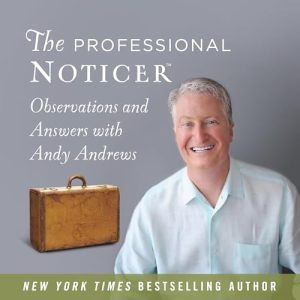
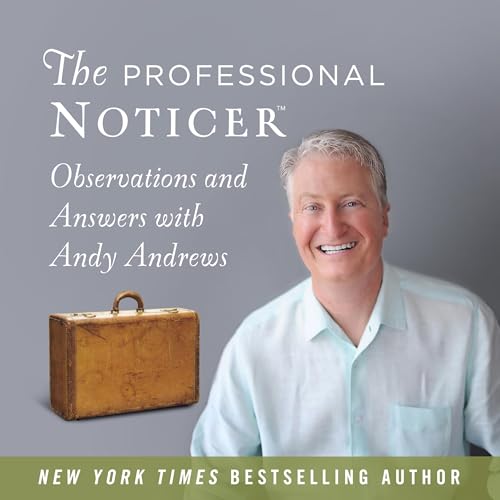
Andy Andrews built his reputation as the author of The Noticer around a simple but durable premise: most people move through life without really seeing it. The audiobook version of this podcast series, hosted and anchored by Andrews, extends that premise into a conversational format where each episode pairs him with a different guest described as one of the greatest mentors the world has to offer. Note that the credited narrator shown for this listing is an anomalous entry that plainly does not correspond to any real narrator's name; Andrews himself serves as the primary voice throughout every episode. If you are expecting a performed, produced audiobook in the traditional sense, the podcast-origin format here is worth knowing upfront before you purchase.
Our Take on The Noticer
Andrews has always positioned himself as someone who teaches by story and observation rather than by lecture, and that instinct carries through here in every exchange. The podcast structure means each installment runs roughly half an hour, which Andrews describes as the most fun and productive half hour of your week. That is a bold claim, but the format does earn it more often than not. The rotating guests represent a genuinely wide range of disciplines, and Andrews draws on over three decades of coaching executives, entrepreneurs, and public figures to guide each conversation. The result is a series that feels less like a self-help module and more like sitting in on a conversation between two people who have actually earned their perspectives through experience rather than credential alone.
Where this series distinguishes itself from the broader category of wisdom-and-growth podcasts is in Andrews' specific talent for noticing the detail that reframes a larger situation. He has written and spoken extensively about how small perceptual shifts produce large behavioral changes, and that lens applies to the guest conversations as well. He is not simply asking his guests to list their best advice. He is pressing them toward what they see that others miss, toward the specific observation or decision point that changed their trajectory. That focus on perception, on the gap between what is in front of us and what we actually register, gives the series an intellectual thread even as the guest roster varies widely across episodes.
The audience for this kind of audio content is well-served by Andrews as a host because he brings his full noticing framework to the interviews themselves. He identifies the moment when a guest is about to pass over something important and redirects toward it, which produces exchanges with more substance than the standard promotional interview circuit typically delivers. Listeners who have spent time with Andrews' books, including the original The Noticer novel and The Traveler's Gift, will recognize that instinct immediately. It is the same quality that makes his fiction work: attention to what other people are not paying attention to.
Why Listen to The Noticer
The runtime listed for this title reflects the podcast episode length rather than a single long-form audiobook, so listeners should calibrate expectations accordingly. Andrews is a polished, experienced speaker who understands pacing and knows how to keep a listener engaged in short bursts. His style owes something to the motivational speaker tradition but steers clear of the emptiest registers of that genre by insisting on concrete situations over abstract inspiration. He is funny in a way that feels spontaneous rather than scripted, and the laughter he generates from guests reads as genuine rather than hosted for effect.
The common sense framing is central to Andrews' brand, and it works here because he does not dress up ordinary wisdom in needlessly complicated language. When he talks about the disciplines that produce extraordinary results for clients, he tends to ground them in specific, observable behaviors rather than abstract principles that sound compelling in the moment and dissolve on contact with Monday morning. That makes the content easier to apply and easier to remember, which is why his ratings across thousands of listeners remain as high as they do. The combination of practical specificity and genuine humor is harder to sustain than it looks, and Andrews sustains it across episodes.
What to Watch For in The Noticer
The episodic structure means quality varies with the guest lineup, as it does in any interview-based format. Andrews is a skilled enough interviewer to elevate a middling conversation, but the best episodes are those where the guest comes with a genuinely distinct viewpoint rather than polished talking points they have delivered dozens of times. Listeners who prefer long-form narrative audiobooks will find the format fragmentary by design, and that is not a flaw so much as a genre distinction. The series is built for the kind of listening that fits into shorter windows, focused intervals throughout the day rather than immersive extended sessions.
Pay particular attention to the moments when Andrews steers a guest toward a specific observation or anecdote they initially glossed over. Those redirections are where his interviewing skill is most visible, and they often yield the most memorable exchanges in any given episode. The humor he advertises in the series description is real, and it lands without undercutting the substantive content, which is a balance most conversational podcasts in this genre struggle to maintain with consistency.
Who Should Listen to The Noticer
Listeners who already respond to Andrews' books and his philosophy of intentional attention will get the most from this series. It also suits professionals and entrepreneurs who want guest-driven conversations about leadership, perspective, and decision-making without the academic framing of a formal business text. Those looking for a structured, chapter-by-chapter audiobook experience should be aware this is a podcast series in audio format rather than a traditionally produced narrative title. Listeners who prefer complete, self-contained arguments or stories will find the episodic rhythm a poor structural fit for their listening habits, and the brief per-episode runtime will feel insufficient for the depth they are seeking.
Does this audiobook require familiarity with Andrews' original The Noticer book?
No prior familiarity is required. The podcast series draws on the same themes of observation and practical wisdom but functions independently. Readers who know the original book will recognize the philosophy, but it is not a prerequisite for any episode.
Who are the guests on The Noticer podcast audiobook?
The series features guests Andrews describes as among the greatest mentors the world has to offer, drawn from a range of fields. Specific guest lineups vary by episode, and the format brings in new voices rather than returning to the same roster.