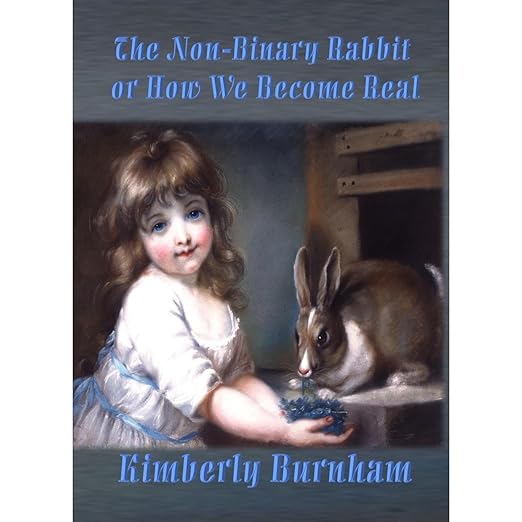
Velveteen Rabbit readers will recognize the emotional architecture immediately: the question of what makes us real, the weight of being truly seen, the cost of love that transforms. Kimberly Burnham's The Non-Binary Rabbit or How We Become Real takes that architecture and rebuilds it for a child who needs the story's language to include them. This audiobook, narrated by Virtual Voice, is a short listen at forty-one minutes, and it works squarely within the tradition of the classic it honors. The great-great-grandchild of the original Velveteen Rabbit, explicitly non-binary, navigates a world that was not written with them in mind, and the question Margery Williams asked a century ago is asked again, for a different child in a different moment.
The book is framed as both a re-writing in honor of the Velveteen Rabbit's hundredth birthday and a story in its own right, positioned as the second book in Burnham's LGBTQ Friendly Books series. That dual framing matters. Burnham is not simply inserting identity markers into a beloved story; she is asking the same fundamental question Williams asked in 1922, and answering it for a reader Williams could not have been writing for when she first put the story to paper.
Love Is What Makes This Rabbit Real
The story's central act of becoming is the same as in the original: love is what makes you real, being truly known by someone is what solidifies your existence in the world. Burnham translates this not as a lesson delivered to children but as a felt reality for a character who has had to define what being real means for themselves outside the categories that were available to them. The emotional logic is sound and the lineage is honored with care. Children who come to Burnham's book directly, without knowledge of the source material, will find a complete story. Children who know the original will feel the resonances at once, in the way the best children's book re-imaginings work.
At forty-one minutes, this audiobook moves at the pace of a longer picture book. The Virtual Voice narration is functional rather than expressive, handling the prose clearly but without the warmth and emotional texture a human narrator would bring to what is essentially a story about tenderness and uncomplicated acceptance. For a text this emotionally delicate, the gap between adequate narration and genuinely good narration is more noticeable than it would be in a different genre. Parents and caregivers listening with young children may find themselves filling in some of the emotional weight the narration leaves flat, which is not necessarily a problem but is worth knowing before purchase.
A Non-Binary Character Loved Without Explanation
The value here is primarily representational and relational. For families with non-binary children, this audiobook offers a story where a character like them occupies the emotional center of a narrative about love and belonging, without making their identity a problem to be solved or a lesson to be taught. That positioning matters enormously in children's literature, which still provides relatively few examples of it done well. The story does not explain non-binary identity to skeptical adults or make the protagonist's identity the drama of the text. It simply tells a story in which a non-binary character is loved and becomes real, which is the more powerful move and the harder one to execute without sentimentality.
Burnham's connection to the original text gives the story an emotional weight that a wholly original premise might not carry as quickly for young listeners. The Velveteen Rabbit is one of the most emotionally durable children's stories in the English language, and using its framework means listeners who know it arrive pre-loaded with affection and with the story's emotional logic already internalized. The new rabbit inherits that context and expands it, and even at forty-one minutes the inheritance feels earned rather than merely opportunistic.
Restraint Over Sentimentality in the Rabbit's Story
The relationship between the non-binary rabbit and the child who loves them is the emotional core, and Burnham handles it with restraint rather than sentimentality, which is the right call for this particular literary tradition. The most resonant moments are the quieter ones, where the rabbit simply exists in their own terms and is met with uncomplicated acceptance rather than explanation or qualification. The story resists the urge to make the protagonist's identity a dramatic pivot point, which is a deliberate and effective choice that reflects real care in the writing.
The "great-great-grandchild" framing is light-touch, providing continuity without requiring strict adherence to the original's plot mechanics or time period. Listeners unfamiliar with Williams's text will not be lost. Those familiar with it will find the generational framing a gentle way to locate this new story in literary time without making it beholden to the original in ways that might constrain the new narrative's ability to go where it needs to go.
Best for Shared Listening With a Caregiver
This audiobook is suited to families with young children, particularly those looking for picture-book-adjacent stories that center non-binary characters with warmth and without explanation. It works best as a shared listening experience between a parent or caregiver and child rather than as independent listening, partly because of its brevity and partly because the emotional content benefits from conversation afterward. Adults listening independently to evaluate it for classroom or library use will find it clear in purpose and gentle in execution. The Virtual Voice narration means it falls short of what a professionally cast human voice performance would deliver, which is worth knowing before purchase if narration quality is a priority. For its intended purpose and intended audience, the story itself is what matters most, and Burnham's handling of the Velveteen Rabbit's legacy for a new generation holds up with real tenderness.
- Narrator: Virtual Voice delivers the text clearly but lacks the emotional warmth this gentle, affectionate story needs; a human narrator would transform the experience.
- Subjects: non-binary identity and belonging, literary inheritance, love as the source of becoming real
- Tone: Tender and quiet, in the register of a picture book
- Bottom line: A meaningful forty-one-minute audiobook for families with young non-binary children or those seeking inclusive stories, with the caveat that AI narration leaves real emotional value on the table.
Good to Know
Is The Non-Binary Rabbit or How We Become Real audiobook appropriate for very young children, or is it aimed at older kids?
The story reads at the level of a longer picture book and is appropriate for young children, roughly ages four through eight. At forty-one minutes it suits a shared listening session, and the emotional themes are handled gently enough for that age range without requiring prior knowledge of the original Velveteen Rabbit.
How does the Virtual Voice narration affect this audiobook's suitability for children?
It is the book's main limitation for its intended audience. The AI narration handles the text clearly but lacks the warmth and emotional expressiveness a human narrator would bring to a story about tenderness and belonging. Families who prioritize narration quality may find the experience slightly flat compared to professionally narrated children's audiobooks.
Is this audiobook part of a series, and should I listen to the first book before this one?
It is the second book in Kimberly Burnham's LGBTQ Friendly Books series, but each book is independent and no prior listening is required. The series provides LGBTQ-inclusive stories for young readers across separate standalone titles.