Quick Take
- Narration: Charles Conrad delivers a composed, reverent reading that suits Goddard’s contemplative tone, though the short runtime leaves little room for the material to breathe.
- Themes: Imagination as creative power, attention and desire, consciousness shaping reality
- Mood: Quiet and inward, philosophically dense
- Verdict: A worthwhile entry point into Neville Goddard’s core ideas, though serious students will want his longer works alongside it.
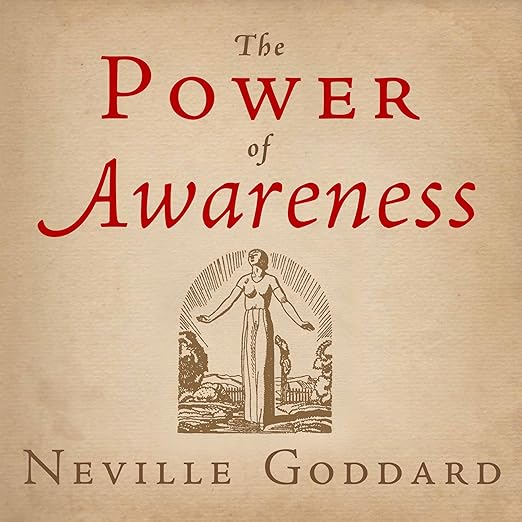
I came back to Neville Goddard on a quiet Tuesday morning, somewhere between a second cup of coffee and the start of a workday I was putting off. I had read fragments of his writing before, mostly in those dog-eared paperbacks that circulate among people who are drawn to the idea that the inner life shapes the outer one. This collection, anchored by The Power of Awareness, gave me a reason to sit with his thinking in a more sustained way. At just two hours and twenty-three minutes, it moves quickly, but what Goddard asks of his readers is not speed. He asks for stillness.
The collection is narrated by Charles Conrad, whose voice is measured and unhurried in a way that actually serves the text. Goddard’s prose is not conversational. It operates on a register closer to scripture than to self-help, and Conrad seems to understand that. He does not perform the material. He reads it, which is the right choice for writing that insists on its own weight.
Our Take on The Neville Collection
Neville Goddard was a Barbadian-American mystic who spent the middle of the twentieth century teaching what he called the law of assumption: that human imagination is not a tool for idle fantasy but the very mechanism by which experience is created. The Power of Awareness is considered his most focused articulation of that idea, and this collection gathers it in a format that rewards attentive listening. The central thesis is stated plainly in the synopsis: imagination is able to do all that you ask in proportion to the degree of your attention. This is not metaphor for Goddard. He means it literally, and the collection builds its case methodically, chapter by quiet chapter.
What strikes me each time I encounter his writing is how resistant it is to reduction. You cannot summarize Goddard into a motivational poster. The ideas require the reader to sit inside them, to test them against their own experience. The audio format, despite its brevity, creates a useful container for that kind of engagement.
Why Listen to The Neville Collection
Audible listeners who have studied what one reviewer described as around a thousand books of like nature will find that Goddard occupies a specific position in that landscape. He is not the most accessible of the New Thought writers, and he is not the most systematic. But he may be the most precise. His vocabulary is his own, and Conrad’s narration does not try to domesticate it. The collection works well as an introduction precisely because The Power of Awareness is his most concentrated work, stripping away some of the mystical elaboration found in his lecture transcripts and going directly to the mechanics of attention and desire.
There is also something to be said for listening rather than reading in Goddard’s case. His ideas emerged from lectures, from a spoken tradition of instruction. Hearing them delivered, even in a studio reading, restores something of that original context.
What to Watch For in The Neville Collection
The runtime is the main limitation here. Two hours and twenty-three minutes is genuinely short for a collection anchored by a full book, which suggests the text used is condensed or that the original work is itself quite lean. Listeners who arrive expecting a comprehensive survey of Goddard’s output will need to look beyond this release. The collection is best understood as an introduction or a companion piece, not a complete portrait of his thought.
The 4.6 rating across 110 reviews suggests that most listeners find the content worthwhile, even if a small number noted cosmetic issues with physical copies of the book. Those concerns are irrelevant to the audio experience, which stands on its own terms.
Who Should Listen to The Neville Collection
Listeners drawn to the intersection of spirituality, consciousness, and the mechanics of manifestation will find this a focused and substantive entry point. It is a better fit for those willing to engage with ideas rather than looking for a practical step-by-step program. Readers of William James, Thomas Troward, or Joseph Murphy will recognize the intellectual neighborhood Goddard inhabits. Those who prefer their spiritual content more prescriptive or socially grounded may find the abstraction harder to sustain over even this short runtime.
Frequently Asked Questions
Is this a complete collection of Neville Goddard’s works or just one book?
Despite the name, the collection is anchored by The Power of Awareness, which Goddard himself considered his masterpiece. The total runtime of just over two hours suggests either a condensed version or that additional shorter texts are included. It is not a comprehensive survey of his catalog.
Does Charles Conrad’s narration suit Goddard’s philosophical style?
Yes. Conrad reads with a calm, unhurried delivery that matches the contemplative register of Goddard’s prose. He does not dramatize the material, which is the correct approach for writing this deliberate in its construction.
Do I need to be familiar with New Thought or metaphysical traditions to follow this?
No prior background is required, though listeners familiar with New Thought writers like Thomas Troward or Joseph Murphy will recognize the framework immediately. Goddard is more precise than most in that tradition, so patient listeners without prior exposure can follow his reasoning without feeling lost.
How does this compare to reading Goddard’s texts rather than listening?
Goddard’s ideas originated in spoken lectures, so the audio format has a certain authenticity to it. For ideas this dependent on internalization rather than analysis, listening can actually be a better mode of engagement than reading, provided you give it your full attention.