Quick Take
- Narration: Laurel Aylesworth reads with quiet warmth and clarity, bringing a respectful, unhurried tone that suits the reflective nature of the material.
- Themes: Ramadan observance, spiritual accountability, mindful practice
- Mood: Gentle, purposeful, and devotional
- Verdict: A structured, holistic Ramadan companion designed by a licensed Muslim therapist, most powerful when used alongside the accompanying PDF rather than as audio alone.
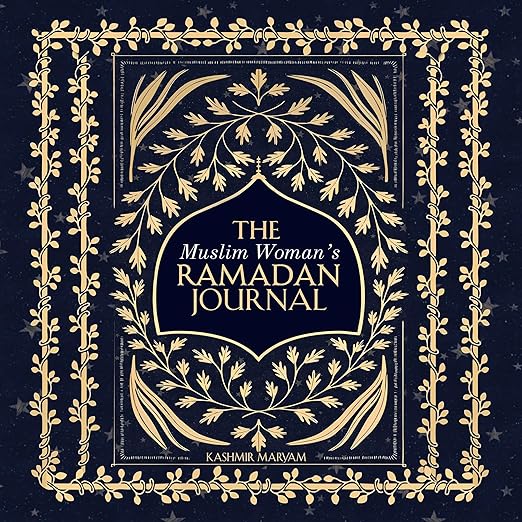
There is a particular genre of spirituality audiobook that works best not as passive listening but as a framework you return to intentionally, a companion you pick up on specific days rather than a narrative you move through once. Kashmir Maryam’s Muslim Woman’s Ramadan Journal sits firmly in that category. I came to it outside of Ramadan, which is admittedly not the ideal entry point, and even then the structure was clear enough that I could understand exactly how it would function during the month it is designed for.
At two hours and thirty-six minutes, this is a short listen that the publisher is clear comes with an accompanying PDF in your Audible Library. That PDF is the functional half of the experience. The audio provides the voice, the framing, the reflective prompts read aloud. The PDF provides the planners, tracking logs, and writing spaces that make this a working journal. If you purchase this as audio only and never download the PDF, you are using roughly half the tool.
Our Take on The Muslim Woman’s Ramadan Journal
Kashmir Maryam is a licensed Muslim therapist, and that background shapes the structural logic of the book in ways that distinguish it from more devotional Ramadan guides. The integration of habit tracking, mindfulness practice, and daily planning alongside specifically Islamic spiritual content reflects a therapeutic orientation: Maryam is interested not just in what you intend to do during Ramadan but in building the conditions that make consistent practice possible.
The journal covers daily prayer scheduling, a Quran reading log, dua lists with English translations, a habit tracker, and sections specific to Muslim women’s experiences during Ramadan, including a guide for navigating menstruation during the month and maintaining spiritual engagement throughout. One reviewer highlights the dua sections with their English translations as a standout feature, noting the value for listeners who may not have classical Arabic fluency but want full engagement with the prayers they are reciting.
Why Listen to The Muslim Woman’s Ramadan Journal
Laurel Aylesworth’s narration is well-chosen for this material. Her voice is clear without being clinical, warm without performing emotion. She reads the reflective passages and journal prompts in a way that creates space for the listener to actually pause and think rather than simply moving to the next section. For a journal-as-audiobook, that pacing quality matters significantly.
Multiple reviewers describe the experience as feeling seen and thoughtfully considered. One reviewer from the Muslim community notes that you can tell the author put a lot of thought into the structure of the book. Another calls it everything she could think of for a Ramadan planner for Muslim women. That sense of comprehensiveness is real: Maryam has built in the guidance for Eid ul-Fitr, the Night of Power preparation for Laylatul Qadr, a children’s section for mothers wanting to inspire their kids, and productivity frameworks for managing the energy shifts that come with fasting.
What to Watch For in Maryam’s Structure
The bonus sections are worth attention. Beyond the core thirty-day framework, Maryam includes a Sunnah food guide, a Ramadan Reframe section focused on building a growth mindset around the month, and a Farewell Ramadan reflection space. These additions give the journal a shape that extends beyond the month itself, treating Ramadan as both an event and a practice that has a before and after.
The Seeking Laylatul Qadr section deserves specific mention. The Night of Power is described in Islamic tradition as greater than a thousand months of worship, and Maryam treats its preparation with proportional care. The reflective prompts here are among the most substantive in the entire journal.
Who Should Listen to The Muslim Woman’s Ramadan Journal
Muslim women preparing for Ramadan who want a structured, intentional approach to the month will find this comprehensive and thoughtfully designed. It is also a genuinely useful gift option, as multiple reviewers note. Listeners who are curious about Ramadan observance from an outside perspective will gain real insight into the texture and intentionality of the practice, though the journal’s interactive elements are clearly designed for active Muslim participants. Download the PDF. Do not skip it.
Frequently Asked Questions
Is the PDF companion essential, or does the audiobook work well on its own?
The publisher explicitly notes that the accompanying PDF is available in your Audible Library with purchase. The audio is the reflective and instructional layer; the PDF contains the actual planning grids, trackers, and writing spaces. Using the audio without the PDF significantly limits what the journal can do for you.
Is this appropriate for someone who is new to Ramadan observance or still learning Islamic practice?
Yes. Maryam writes in accessible language and explains context rather than assuming deep prior knowledge. The dua sections include English translations specifically for listeners who may not have strong classical Arabic fluency. It is welcoming rather than exclusive.
Is Laurel Aylesworth’s narration culturally appropriate for this Islamic devotional material?
Her pronunciation of Arabic terms is careful and respectful, and her overall approach to the material is attentive rather than detached. Several reviewers from the Muslim community have not flagged the narration as problematic, and her tone throughout is genuinely reverent.
Can this journal be used outside of Ramadan as a general spiritual practice tool?
The structure is specifically designed around the thirty days of Ramadan and its particular rhythms, including fasting, Tarawih prayers, and the final ten nights. While the mindfulness and habit-tracking elements are broadly applicable, the journal’s architecture is tied to Ramadan specifically and is most coherent within that context.