At a Glance
- Voice: Hal Elrod narrating his own updated audiobook brings genuine conviction to the S.A.V.E.R.S. method. The enthusiasm is real and it is earned.
- Big ideas: Morning routines, identity-level change, incremental daily discipline
- Atmosphere: Energizing and practical, with the warmth of someone sharing something that actually worked for them
- Worth it?: A self-narrated update that justifies its expanded runtime. The new Miracle Evening and Miracle Life sections add real substance to a framework that millions already trust.
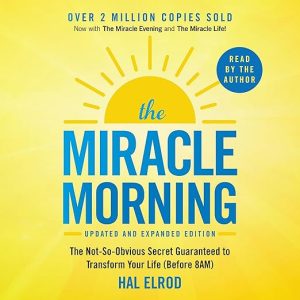
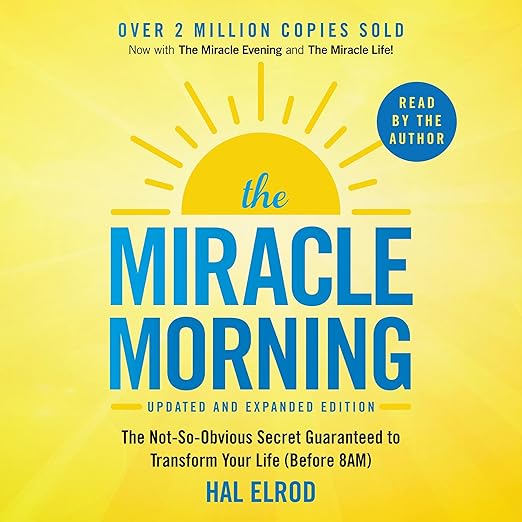
Alarm clocks and I have an adversarial relationship. That is the honest version of how I came to The Miracle Morning (Updated and Expanded Edition) by Hal Elrod. A colleague who had been irritatingly productive for six months mentioned the S.A.V.E.R.S. method in conversation, and I pulled up the audiobook partly out of curiosity and partly out of mild competitive concern. At seven hours and twenty-two minutes, narrated by Elrod himself, this updated edition adds over forty pages of new content to the framework that has sold more than two million copies and been translated into forty-plus languages. This is not a niche experiment in self-help publishing. It is a genuine phenomenon worth understanding on its own terms.
The core method is six practices: Silence, Affirmations, Visualization, Exercise, Reading, and Scribing. The acronym is deliberate and slightly dorky in the self-help tradition, but the practices themselves are grounded in evidence across psychology and performance research. What Elrod does effectively is present them not as a hierarchy of importance but as an integrated morning routine that can be compressed to six minutes when life demands it or expanded to an hour when it does not. That flexibility is the key insight of the framework, and the audiobook makes the case for it without the rigidity that renders most routine-optimization content useless in actual practice.
Evening and Life Sections Complete the Circuit
The expanded edition's additions are the primary reason to listen if you have encountered the original. The Miracle Evening section addresses what happens at the other end of the day: sleep optimization, wind-down practices that support the morning routine, and the relationship between how you end a day and how the next one begins. This is a gap in the original framework that the update addresses thoughtfully. Elrod is not just padding the runtime with material from a different book. The evening section completes a circuit that the morning focus alone leaves open, and it is the kind of practical addition that changes daily implementation rather than just enriching the theory.
The Miracle Life section is newer territory and the more philosophically ambitious addition. Elrod's discussion of inner freedom and learning to love the life you have while creating the life you want sits in productive tension with the self-optimization framing of the rest of the book. Listeners who have spent time with the framework and found it useful but noticed something missing in the acceptance dimension will find this section addresses that gap directly. Reviewer Lisa describes the new content as even better than the first version, with specific focus on how it reframes personal growth and self-care. That judgment tracks with what the updated edition is genuinely trying to accomplish.
Elrod's Survival Story Backs His Own Method
Elrod narrating his own work is the right decision here. Unlike many self-help audiobooks where the author's narration feels like an obligation fulfilled with limited investment, Elrod sounds like someone who genuinely believes what he is saying because he has lived it. His survival of a car accident that left him clinically dead for six minutes and then a cancer diagnosis gives the framework's emphasis on resilience and purposeful living a biographical credibility that no professional narrator could manufacture. When he describes transforming your morning as transforming your life, the claim does not sound like marketing copy. It sounds like a conclusion reached through serious personal testing over many years.
The pacing of the audiobook rewards active listeners rather than passive ones. The material is structured for application, not just comprehension. Reviewer Garrett Elseroad describes the book as putting beautiful order into mornings for someone who already got up early but did not know what to do with the time. That functional specificity is what distinguishes the Miracle Morning framework from more diffuse motivational content. It gives you concrete practices rather than aspirational moods. Another reviewer calls the book life-changing and notes that mornings that were previously rushed and lacking in personal growth became genuinely different after implementing the S.A.V.E.R.S. sequence in full.
Scribing and Affirmations Need Pen and Paper
The audiobook's format creates a specific challenge for the Scribing practice. Journaling requires a pen and paper, and Elrod's guidance around this practice includes reflection prompts and tracking suggestions that are easier to implement with a written text in hand. Listeners who take the Scribing section seriously will want to pause and write during or after those passages rather than expecting to absorb and remember all the specifics on a first listen.
The affirmations section raises a similar issue. Affirmations as a practice work when they are personalized and written down. Listening to someone else describe the process of creating affirmations is a first step, not the whole practice. Listeners who do not supplement the audiobook with the actual written work the method requires will find their results limited. The audiobook is excellent at the why and the what. The how requires implementation beyond listening, and that is worth knowing before you begin.
Six Minutes Is the Framework's Real Safety Net
People who have tried morning routines before and failed to sustain them will find Elrod's approach to the flexibility problem genuinely useful. The six-minute minimum is what makes the framework survivable across busy weeks. Those who have followed the original Miracle Morning framework and want access to the Miracle Evening and Miracle Life additions should listen to the updated edition specifically rather than revisiting the original. Skeptical listeners encountering self-help audiobooks for the first time will appreciate that Elrod's background story and the two million copies sold provide at least substantial anecdotal evidence of real-world impact. If mornings feel like something that happens to you rather than something you shape, this audiobook gives you a concrete framework for changing that relationship one day at a time.
Frequently Asked Questions
What is actually new in the Updated and Expanded Edition of The Miracle Morning audiobook compared to the original?
The update adds over forty pages of new content, including the Miracle Evening section on sleep and wind-down practices, and the Miracle Life section on inner freedom and loving your current life while building toward a better one.
Is this audiobook useful if you are not a morning person?
Elrod directly addresses this. The framework includes guidance on making waking up earlier sustainable for people who do not naturally orient toward mornings, and the six-minute minimum is designed specifically for days when motivation is lowest.
Does Hal Elrod's self-narration strengthen the audiobook's credibility?
Yes. Elrod's personal history, including surviving clinical death and a cancer diagnosis, gives the framework's emphasis on resilience genuine biographical weight that a professional narrator could not provide.
Can you get the full benefit of The Miracle Morning audiobook without supplementary written materials?
The concepts are fully communicated through listening, but practices like Scribing and Affirmations require written implementation to be effective. Pairing the audiobook with a journal is recommended for maximum impact.