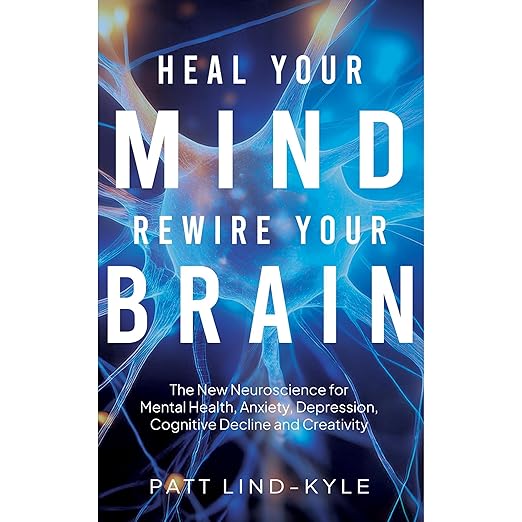
Quick Take
- Narration: Virtual Voice narrates this title, and the synthetic delivery creates a particular friction here, a book about cultivating mindful awareness and emotional healing is poorly served by a voice that cannot model the calm, grounded presence the exercises are trying to build.
- Themes: Neuroplasticity as practical tool, emotional pattern reprogramming, mindfulness and cognitive clarity
- Mood: Should feel like a calm mentorship; the Virtual Voice narration makes it feel more like a computer reading wellness content aloud
- Verdict: The content from Patt Lind-Kyle is substantive and the reviewer responses are consistently enthusiastic, but the Virtual Voice narration is a genuine obstacle for material that depends on modeled calm to work as intended.
I finished a very long week once by lying on the couch and listening to a guided body scan meditation. The voice on the recording, a human voice, with breath and slight variation and the kind of deliberate pacing that signals someone is actually present with the words, was the mechanism through which the exercise worked. I couldn’t have had the same experience with a synthetic voice, not because the words would be different but because the felt sense of being in the presence of another consciousness is part of what the practice offers. I thought about that when I came to this audiobook.
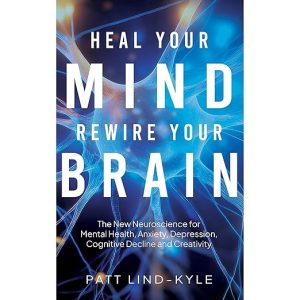
Patt Lind-Kyle has written a book that reviewers describe as quietly life-changing. One describes it as helping them see how their “thoughts and patterns were literally wiring my nervous system day to day.” Another calls it “a masterful and deep exploration into the neuroscience and psychobiology of emotional transformation.” These are not lightweight endorsements, and they suggest the underlying content has genuine value. The neuroscience of neuroplasticity, the brain’s capacity to rewire in response to deliberate practice, is solid ground, and Lind-Kyle’s integration of mindfulness practice with that science places the book in a well-established tradition of mind-body medicine.
The Neuroplasticity Framework
The core argument of the book is that neuroplasticity is not a passive process that happens to you, it is something you can direct. Lind-Kyle offers a step-by-step approach to identifying limiting thought patterns, understanding their neural substrate, and using specific practices to build new pathways. The exercises she describes, combining mindfulness, breath, and reflective writing, are drawn from the intersection of meditation practice and therapeutic neuroscience, and the reviews suggest they work for readers who engage with them seriously.
The distinction between approaches like this one and more generic positive-thinking content is the mechanism. Lind-Kyle doesn’t ask you to think good thoughts as an act of will. She asks you to understand why certain patterns persist, what emotional triggers maintain them, and what consistent practice does to the brain structures that govern those patterns. That mechanistic grounding is what separates a book like this from the wellness noise that surrounds it.
Where Virtual Voice Becomes a Problem
The reviewer who calls this “one of those quietly life-changing books” read it rather than listened to it. That distinction matters significantly here. The exercises in this book, practices designed to quiet mental noise, build mindful awareness, and facilitate emotional release, require the listener to follow verbal guidance and enter a receptive state. Virtual Voice narration, with its characteristic flatness and absence of tonal variation, creates the opposite atmosphere. It signals that a machine is reading content, and that signal works against the psychological conditions the content is trying to establish.
This is not a minor complaint. For passive informational content, straightforward nonfiction, data-driven business books, history, Virtual Voice narration is suboptimal but workable. For a book where the narration itself is part of the therapeutic mechanism, it is a significant mismatch. Listeners who respond well to the framework here should seek out the print version for the exercises, or look for an edition with a human narrator if one becomes available.
The Seven-Hour Question
At nearly eight hours, this is long enough to function as a comprehensive course rather than a brief overview. The runtime suggests Lind-Kyle goes deep into each element of the framework rather than covering the surface quickly. For listeners willing to engage with the content actively, pausing to complete exercises, returning to specific sections, the length is appropriate. For passive listening, eight hours of Virtual Voice on neuroscience and mindfulness practices will feel considerably longer than it should.
Who Should Listen and Who Should Skip
Listen only if you cannot get the print version and already understand the Virtual Voice limitation. The content is strong enough that determined listeners may find value despite the narration friction. For everyone else, this is a case where the specific book is better experienced in print, with the audiobook as a secondary reference if needed.
Skip if you’re new to mind-body practices and hoping the audiobook will guide you through the exercises, the Virtual Voice narration will undermine the experiential dimension significantly. The print version, based on reviewer responses, appears to deliver the experience the author intended.
Frequently Asked Questions
Why does a book about mindfulness and neuroplasticity use Virtual Voice narration instead of a human narrator?
Virtual Voice is Audible’s AI narration product, used typically for titles where the publisher has opted for lower-cost production. It’s a production decision unrelated to the book’s content quality, but it’s particularly ill-suited to material designed to guide listeners into a receptive, calm mental state.
Is this primarily a neuroscience book, a meditation guide, or a self-help program?
It sits at the intersection of all three. Lind-Kyle grounds the practices in neuroplasticity research, but the book’s core offering is a practical program of exercises combining mindfulness, emotional pattern recognition, and reflective work. Think mind-body medicine rather than either pure science writing or pure meditation guidance.
How does this compare to books like The Whole-Brain Child or Hardwiring Happiness in terms of approach?
Those books are more focused on specific mechanisms, children’s emotional development and the hedonic baseline respectively. Lind-Kyle works at a broader level, targeting adult patterns of stress, self-criticism, and emotional reactivity through an integrated practice framework rather than a single mechanism.
Does the book include specific guided exercises, or is it primarily conceptual?
Based on reviewer accounts and the synopsis, the book includes specific practices, described as combining mindfulness, breath, and reflective work. One reviewer notes it helped them ‘really see’ how their thought patterns were working, suggesting the exercises are experiential rather than purely analytical.