Quick Take
- Narration: Brian Nishii brings calm authority to dense metabolic science, pacing the material well without flattening Fung’s occasionally provocative tone.
- Themes: insulin resistance, hormonal drivers of weight gain, intermittent fasting as metabolic reset
- Mood: Methodical and quietly confrontational, Fung is dismantling conventional wisdom paragraph by paragraph
- Verdict: If you’ve tried calorie restriction and watched it fail, this is the scientific case for why, and it holds up under scrutiny.
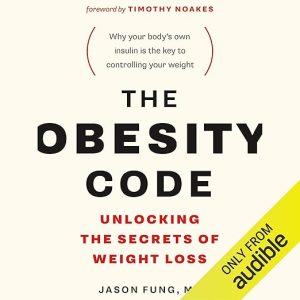
I came to this one skeptical. I’d read enough diet books to recognize the familiar architecture: alarming premise, origin story, five actionable steps. Jason Fung uses that architecture too, but what he builds inside it is different. I was about forty minutes in, washing dishes on a Tuesday night, when I realized I’d stopped registering the podcast playing in my other ear. The Obesity Code had quietly taken over.
Fung is a Toronto-based nephrologist who spent years watching his patients gain back every pound they lost through calorie reduction, then gain more. Instead of accepting this as patient failure, he went looking for a different explanation. That intellectual move, a clinician refusing the standard story, is the engine driving this entire audiobook.
Why Hormones, Not Calories, Is the Argument That Sticks
The central claim here is that obesity is a hormonal disorder, specifically a disorder of chronically elevated insulin. This isn’t new science, Gary Taubes was making a version of this argument in the early 2000s, but Fung’s version is cleaner, more clinically grounded, and better integrated with the broader literature on insulin resistance. He walks through why calorie restriction produces weight loss initially but triggers compensatory hormonal adaptations that eventually reverse it, why the same meals eaten at different times of day produce different metabolic outcomes, and why the type of carbohydrate matters far more than the count.
A practicing physician with experience publishing on metabolic disorders left a review noting this book covers territory Fung is genuinely qualified to cover, and that comes through. When he cites studies, he explains what they measured, what their limitations were, and why some popular interpretations overreached. That rigor is unusual in this genre, where studies tend to appear as authoritative end-points rather than messy starting-points for further inquiry.
The Intermittent Fasting Case and How Fung Makes It
The second half of the audiobook pivots toward practical application, and here Fung’s case for intermittent fasting is built not on trendiness but on the hormonal logic he’s spent the first half establishing. If insulin stays persistently elevated because we eat constantly, then creating genuine fasting windows allows insulin levels to fall far enough to reverse the resistance cycle. The argument follows from the premise rather than being bolted on for marketability.
He’s also honest about what fasting is and isn’t. It isn’t starvation. It isn’t appropriate for everyone in every context. He addresses the evolutionary case for periodic fasting, the difference between different fasting protocols, and the evidence base for each. The five basic steps he offers aren’t a quick fix but a framework for long-term habit restructuring, which is both the book’s honest selling point and the thing that will frustrate readers hoping for a shortcut.
Brian Nishii’s Performance and the Science Listener’s Ear
Nishii is a steady, intelligent narrator. He reads Fung’s slightly formal prose without making it feel academic, and he handles the passages of metabolic biology without either rushing through them or over-dramatizing. The tone never becomes lecturing, which is a real risk with health science that involves overturning established dogma. A few listeners note wanting Fung’s own voice, which is fair, this is a book where the author’s identity as a practicing clinician matters. But Nishii reads with enough precision that the credibility transfers.
At just over ten hours, the pacing is appropriate for the material. The audiobook doesn’t meander, but it doesn’t compress either. You get full explanations where full explanations are warranted.
Who Should Listen and Who Should Think Twice
Listen if you have repeatedly lost weight through calorie restriction only to regain it, if you have type 2 diabetes or pre-diabetes in your family history, if you want to understand the actual mechanism behind fasting before committing to it, or if you’re a healthcare professional looking for a patient-friendly introduction to insulin resistance science.
Think twice if you’re looking for a meal plan or concrete daily protocols, that’s more the territory of Fung’s follow-up books like The Complete Guide to Fasting. Also approach with some critical distance if you have a history of disordered eating; intermittent fasting is not a universally safe recommendation, and Fung, while thoughtful, is not writing for that specific audience.
Frequently Asked Questions
Is The Obesity Code audiobook the same as the print edition, or has content been updated?
The audiobook follows the same content structure as the print edition. Brian Nishii narrates the full text, and no significant content was cut or altered for the audio format. The book’s core argument about insulin and obesity remains the primary through-line.
Does Dr. Fung’s insulin-resistance theory have mainstream scientific support, or is it fringe?
The hormonal theory of obesity has substantial peer-reviewed support, though it remains contested in some dietary science circles. Fung draws on published research, and reviewers with medical credentials have affirmed the clinical grounding. It is not fringe, but it does challenge the dominant calorie-deficit paradigm.
How does The Obesity Code compare to Fung’s other books like The Diabetes Code or The Complete Guide to Fasting?
The Obesity Code is the foundational text, it builds the hormonal case from first principles. The Diabetes Code applies that framework specifically to type 2 diabetes, and The Complete Guide to Fasting moves into practical protocol detail. Most listeners benefit from starting here before the others.
Does the audiobook include any supplementary material like charts or reference tables?
No companion PDF is mentioned for this title. The arguments are presented verbally and work well in audio. That said, some listeners note that having a print copy alongside can be useful for the sections referencing specific studies or dietary breakdowns.