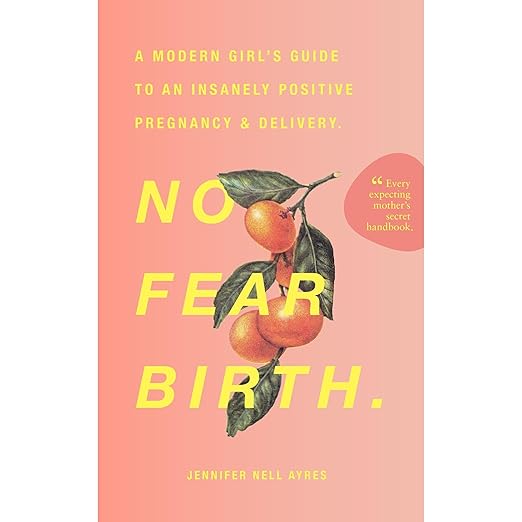
Quick Take
- Narration: Virtual Voice handles this short, practical guide adequately in terms of information delivery, but the faith dimension and personal warmth Ayres brings to the subject are noticeably dampened.
- Themes: fear-free childbirth, faith-based preparation, natural delivery techniques
- Mood: Encouraging and faith-infused, written with practical specificity about the body
- Verdict: A compact, specific guide for faith-motivated expectant mothers that delivers on its premise in 80 minutes, though those seeking secular evidence-based preparation will want to look elsewhere.
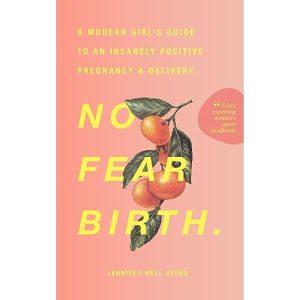
Eighty minutes. That is the runtime of No Fear Birth, and it is not a criticism. It is a design feature. Jennifer Nell Ayres has written what the synopsis accurately calls a handbook rather than a comprehensive guide, and she has been precise about what that means. She is not attempting to cover every aspect of pregnancy and childbirth. She is attempting to do one specific thing: give women the tools to move from fearing delivery to anticipating it. At that specific goal, the book delivers.
I listened to this on a quiet midweek evening when I was following up on a conversation with a friend who had just received her first positive pregnancy test. She had already described the particular dread that sometimes arrives with that news, the immediate awareness that something that is supposed to be wonderful comes with a terrifying biological event attached. No Fear Birth addresses that specific fear from a specific angle: the intersection of physical preparation, practical technique, and faith-based perspective.
The Pain-Fear-Tension Cycle and How Ayres Breaks It
Ayres’s central argument rests on the pain-fear-tension cycle, a concept with roots in natural childbirth literature going back to Grantly Dick-Read but that Ayres frames within a scriptural perspective. Fear, she argues, triggers tension; tension amplifies pain; pain increases fear. Breaking that cycle requires addressing all three components simultaneously. The book provides specific techniques for each: breathing methods to interrupt the tension response, mental framing to address the fear component, and a theological perspective that frames the body’s capacity for birth as designed rather than adversarial.
The faith dimension is explicit and central, not decorative. Ayres references Scripture throughout, and the book is aimed clearly at women for whom that framing is not merely acceptable but actively useful. A reviewer describes exactly this, the integration of God-given truths with practical technique as the specific combination she found most effective. For readers outside that framework, the techniques are still present, but the architecture of the argument will feel mismatched to their worldview.
The Illustrated Exercises and the Audio Gap
The print edition of No Fear Birth includes full-color illustrations of exercises that prepare the body for delivery. These illustrations cannot be rendered in audio. Virtual Voice reads the descriptions of these exercises competently enough that a listener can understand what Ayres is referring to, but the illustrations were almost certainly doing significant work in the original. The book’s website (NoFearBirth.co) is referenced for supplementary materials, which suggests Ayres anticipated the need for resources beyond the text itself.
At 80 minutes, the book moves quickly. There is no padding. Ayres writes with the economy of a professional copywriter, as the synopsis notes, and the structure reflects that. Each section covers one mechanism or technique and moves forward. This is a virtue for a handbook but means the audio experience is closer to a concentrated listening session than a long-form companion.
The Population This Reaches, and the Population It Does Not
No Fear Birth is specifically and genuinely useful for faith-motivated expectant mothers, particularly those experiencing their first pregnancy with significant fear around delivery. The 4.5 rating across 39 reviews reflects a readership predominantly within this audience, and the enthusiasm of those reviews suggests the book succeeds at what it sets out to do for the women who fit its intended profile.
Women seeking secular, evidence-based preparation for childbirth will find the framing incompatible regardless of how practical the techniques are. Women looking for comprehensive pregnancy guidance covering every trimester and every contingency should supplement this with a more encyclopedic resource. At 80 minutes, No Fear Birth is built for a specific moment, the point where fear about delivery is the primary obstacle, and it does not try to be anything else.
Frequently Asked Questions
Is the faith dimension of No Fear Birth central to how the techniques work, or are the practical methods separable from the scriptural framing?
The faith framing is architecturally central to how Ayres presents the material. Scripture is referenced throughout, and the overall argument is built on the premise that the body was designed for birth. The practical techniques for breathing and fear management are present independently, but the book’s logic is explicitly theological. Readers who want secular childbirth preparation will find the framing pervasive rather than optional.
The print edition includes full-color illustrations of exercises. How much is lost in the audio version?
Something meaningful is lost. Ayres describes exercises that prepare the body for delivery with a visual component that audio cannot replicate. Virtual Voice reads the descriptions adequately, but the audiobook is best used alongside the website resources Ayres references (NoFearBirth.co) or the print edition for the illustrated sections.
At 80 minutes, is this book substantive enough to be genuinely useful, or is the runtime a sign of thin content?
The short runtime is a deliberate design choice. Ayres writes with the economy of a professional copywriter and covers specific, actionable territory in 80 minutes. Multiple reviewers describe it as packed with information. It is a handbook focused on fear management and delivery preparation, not a comprehensive pregnancy guide.
Is this book useful for a second or third pregnancy, or is it primarily aimed at first-time mothers?
The explicit framing is for any woman experiencing fear around delivery. Reviewers include both first-time mothers and women returning to the subject. The techniques Ayres describes are applicable regardless of prior birth experience, particularly if previous deliveries were difficult or traumatic.