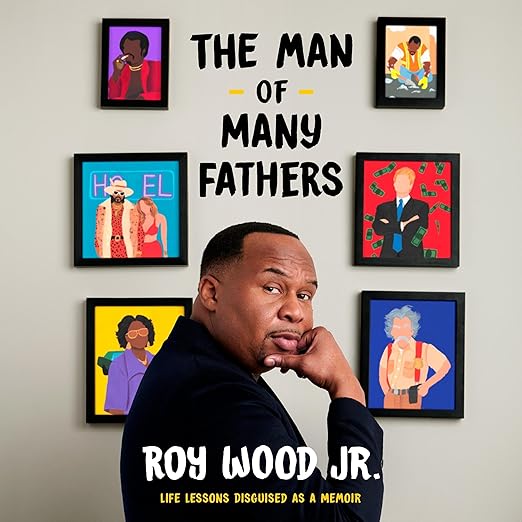
In Brief
- Narration: Roy Wood Jr. narrates his own memoir with stand-up precision, controlling the shift between comedy and grief without ever signaling it.
- Themes: absent fathers and found mentors, comedy as emotional processing, becoming a parent yourself.
- Mood: Funny, tender, unexpectedly moving.
- Verdict: One of the strongest self-narrated comedian memoirs in the catalog, recommended without hesitation.
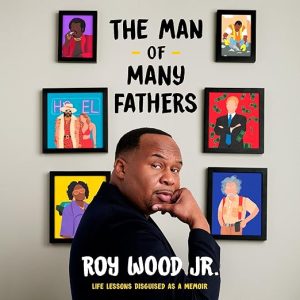
Roy Wood Jr. lost his father, a voice of the Birmingham civil rights movement, when he was sixteen, so who ended up filling in the lessons that never got finished? That question sits at the center of this audiobook, and Wood, an Emmy-nominated writer and former Daily Show correspondent, answers it by looking backward across his own life rather than forward into generic parenting advice. Holding his newborn son for the first time, he found himself cataloging every man who had actually taught him something: a formerly incarcerated man from Philadelphia who showed him what having a vision for your life looks like, fellow stand-up comedians who modeled the grind of building a career from nothing, and eventually famous names in Hollywood, including Trevor Noah, whose blurb calls the resulting book honest, raw, and an absolute treat.
Self-Narration Is the Entire Mechanism Here
Self-narration here is not a nice bonus, it is the entire mechanism the book runs on. Wood built his stand-up career on precise control of setup and payoff, and that same instinct governs how he moves between comic anecdotes, racing lit-match leaf boats with friends during a drought, learning not to snitch from a colleague who played pickup basketball while Wood scrubbed dishes, and genuinely heavy material about his father's early death and the responsibility of becoming a father himself. The shifts between funny and serious never feel signaled in advance the way they might if a professional narrator, working from a script rather than lived memory, tried to reproduce Wood's specific comic rhythms secondhand.
Structurally, the book organizes itself around specific people rather than a strict chronology, each chapter built around one father figure and one lesson learned, sometimes obvious in the moment, sometimes only clear in hindsight once Wood became a parent himself. That structure suits audio particularly well; each chapter functions almost as a self-contained short story with its own arc, making this an easy book to pick up in fifteen- or twenty-minute sessions without losing the thread, unlike a memoir built on a single continuous timeline that punishes interrupted listening.
Many Fathers Replace One Absent Figure
The title itself does real work once you sit with it: many fathers, plural, not one absent father and a hole where guidance should have been. That reframing runs through the whole book. Wood refuses the easy, sympathetic version of his own story, the fatherless boy who overcame the odds alone, in favor of a more accurate and more generous one, crediting a wide, unglamorous cast of coaches, colleagues, and near-strangers with raising him in pieces, which is a genuinely different and more interesting argument about what fatherhood actually requires.
Specific chapter lessons carry real comic weight on their own: the rule about never trying to outfox a single mother, learned the hard way, and the deadpan wisdom about how not to get caught snitching both work as self-contained bits before Wood pivots each one toward something more reflective about respect, boundaries, and consequence. That double function, genuinely funny on a first pass, quietly instructive on a second, is the through-line connecting nearly every chapter in the book.
Punchline Timing Proves the Audiobook's Value
One reviewer, writing from the Mississippi Delta, describes the book resonating with a depth she says she has not felt from a book in a long time, specifically citing the humor as inseparable from the emotional weight rather than a relief valve away from it. That balance is difficult to fake in prose alone; hearing Wood deliver his own punchlines with the timing built over two decades of stand-up, then pivot into a quieter register for the material about his father without breaking that same voice, is the clearest evidence the audiobook format adds real value here rather than simply being a convenient alternative to reading.
The blurbs stacked at the front of this listing, Chelsea Handler calling it insightful and memorable, Stephen A. Smith noting that Wood left a mark, come from people with genuine, hard-won standing in comedy and media, not manufactured praise, and the book's status as a national bestseller confirms the reception extended well past Wood's existing fanbase. A 4.7 rating across 135 ratings is strong for a memoir this specific and personal, and the reviews attached lean toward exactly the reaction that specificity should produce: readers connecting the details of Wood's particular upbringing to their own, rather than treating it as generic celebrity memoir filler.
Aware His Own Son Will Hear This
Go in expecting memoir pacing, not a recorded stand-up set. The laughs are real and frequent, but they arrive inside stories built for emotional payoff, not a rapid string of premise and punchline the way a comedy album would structure itself. One reviewer specifically frames this as quick and easy despite its emotional weight, while also noting a sense that Wood left a lot out, aware his own son will eventually read or hear every word. That restraint is a legitimate authorial choice, not a flaw exactly, but readers hoping for full, unfiltered disclosure about Wood's private life should adjust expectations accordingly.
At eight hours and forty-nine minutes, this sits at a comfortable, unhurried memoir length, long enough to develop each father figure with real specificity rather than a rushed montage, short enough to finish within a week of normal commute listening. No companion workbook or exercise material exists here to worry about missing in audio, unlike some parenting-adjacent titles; this is straightforward narrative memoir from cover to cover, meaning the audio edition loses nothing structurally that the print edition offers.
Compared to grief memoirs built around a single loss, this book resists a mournful register almost entirely, which some listeners expecting a heavier tone throughout may not anticipate going in. Wood's father's death sets the book's premise but does not dominate its mood; the emphasis stays on the accumulated lessons from everyone who stepped in afterward, an intentionally forward-looking structure rather than a book that lingers in one specific loss for its full runtime.
For Anyone Untangling a Complicated Fatherhood
Strongly recommended for fans of Wood's stand-up and Daily Show work who want the same comic sensibility applied to something more personal and sustained than a five-minute segment allows. Also recommended broadly to anyone processing their own complicated relationship with fatherhood, whether as a son piecing together an incomplete father-son relationship or as a new parent wondering, the way Wood does, whether they absorbed enough of the right lessons along the way. Listeners who loved self-narrated comedian memoirs built on precise timing will recognize the same craft at work here.
Skip it if you specifically want raw stand-up energy over memoir reflection, or if celebrity-adjacent blurbs and comedy-world name-dropping read as a turn-off rather than a draw. Everyone else, especially listeners who appreciate humor used as a tool for approaching real grief rather than avoiding it, should find this among the stronger self-narrated comedy memoirs currently available in audio.
Before You Listen
Does Roy Wood Jr. narrate this audiobook himself?
Yes, Wood reads the entire memoir personally, and his stand-up honed sense of comic timing shapes how the funny and emotionally heavy passages sit next to each other throughout.
Is The Man of Many Fathers more comedy or more serious memoir?
Both, blended rather than alternated. The book uses humor structurally, not as a break from the heavier material about his father's death and his own path to fatherhood, so expect real emotional weight alongside the laughs.
Do you need to be a fan of Roy Wood Jr.'s stand-up to enjoy this audiobook?
No. Prior familiarity helps you recognize his comic voice faster, but the memoir stands on its own for anyone interested in mentorship, fatherhood, or growing up without a present father.
How does the book handle Roy Wood Jr.'s relationship with his own father, who died when Roy was sixteen?
With real restraint. Wood focuses more on the specific lessons that relationship left unfinished, and on the men who later filled those gaps, than on exhaustive detail about his father's death itself.