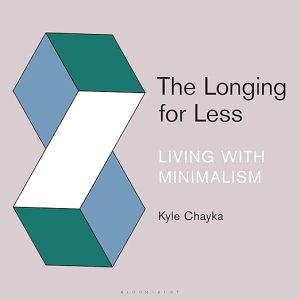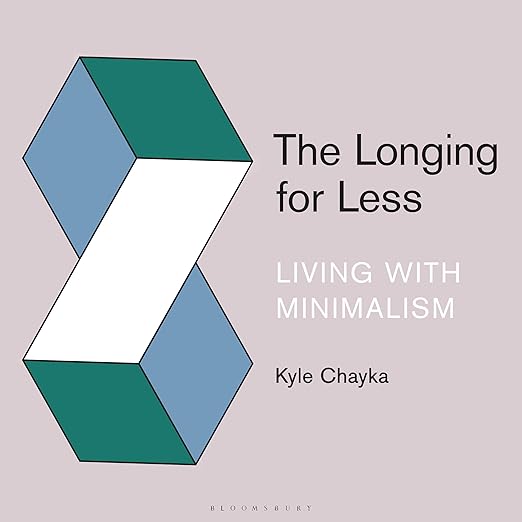
Kyle Chayka writes cultural criticism, and this audiobook is one of the stronger recent examples of the form: genuine intellectual curiosity rather than the knowing authority that makes much arts journalism feel like gatekeeping. The Longing for Less arrived when the minimalism conversation was reaching a kind of self-parody: Marie Kondo had become a household name, the sparking-joy framework had generated its own parody economy, and the spare Scandinavian coffee shop aesthetic had colonized every college town with a design-conscious clientele. Into that moment Chayka launched a book that refused to participate in either the celebration or the easy deflation of minimalism as a cultural force. Jenny Odell, who had done something similar for attention and digital distraction in How to Do Nothing, called it "thoroughly alive." The audiobook narrated by Christopher Ragland gives that aliveness a measured, deliberate quality that the essayistic format rewards.
From Agnes Martin's Canvases to Donald Judd's Marfa
Chayka's structure is what separates this audiobook from the lifestyle minimalism genre it is nominally about. He opens with the familiar terrain: the decluttering industry, the inbox-zero aspirations, the Instagram-ready spare interiors. He does so not to celebrate them or mock them but to identify the genuine longing beneath them. That longing, he argues, is real and deep, but the products and gurus and aesthetics sold to satisfy it are not adequate to what it actually needs. The rest of the audiobook is Chayka's investigation into where that longing comes from and where it has been more fully answered. He goes to Agnes Martin's paintings in New York and New Mexico, finding in their near-monochromatic surfaces something about presence that has nothing to do with having fewer possessions. He visits Donald Judd's Marfa compound in the Texas high desert, where minimalism in architecture becomes a sustained argument about how space shapes consciousness. He listens to John Cage's experiments with silence and sound, and to Julius Eastman, the Black composer whose contributions to minimalist music have been systematically underacknowledged. Each chapter is its own miniature intellectual journey, and Ragland's narration makes those journeys feel navigable without flattening their complexity. His pacing is steady and unhurried, which is the correct choice for this material. Reviewers at different points on the rating scale illuminate the audiobook's central tension: Jada calls it "a lightbulb moment" she could not put down, while others find the lack of concrete prescriptions frustrating. That tension is, in a sense, what the book is about. Chayka is not selling a better way to declutter. He is trying to explain why you feel the pull toward simplicity and what it might actually mean to answer it. Listeners who arrive expecting actionable minimalism guidance will be disoriented; listeners who arrive ready to have their assumptions about simplicity taken seriously will find this one of the more intellectually honest audiobooks available in the cultural criticism space.
Ragland's Cadence Sustains an Eight-Hour Sonic Tour
The audiobook format works for The Longing for Less partly because Chayka's sentences are built for the ear. He writes with a cadence that translates well to narration: long enough to carry genuine ideas, structured enough to avoid the dissolution that can make dense nonfiction difficult to follow in audio form. Ragland finds that cadence and sustains it across nearly eight hours, which requires interpretive intelligence that elevates this beyond simple text-to-audio conversion. The journey sections, Chayka visiting Martin's New Mexico studio, walking through Judd's Chinati Foundation, exploring the back alleys of Kyoto, benefit from audio rendering in a specific way: the prose becomes a kind of sonic guided tour with its own textural quality as sound. The cultural history chapters, particularly the music sections on Cage and Eastman, reward listeners who engage actively rather than letting the audiobook become background noise. David's review, noting that the book "presented a wealth of artists, authors, and philosophers to explore" and ultimately "won him over," captures the ideal listener experience: arriving with some resistance and leaving persuaded that Chayka has genuinely found something worth saying.
Not Prescriptive Enough for a Vocal Minority
At seven hours and 48 minutes, this audiobook is a substantial commitment, and its architecture rewards sustained engagement rather than episodic dipping. The first portion, covering contemporary minimalism trends, functions as necessary setup before Chayka moves into the artistic and philosophical territory that gives the book its depth. Listeners who invest through the early chapters will find the payoff significantly richer. The music sections require either prior familiarity with figures like Julius Eastman and John Cage or a willingness to sit with unfamiliarity; Eastman in particular is discussed with an assumption that listeners can engage with his work seriously even if they do not know it. The book's 4.1 rating across nearly 200 reviews reflects a meaningful minority who find its conclusions insufficiently prescriptive or its cultural landscape too narrowly art-world focused. Those are fair criticisms for listeners who want practical guidance. The New York Times Editor's Choice designation and Odell's endorsement signal the book's intended positioning: serious cultural nonfiction that earns its reflection time.
Best Suited to Commuters on Longer Rides
Listeners with genuine interest in contemporary art history, music, and cultural criticism will find this audiobook well worth the investment of attention it requires. Those who enjoyed Odell's How to Do Nothing or other recent critical examinations of attention and consumption under contemporary capitalism will find Chayka's inquiry a natural companion. The audiobook suits commuters with longer rides who prefer material that rewards consecutive sessions over short-form content. Skip it if you are primarily seeking actionable minimalism advice or a lifestyle framework; Chayka is operating in an entirely different register, and arriving with that expectation will generate only frustration with what is otherwise a genuinely thoughtful piece of cultural criticism.
Before You Press Play
- Narrator: Christopher Ragland's measured, thoughtful delivery suits Chayka's essayistic prose well, though the pace demands an alert listener.
- Subjects: Minimalism and its cultural history, presence over consumption, art as a way of living
- Tone: Reflective, intellectually stimulating, and quietly urgent
- Bottom line: Kyle Chayka's audiobook rewards patient listeners who want their assumptions about simplicity genuinely unsettled rather than flattered.