
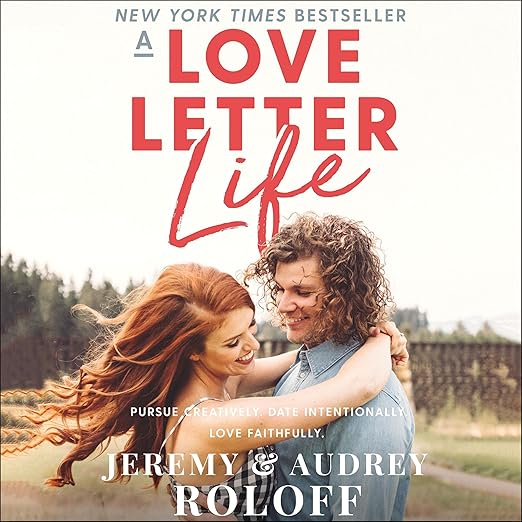
Two people wrote this book and one voice carries the audiobook. Jeremy Roloff is credited as author and as narrator; Audrey Roloff is credited as neither, although the description says the story is told through both their voices and quotes the pair together, as Jeremy and Audrey write. Six and a half hours, published by Zondervan in April 2019. The rating block underneath reports 4.7 stars from two ratings while displaying five written responses, every one of them a five.
The Review
Its central claim is unhedged, which counts for something in a crowded shelf: if you can fall into love you can fall out of it, so love is a thing you choose to live out through actions, decisions and sacrifices. Around that argument the Roloffs set their own dating history, described in the copy as bumpy and complicated, with health problems, emotional walls and a thousand miles between them. The wedding drew 2.3 million viewers. The book is mostly about the years before it.
Structure is what separates this from the general run of couple-authored marriage books, and plenty of it sits on the page. Nine rules for fighting well. A worked position on male and female differences in dating. A chapter on purity that the copy flags rather than buries. Whether that reads as helpful or prescriptive depends entirely on where a listener already stands, and nobody could accuse the book of being vague about its commitments.
Audience context arrives through the responses. A May 2019 five-star describes following the family on Little People, Big World from the beginning, living in Oregon, visiting the farm, watching Jeremy and Audrey marry, then following their ministry and buying the marriage journal for a son and his new bride. That describes the reader this book was written for, and the account is candid that the purchase was made partly with young adult daughters in mind.
The Best Parts of A Love Letter Life
The runtime suits this material. The book is a memoir with takeaways rather than a program, and it moves at story pace, which travels better in audio than a workbook ever does. Five stars on 30 April 2019 came from somebody who opens by declaring themselves not a reader at all, never one to read anything unassigned, and then reports finishing this in two evenings, which is a fair index of how quickly the thing goes down.
Self-narration is the strongest argument for this edition and the source of its oddest gap. When an author reads a memoir, nobody is interpreting somebody else's life, and the emphasis falls where it fell when the events happened. Jeremy Roloff holds that job here. What the listing declines to say is what becomes of Audrey's half, in a book the copy explicitly describes as told through both voices.
That question is worth pressing because the structure depends on the answer. A dual-voice memoir works by alternating perspectives on the same events, and the difference between one person reading both parts and two people reading their own is the difference between a story told and a conversation overheard. Nothing on this page settles which of those you would be buying.
The Caveats
Begin with the rating block, which cannot be right. Two ratings, if that is genuinely what the page holds, can only average on the halves: two whole-star votes produce 4.5 or 5.0 and nothing between them, so 4.7 is not a figure two voters can generate. Beneath it sit five written responses, all five stars, which would average a clean 5.0 were they the population being counted. They plainly are not, and the page never says what is.
Co-authorship is the bigger issue. The description credits Jeremy and Audrey throughout, quotes them jointly and states that the book carries both their voices, while the byline names one of them. Anyone searching under the other name will not find this listing, and any catalogue built from these fields will record a single-author book that the publisher's own copy describes as a joint one.
Shelving is off as well. This sits under arts and entertainment, tagged Entertainment and Performing Arts, and it is a Christian marriage memoir whose central chapters concern dating, purity and how to argue well. The television connection presumably drove the classification. The consequence is that the listeners most likely to want the book will not meet it while browsing, and the ones browsing that category are not its audience.
Then the photographs, which live outside the recording. The copy invites you to follow Audrey and Jeremy's love story through images supplied in a companion PDF download, so the visual half of a memoir about a very public wedding arrives as a separate file. A November 2019 five-star from Mexico gives away a related detail in passing, describing what a reader discovers within the first fifty pages, which is a printed edition scoring into the same rating block as this one.
The Right Listener for A Love Letter Life
Couples who share the Roloffs' faith are the core, and the book speaks to them without needing translation. Less obvious is how much of the readership is single. A response filed on 18 April 2019, written as a letter addressed to both authors and describing its writer as a single woman in college, reports using the book to test the standards she had set for herself, which is closer to the book's actual argument than any marriage manual framing suggests.
Not for you if the faith framing is a barrier. God is not a garnish in this book; the copy says a love story should be written for who God created you both to be, and the responses that praise it most warmly praise it as a testimony of agape love. Anyone wanting relationship advice with the theology stripped out will spend six hours doing the stripping.
Viewers of the show get a third thing again, which is a longer look at years the cameras covered only in outline. A December 2019 response from Canada credits the pair with insight on love, marriage, intentionality and faith, and says the book rekindled a desire to build a love story worth reading back later. Six and a half hours is a modest price for that if the names already mean something to you.
- Narration: Jeremy Roloff reads the book as its co-author, which fits the material, though the copy describes a story told in two voices while the credits list one.
- Themes: Love as a daily choice rather than a feeling, faith-centered dating, nine rules for fighting well
- Mood: Earnest, warm and openly devotional
- Verdict: Worth six and a half hours for couples who share its framework, provided you ignore both the byline and the rating block.
Questions Listeners Ask
Does Audrey Roloff appear on the A Love Letter Life audiobook?
The listing does not answer that. One name fills the narrator field and one fills the author field, both of them Jeremy's, while the copy attributes the writing to two people working jointly. A buyer who wants both voices should confirm the cast before spending a credit, because nothing on this page confirms it.
Is this a marriage book or a dating book?
Both, and it leans toward dating. The Roloffs spend most of their pages on the years before the wedding, arguing that preparing for a marriage matters more than preparing for a wedding day. The practical chapters address people who are single and searching, dating seriously, or hoping to love a spouse better.
Does the six-and-a-half-hour audiobook lean more memoir or more advice?
More memoir. The Roloffs build the book around their own dating history, the health problems, the emotional walls and the thousand miles between them, then hang the practical material on that spine: nine rules for fighting well, a position on male and female differences, a chapter on purity. It moves quickly as a result.
Do you need to have watched Little People, Big World first?
No. The copy leans on the show for context, noting that 2.3 million people watched the wedding and that the two were co-stars on it, but the book is a dating and marriage memoir that explains its own history as it goes. Viewers will recognize more names, and newcomers will not be lost.







