Quick Take
- Narration: Walter Dixon’s delivery is steady and professional, well-suited to financial content though offering little in the way of vocal dynamism to compensate for the book’s drier passages.
- Themes: Foreign exchange fundamentals, short and long-term trading strategies, risk awareness and common beginner mistakes
- Mood: Introductory and measured, written to reassure rather than excite
- Verdict: A competent primer for complete beginners that shows its age in a few spots, but Kathy Lien’s foundational framing of how currencies move still holds up as a starting point.
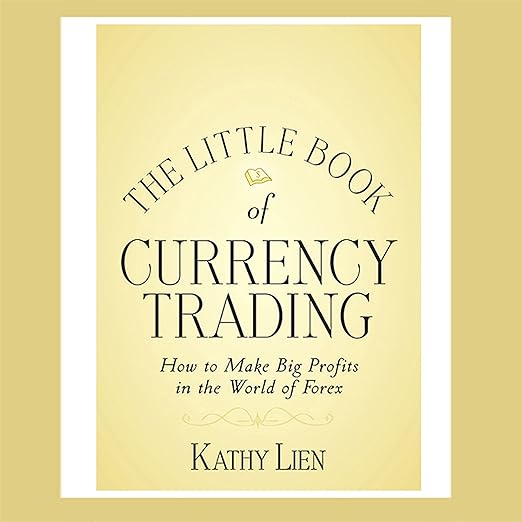
I remember when I first started paying attention to the forex market back when I was reviewing financial literacy titles in my early days at a culture publication in Paris. The sheer number of books promising quick riches through currency speculation was staggering, and most of them were borderline irresponsible. Kathy Lien’s approach in The Little Book of Currency Trading was, even then, different: calm, systematic, and genuinely interested in giving readers a realistic picture of what forex trading involves rather than a fantasy version of it. More than a decade later, the audiobook version narrated by Walter Dixon holds up as one of the more honest introductions to a market that attracts a lot of wishful thinking.
Lien is a serious figure in forex analysis, having worked at JPMorgan and running her own firm, and her credibility shows in how she structures this material. The book does not begin with promises or testimonials. It begins with how the foreign exchange market actually works, who participates in it, and what moves currency prices at a structural level. That foundation is more valuable than any specific strategy she later offers, because it gives beginners a framework for evaluating everything else they will encounter in forex content.
Our Take on The Little Book of Currency Trading
At four hours and thirty-three minutes, this is a genuinely compact listen. Lien covers a lot of ground efficiently: the difference between investor and trader approaches, fundamental versus technical analysis in a currency context, specific strategies including a Bollinger bands approach that at least one reviewer flagged as genuinely novel to them, and a clear catalog of the most common mistakes beginners make. The chapter on avoiding forex scams is particularly useful given how prolifically that particular industry generates predatory products.
One reviewer described it aptly as ‘the cliff notes of currency trading,’ and that framing captures both the book’s strength and its limitation. The brevity is a feature for the right reader, someone who wants orientation rather than deep training. For anyone expecting actionable systems and detailed entry/exit rules, the book will feel thin. Lien herself seems to know this, structuring the material as a roadmap to further learning rather than a self-contained instruction set.
Why Listen to The Little Book of Currency Trading
The audiobook format works well for this title because the content is conceptual rather than visual. Unlike a book built around chart patterns, where diagrams are essential, Lien’s framework is primarily about understanding macroeconomic forces and the behavioral tendencies of currency traders. Those ideas translate cleanly into audio without losing much.
Walter Dixon’s narration is functional and clear, maintaining appropriate pace through the denser explanatory sections without rushing. He does not bring interpretive character to the material, but financial audiobooks rarely benefit from performance choices. What matters is that the concepts land clearly, and they do. Lien’s prose is direct enough that any competent narrator will deliver it well, and Dixon is well above competent.
For a beginner who is attracted to the forex market but has encountered primarily promotional content elsewhere, this book serves as a useful reality check. The discussion of how much time and attention active trading actually requires, and how ‘slow and steady investing’ differs from short-term speculation, sets realistic expectations in a space that is systematically unrealistic about what returns are achievable.
What to Watch For in The Little Book of Currency Trading
The book was published in 2010, and certain sections show their age. The specific brokers and platforms mentioned are dated, and some regulatory context has shifted since then. Lien’s structural analysis of what moves currencies is durable, but listeners should treat the tactical chapters as a starting framework to verify against current resources rather than a ready-to-apply system.
The depth limitation is genuine. One reviewer described it as having about twenty pages of standout material buried in content that leans on familiar structures, and that is a fair assessment of the uneven distribution of insight across the chapters. The early sections on how the forex market functions are the strongest. The later chapters on specific strategies are where the brevity becomes a real constraint. There is simply not enough space to develop any single approach to the point where a new trader would feel confident implementing it.
Who Should Listen to The Little Book of Currency Trading
Complete beginners to forex who want an accessible orientation and a realistic sense of what the market involves will get genuine value from this listen. It pairs well with more current resources as a conceptual foundation. Traders with any experience will find too little here to justify the time. And anyone hoping for a practical trading system with clear rules will need to look elsewhere after finishing this one, since the book functions as an introduction to the territory rather than a guide through it.
Frequently Asked Questions
Is the content still accurate given that the book was published in 2010?
The foundational material on how currency markets work, what drives exchange rates, and the behavioral patterns of forex traders is still relevant. The specific platform recommendations and some regulatory references are outdated, so listeners should treat those sections as historical context rather than current guidance.
Does Walter Dixon’s narration handle the financial terminology clearly?
Yes. Dixon reads the technical terminology accurately and at a pace that allows it to register without becoming plodding. The narration does not add interpretive texture, but financial concepts benefit from clarity over performance, and Dixon delivers that.
Will this book give me an actionable trading strategy I can start using?
Not exactly. Lien covers a Bollinger bands strategy and value investing concepts in forex, but the treatment is introductory rather than systematic. Think of it as an orientation to the types of strategies that exist rather than a step-by-step system to implement.
Kathy Lien is listed as the author but not the narrator. Does the book still convey her expertise?
Her expertise comes through in the writing itself. Lien’s background managing institutional forex positions gives the material a credibility that no narration choice can undermine or replace. Walter Dixon reads her words accurately, and her perspective on what matters, and what tends to go wrong, comes through clearly.