Three Bonus Tracks From Butler's Own Voice Archive
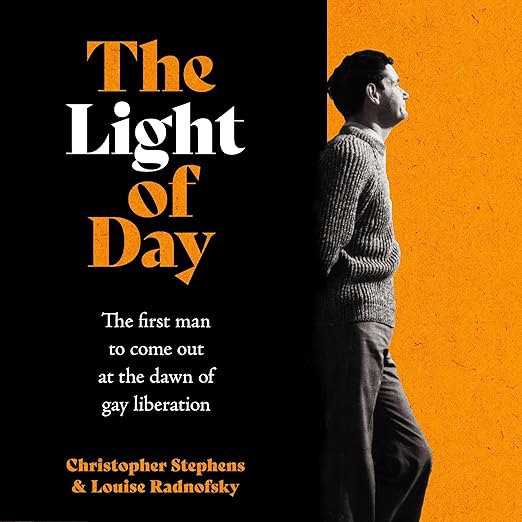
Who was Roger Butler, and why has almost no one heard of him? In June 1960, seven years before the decriminalisation of homosexuality in Britain, Butler wrote a letter to several newspaper editors, signed it with his own name, and began it: 'Sir, we are homosexuals.' Coming out publicly, voluntarily, using his real name, to the entire British press, at a moment when doing so could mean imprisonment. That act, which The Light of Day makes a compelling case is the first of its kind in British recorded history, has been almost entirely erased from the official narrative of LGBTQ+ history. This audiobook is Christopher Stephens's account of how that erasure happened, how he came to know Butler, and how he became the person entrusted with reversing it. Stephens self-narrates, which is not just appropriate but essential to how the book works, because he is not simply the author of this story. He is a character in it, and his voice carries the specific weight of someone telling a story they feel is owed to someone else.
Stephens was a student when he was asked to visit Butler, then an old, blind man, and read to him. What began as an act of service became an intergenerational friendship that lasted until Butler's death and beyond. The audio edition of The Light of Day includes three bonus tracks from Roger Butler's own voice archive, recordings made at Regent Street in which Butler can be heard discussing his parents, reading with Stephens, and drafting a letter. Hearing Butler's voice directly, in the context of a book that seeks to recover his erasure from history, is an extraordinary experience that the print edition cannot replicate.
Three Registers Held in Productive Tension
The structural architecture of this audiobook is one of its genuine strengths. Stephens moves between three registers throughout: the historical account of Butler's activist work in the 1950s and 1960s, including the criminalised underground of gay pubs, parties, and organising meetings; the personal account of the friendship between Stephens and Butler at the beginning of the twenty-first century; and the posthumous discovery of unsent letters Butler left in a pink folder, addressed specifically to Stephens, containing his final wish. That layered structure creates an unusual kind of intimacy, the sense of a voice reaching forward through time to a specific person who has accepted the responsibility of carrying it further. Stephens's narration holds all three layers in productive tension throughout the audiobook.
Reviewer Goran describes the book as 'a beautiful love story, on so many levels,' and that framing is accurate. The loves in question are plural: Roger's love for the movement he helped create and from which he was later marginalised, Stephens's love for the old man who trusted him with his most precious possession, and the broader commitment to a kind of history that gets lost when the people who made it die without formal archives or institutional recognition. Stephens is doing historical recovery work in the most personal possible mode, and the audiobook format makes that work viscerally present in a way that the print edition cannot fully achieve.
Sir Ian McKellen's endorsement, 'Your book is the really good book. Just one that Roger Butler would have wanted,' and Will Tosh's description, 'Miraculous. The Light of Day reclaims a forgotten hero,' give some indication of how the book has been received by people who knew the history Butler helped make. Matthew Parris calls it 'at times gripping, at times very personal, an important piece of objective history, faithfully recorded.' That combination of adjectives is apt: Stephens is scrupulous about the historical record while being fully honest about the personal dimensions of his relationship with Butler and what it meant to both of them.
Written Out of a History He Helped Write
The sections on Butler's marginalisation from the movement he helped create are quietly devastating and handled with care throughout. After Butler lost his sight in his early thirties, he found himself increasingly sidelined from the activist communities he had helped establish. The visibility politics of the later 1960s and the organized Gay Liberation Front era moved in directions that did not have obvious room for a blind man whose public act had preceded the organized movement by nearly a decade. Stephens does not simplify this history or sensationalize it; he allows the particular cruelty of being written out of a history you helped write to register at its actual weight, which is considerable.
Reviewer tanith stephens calls the book 'transformative' and notes particular interest in the sections about Butler's years at Oxford as a blind student. Those sections are among the more affecting in the audiobook, and Stephens's narration of them has the quality of testimony from someone who witnessed what he is describing rather than reconstructed it entirely from documents. The texture of direct experience in those passages is one of the things self-narration makes possible that third-party narration would eliminate.
The audio bonus tracks, the three 'Recordings from Regent Street,' are the reason to prioritize the audio edition over the print version. Butler lost his sight in his early thirties and composed his written work through a specific process of dictation and transcription, and hearing him actually speak makes that process legible in a way that prose description cannot achieve. His voice in those recordings is unmistakably the voice of the man Stephens describes throughout the text, and the presence of those recordings transforms the audiobook from a good historical narrative into something more layered and more lasting.
What One Person Did and What It Cost
This audiobook belongs in the listening queue of anyone with a genuine interest in LGBTQ+ history and specifically the granular ways that history gets made, recognized, and then lost. It is also for readers of biography who are drawn to lives recovered from obscurity by the specific people who loved them, and for anyone who has thought carefully about what it means to come out not as a personal act of self-expression but as a deliberate, dangerous political statement in a society that has criminalized your existence. The audio bonus tracks are reason enough to seek out the audio edition specifically.
Some familiarity with the broader British LGBTQ+ legal history, including the Wolfenden Report and the 1967 Sexual Offences Act, will enrich but is not required for the listening experience. Stephens provides enough historical context for listeners coming in without prior knowledge, and the personal story at the book's center works independently of the legal and political framework. This is ultimately a book about what one person did and what it cost him and what one other person decided to do about that cost, and those are questions that require no background knowledge to engage with fully.
Key Details
- Narration: Christopher Stephens self-narrates with the quality of someone who owes this story to the man it concerns; the three bonus archive recordings of Roger Butler's own voice are the audio edition's most irreplaceable feature.
- Themes: Forgotten LGBTQ+ history and deliberate erasure, intergenerational friendship as an act of witness, the distance between making history and receiving credit for it
- Mood: Quiet, intimate, and at moments genuinely affecting; a work of recovery and restoration rather than polemic
- Verdict: A meticulously told recovery of a forgotten first: the man who publicly identified as homosexual in 1960 Britain, seven years before legalization, narrated by the person he trusted with his story and his voice.
Good to Know
Does Christopher Stephens narrate his own audiobook, and how does that shape the experience?
Yes. Stephens is a character in the story as well as its author, and his self-narration carries the specific quality of someone reporting on events he personally witnessed and relationships he personally held. The difference from third-party narration is audible and matters particularly in the sections describing his friendship with Butler.
What are the audio bonus tracks included in The Light of Day audiobook?
Three recordings from Roger Butler's personal audio archive, titled 'Recordings from Regent Street,' in which Butler can be heard discussing his parents, reading with Stephens, and drafting a letter. For a man who lost his sight in his early thirties and composed his work through dictation, hearing his voice is a significant addition to the printed text and a primary reason to choose the audio edition.
Do I need background knowledge of British LGBTQ+ history to follow this audiobook?
No, though familiarity with the Wolfenden Report and the 1967 Sexual Offences Act will add useful context. Stephens provides enough historical background for listeners coming in without prior knowledge, and the personal story at the book's center works independently of the legal and institutional framework surrounding it.