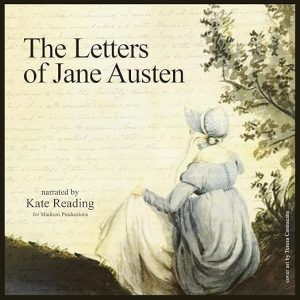
Austen scholars have long argued that the letters she wrote to her sister Cassandra reveal a version of their author that the novels, by necessity, keep at a remove. The Letters of Jane Austen audiobook, narrated by Kate Reading, makes that argument in audio form over nine hours and thirty-five minutes, and the case it makes is compelling. This is not the Austen of drawing rooms and carefully plotted matrimonial maneuvering. This is Austen noticing, judging, and reporting back with the pleasure of someone who has found a correspondent she trusts completely. The letters are not literature in the conventional sense. They are dispatches, and they were never meant to be read by anyone except Cassandra.
Mulberry Trees Not Dead, But Not Alive
The collection was originally compiled by Lord Brabourne, Edward Hugessen Knatchbull-Hugessen, the son of Cassandra's niece Fanny Knight, and first published in 1892. This edition, published in 1908, is in the public domain, and it includes a preface and editorial notes that help orient listeners to the original context of composition and collection. What you get is not a continuous narrative but a series of dispatches: observations about neighbors, travel conditions, family health, balls attended, fabric purchased. The accumulation of these details is precisely the point. Austen's eye for human behavior does not switch off because she is writing privately. If anything, it sharpens considerably when the audience is reduced to one.
One reviewer quoted the line to Cassandra about mulberry trees: "I will not say that your mulberry-trees are dead, but I am afraid they are not alive." That sentence captures exactly the kind of deadpan precision that makes these letters worth hours of your time. Another reviewer, describing herself as a devoted Janeite, was honest about the audience this audiobook serves: it will feel slow and repetitive for anyone not already invested in Austen's world, but for those who are, the letters dismantle the saintly image that biography sometimes constructs and replace it with something more complicated, more fallible, and more alive. Cassandra's decision to destroy so many of these letters before her own death makes the ones that survived feel genuinely precious.
Kate Reading's Fantasy Epics Prepared Her for This
Kate Reading is best known for her work on fantasy epics, which makes her an unexpected but effective choice here. Her voice carries a natural authority that keeps the material from becoming too cozy, and she reads Austen's asides with a light touch that avoids editorializing. The epistolary format works well in audio in a way it does not always work on the page. Hearing the letters read aloud restores something of their original function, these were meant to be received by a single person in a particular place, and Reading's intimacy of delivery approximates that experience more closely than silent reading can.
At nine hours and thirty-five minutes, this is a commitment. One reviewer deliberately spread the experience across several days to draw it out, and that approach makes practical sense. These are not letters designed to be consumed in sequence like chapters of a novel. They accumulate meaning through repetition, the same concerns returning, the same relationships evolving in small increments, the same sharp observations turning different subjects in the same unsparing light. Listening across multiple sessions allows the texture of Austen's daily life to settle in properly rather than rushing toward an end point that does not exist.
A Material Object With a Physical History
Pay attention to the letters written during periods of travel or social obligation, these tend to produce Austen's sharpest observations, as she processes unfamiliar company with the same analytical detachment she applies to her fictional characters. The letters to Cassandra also contain moments of genuine tenderness that the novels, structured around irony and social comedy, cannot quite accommodate. The contrast between Austen's public mode and her private affection for her sister is one of the more moving things this collection reveals, and it comes through in audio with particular force.
The editorial framing, the preface and Lord Brabourne's notes, deserves attention rather than skipping. Brabourne's perspective as a family descendant shapes which letters he prioritized and how he interpreted them, and that mediation is part of the historical record of how Austen's reputation was actively constructed in the Victorian period. For listeners interested in literary history as much as in Austen herself, these framing materials add a layer that a straightforward collection would lack. The cover art note that the edition includes Cassandra's sketch of Jane and an image of her handwriting is worth keeping in mind as a reminder that this is a material object with a physical history, even in audio form.
The Closest Approximation Currently Available in Audio
Committed Austen readers will find this audiobook genuinely rewarding, a private window into a sensibility they have encountered only through the careful architecture of the novels. Those new to Austen should start with the fiction and return to the letters once the world is familiar enough to make the private references legible. Literary historians and students of the Regency period will value the domestic detail as primary source material for understanding daily life in the early nineteenth century. Anyone expecting plot or forward momentum will find the experience frustrating and should look elsewhere. But for listeners who have ever wanted to sit in the room with Austen while she processes the world, Kate Reading's narration of these letters offers the closest approximation currently available in audio.
- Performance: Kate Reading brings warmth and precision to Austen's epistolary voice, her timing catches the wit without overstating it, and the intimacy of the letter format suits her quieter register well.
- What it covers: Domestic life and social observation, intimacy between women, wit as armor and affection
- Feel: Intimate and gently irreverent, with flashes of surprising sharpness
- Our call: For devoted Austen readers, this audiobook is a rare opportunity to hear the private voice behind the novels, acerbic, tender, and entirely unperformed.
Questions Listeners Ask
Does this audiobook of The Letters of Jane Austen include all of Austen's surviving correspondence?
No. This edition is the 1892 Lord Brabourne collection, which covers letters he had access to, primarily those addressed to Cassandra and other family members. Cassandra destroyed a significant portion of the correspondence before her own death, so no edition can claim completeness.
How does The Letters of Jane Austen audiobook compare to reading the text on the page?
Audio restores something of the original function of a letter, these were meant to be received and heard, not silently scanned. Reading's delivery gives the private observations a conversational immediacy that the printed page can muffle.
Is this audiobook worth it for listeners who have only seen Austen adaptations but never read the novels?
Probably not as a starting point. The letters assume familiarity with Austen's world and relationships. The novels or a good biography would provide a more rewarding entry point before returning to this collection.