At a Glance
- Narration: Matt Hay narrating his own audiobook is the defining choice: the personal stakes of losing his hearing make every musical reference feel lived rather than curated, and his voice carries earned warmth.
- Themes: hearing loss and identity, music as memory and emotional anchor, love and disability
- Mood: Tender and personal, funny in the way that grief sometimes forces you to be
- Verdict: Matt Hay's memoir is among the best audiobooks in the disability memoir category, made essential by his own narration and the specific power of hearing a man describe losing sound through sound itself.
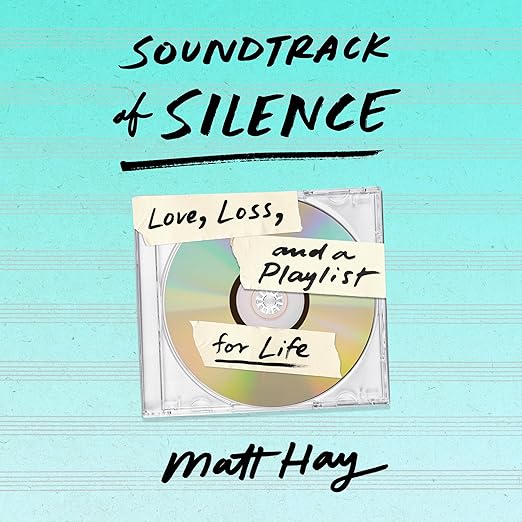
Matt Hay did not know his hearing was different from everyone else's, not for years. The workarounds he developed as a child were good enough that even the school nurse missed his condition at the annual checks. But by the time he was trying to qualify for West Point, the tumor generating his progressive deafness had made the situation unavoidable: he was losing his hearing, and fast. Soundtrack of Silence is his audiobook memoir of how he navigated that loss, narrated by Hay himself, and the decision to put this story in audio format in his own voice is one of the more structurally intelligent choices I have encountered in the memoir category. The program runs 6 hours and 58 minutes, a Macmillan Audio production from St. Martin's Press.
The formal conceit at the heart of this memoir is the personal soundtrack. As a Midwestern kid growing up in the 1980s, Hay organized his memories around music (the Eagles, Elton John, Bob Marley, U2, Peter Frampton) and when his diagnosis made clear that those songs were becoming temporary, he began deliberately committing them to memory. The track he needed most urgently was the one playing in the car on his first date with Nora, the woman who would become his wife. That detail (the specific song, the specific urgency of wanting to lock it in before it was gone) is the emotional key of the entire audiobook, and it is the kind of detail that only a memoir written close to the events could carry with this precision.
The formal structure of Hay's memoir is worth examining because it is doing more work than it might initially appear. Using the personal soundtrack as an organizing principle means that each chapter arrives with its own musical context, its own era, and its own set of associations that any listener who grew up with those songs will partially share. This is not a nostalgia mechanism. Hay is not asking you to sentimentalize your own 1980s. He is using music's established power as a memory system to give you direct access to his, and it works with unusual intimacy. One reviewer noted feeling really wowed by Hay's Ironman triathlon statistics, and that detail is representative: this is a memoir about disability that refuses to let disability be its only subject. The narrative includes athletic achievement, marriage, friendship, and parenthood, and those elements are not deployed as uplift but as honest accounting of a full life.
The relationship with Nora, described by one reviewer as a reminder of how to love unconditionally, is handled with striking directness. Hay does not idealize it. He acknowledges the strain that his condition and his sometimes stubborn independence placed on their relationship, and his unabashed adoration of his wife comes across as genuinely earned rather than performed. That emotional honesty is what separates good disability memoir from inspirational narrative, and Hay is consistently on the right side of that line.
A Voice That Negotiated With That Loss
The self-narration is the irreplaceable element of this audiobook. Hay reading his own story means that when he describes the gradual disappearance of sound, you hear a voice that has negotiated with that loss and arrived somewhere real with it. The humor (and there is real humor throughout; reviewers described laughing and crying in sequence) is funnier in his delivery because it carries the inflection of someone who has genuinely found the absurdity in a difficult situation rather than performing lightness over darkness. When he describes the compensation strategies he developed, the social navigation of hearing loss in contexts where it was not disclosed, the specific awkwardness of a young man trying to seem normal at West Point hearing tests, the material lands harder in his voice than it would in any professional narrator's interpretation.
The Macmillan Audio production quality supports this. At just under seven hours, the runtime is right for the material. It is long enough to develop the full chronological arc from childhood to the present, short enough to avoid the pacing problems that plague some disability memoirs when they extend well past the central crisis into extended triumphalist recovery narrative. Hay ends the book in a real place rather than a conclusive one, which is the honest choice and the right structural decision.
Bodily Sovereignty the Deafness Threatened to Undermine
Pay close attention to the sections covering Hay's experience of music after significant hearing loss. His descriptions of how he processes music through vibration, context, and remembered association rather than through direct auditory experience are among the most precise accounts of the phenomenology of acquired deafness available in popular memoir. This is not medical literature; it is lived experience described with genuine precision. Also notable is his treatment of the Ironman training, which functions as more than an inspirational plotline. The athletic discipline becomes a way for Hay to understand what his body can do independent of the hearing it has lost, a kind of bodily sovereignty that the deafness itself had threatened to undermine.
Genuine Wit Integrated Into the Fabric of the Story
Anyone who has navigated disability (either personally or alongside someone they love) will find Hay's memoir both accurate and comforting in the particular way that honest accounts of difficult experience can be. Listeners who grew up with the 1980s soundtrack Hay references will have an additional layer of personal resonance, though the book's emotional core is accessible without that shared musical context. Memoir listeners who want their books to be both funny and real (not comic relief punctuating serious content, but genuine wit integrated into the fabric of the story) will find Soundtrack of Silence one of the better examples of that balance. The self-narration makes this an audiobook that works differently from its print equivalent, and better.
Questions Listeners Ask
Does Matt Hay narrating his own audiobook affect the listening experience in a meaningful way?
Significantly. The specific power of hearing a man describe losing his hearing through his own voice (the humor, the grief, the matter-of-fact accounting of what changed) only exists in the self-narrated version. This is one of those audiobooks that is genuinely different from its print equivalent.
Is Soundtrack of Silence primarily a medical memoir or a broader life story?
Broader life story, structured around music as memory. The hearing loss and brain tumor diagnosis are central events, but Hay's narrative spans his Midwestern childhood, his relationship with Nora, athletic achievement including Ironman triathlon, and the full shape of a life built around finding workarounds. It is not a medical narrative.
Does the audiobook require familiarity with the 1980s music Hay references?
No prior familiarity is required. The musical references (Eagles, Elton John, Bob Marley, U2, Peter Frampton) function as emotional anchors within the memoir rather than as cultural tests. Listeners without strong personal associations with those songs can still follow the emotional logic of Hay's soundtrack project.
How does this audiobook handle the relationship between disability and identity?
With honesty and precision rather than inspirational simplification. Hay acknowledges the practical and emotional costs of his hearing loss without reducing himself to it. The memoir is as interested in what he can do as in what he has lost, and that balance is one of the things that makes it one of the stronger audiobooks in the disability memoir category.